
Selecting the wrong pump for diesel unloading or tank transfer is a highly expensive error that routinely plagues Indian industrial sites. In remote mining operations, agricultural fields, or telecom tower refueling setups, a failed pump doesn't just mean a replacement cost; it halts operations. When procurement teams treat diesel transfer as a basic plumbing issue rather than an engineered fluid dynamics problem, the results are predictable: cavitating rotors, overheated DC stators, and flow collapse under load. Whether you are moving diesel, kerosene, or light fuel oil, the equipment must be sized explicitly for the viscosity of the fluid, the atmospheric pressure of the site, and the often-unreliable power availability typical in Indian industrial environments.
This buyer’s guide gives Indian plant managers, maintenance engineers, and procurement heads a strict, specification-first method to evaluate Fuel Transfer Pumps. We will bypass marketing claims and focus purely on the engineering constraints—suction lift limits, intermittent duty cycles, volumetric efficiency, and motor protection. By understanding how to balance flow rate against discharge head and power type, you can confidently specify equipment that prevents cavitation, avoids thermal overloads, and handles the rugged realities of Indian site conditions.
1. What Is a Fuel Transfer Pump and What Does It Do?
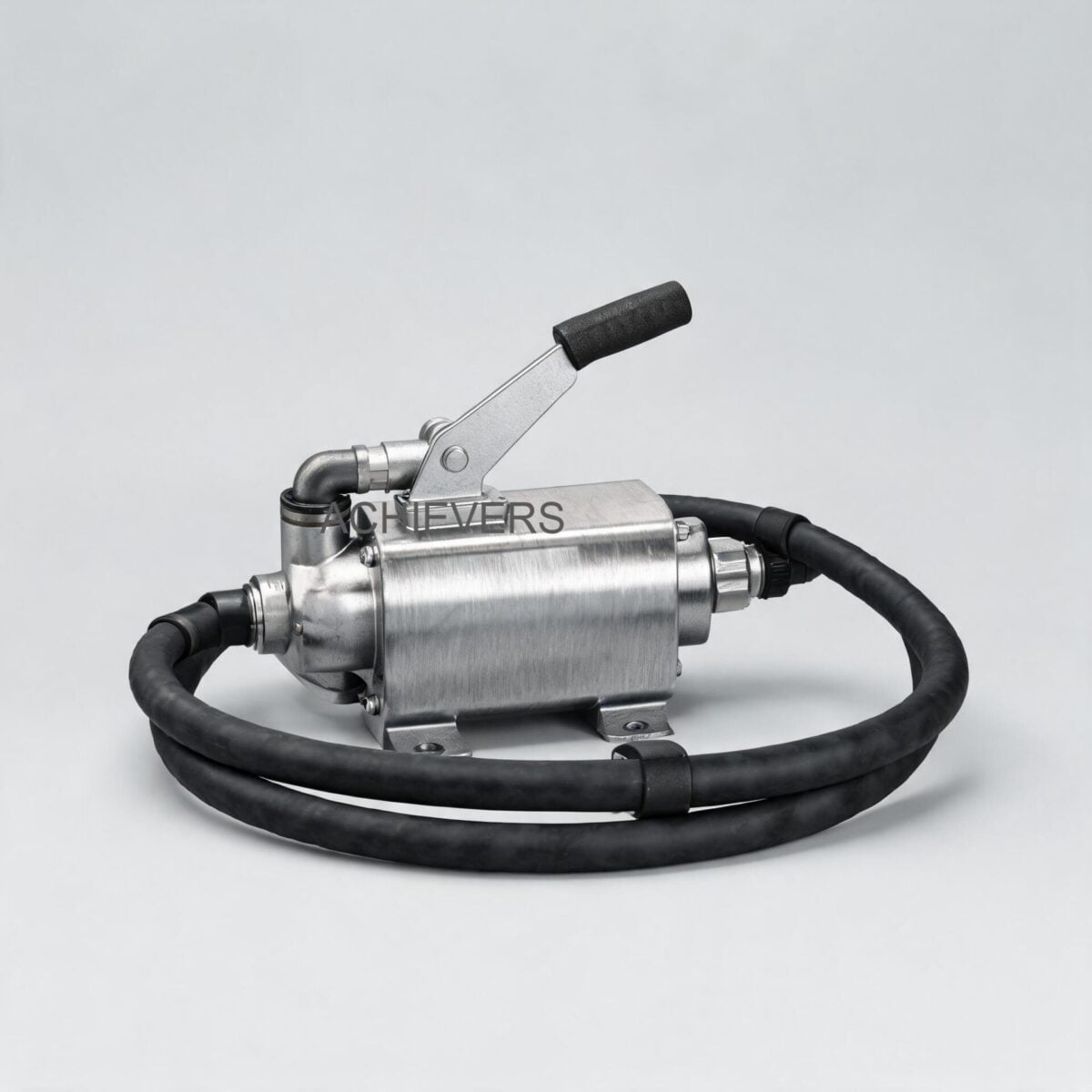
Industrial Fuel Transfer Pumps are positive displacement, self-priming rotary electric pumps engineered specifically to move hydrocarbons like diesel, kerosene, and gas oil. Unlike centrifugal pumps that rely on kinetic energy and struggle with air in the suction line, positive displacement transfer pumps (utilizing either rotary vane or gear mechanisms) create a strict mechanical seal. This action traps a fixed volume of fluid and forces it into the discharge pipe, providing a near-constant flow rate regardless of variations in discharge pressure.
In mobile refueling applications—such as earth-moving machinery, fleet agriculture applications, or construction yard tanks—these pumps are typically powered by 12V or 24V Direct Current (DC) brush motors featuring permanent magnet stators. To ensure safety and longevity, high-quality models feature die-cast aluminum or cast iron bodies coated with anti-corrosion paint, built-in bypass valves to prevent over-pressurization when nozzles are closed, and integral strainers to protect the internal rotors from solid contaminants.
Baseline Specifications of Industrial Transfer Pumps
| Specification | Technical Value | Engineering Notes |
| :— | :— | :— |
| Pump Mechanism | Rotary Vane or Gear Pump | Positive displacement, self-priming capable. |
| Flow Rate Range | 40 L/min up to 120 L/min | Highly dependent on suction lift and fluid viscosity. |
| Motor Protection | IP55 (Ingress Protection) | Protected against dust and low-pressure water jets; critical for Indian monsoons. |
| Operating Cycle | 30-Minute Intermittent Duty | Thermal constraint: requires a 30-minute rest period to dissipate stator heat. |
| Internal Materials | Sintered Steel Rotor, Acetal Resin Vanes | Ensures low wear and high volumetric efficiency in unlubricated fuels. |
| Suction Lift Capacity | 2 to 4 meters | Dependent on atmospheric pressure and pipe diameter. |
| Bypass Valve | Built-in to pump body | Crucial for safety; recirculates fuel internally when the discharge valve is closed. |
2. Key Selection Criteria for Indian Industrial Buyers
Procuring equipment for Indian industrial facilities requires accounting for extreme ambient temperatures (frequently exceeding 45 degrees Celsius), heavy particulate matter in the air, and fuel that often contains impurities. When sizing your pump, you must evaluate the following six criteria.
A. Suction Lift and Net Positive Suction Head (NPSH)
The most common cause of pump failure is cavitation—the boiling of the fuel inside the pump casing due to low pressure, which creates imploding vapor bubbles that destroy rotors. Standard transfer pumps offer a suction lift of 2 to 4 meters. If your underground tank requires a deeper pull, the pump will cavitate.
Engineering Calculation Note:
To avoid cavitation, the Net Positive Suction Head Available (NPSHa) must be greater than the Net Positive Suction Head Required (NPSHr) by the pump.
NPSHa = Atmospheric Pressure – Vapor Pressure of Diesel – Static Suction Lift – Friction Losses in Suction Pipe.
Because diesel has a low vapor pressure, static suction lift (the vertical distance from fluid level to pump) and friction losses (narrow pipes, too many elbows) are the primary factors you must minimize.
B. Discharge Head Constraints
Discharge head refers to the vertical distance the pump must push the fluid plus the resistance of the piping system. A standard 70 L/min unit like the CE-70-A-DC is rated for a 10m head. Pushing beyond this limit forces the internal bypass valve to partially open, causing massive drops in volumetric efficiency and skyrocketing motor temperatures.
C. Power Supply and Ampere Draw
DC pumps are vital for mobile refueling on construction sites lacking AC grid power. However, high-flow DC motors draw significant current. For instance, an 80 L/min, 12V DC pump can draw up to 44 Amps. In Indian conditions, connecting this to a depleted tractor battery using undersized wires will cause severe voltage drop. A 12V motor receiving only 9V will draw even more current to compensate, leading to rapid overheating of the permanent magnet stator.
D. 30-Minute Duty Cycle Adherence
Most DC transfer pumps are strictly rated for intermittent service—specifically a 30-minute work cycle. Operating them continuously for hours to empty a 10,000-liter storage tank will degrade the motor winding insulation. Plant managers must size the flow rate so that the required batch transfer can be completed within 29 minutes, allowing the pump to rest and cool.
E. Viscosity and Fluid Compatibility
These pumps are designed for light oils, diesel, and kerosene. They are not suitable for highly viscous gear oils, heavy fuel oil (HFO), or highly volatile fluids like gasoline (petrol) unless specifically ATEX-rated. Pumping high-viscosity fluids drastically increases the torque required, overloading the motor and drastically reducing the flow rate.
F. Environmental Protection (IP Rating)
Dust and water ingress destroy electrical components. Given India's dusty summers and heavy monsoons, an IP55 motor protection grade is non-negotiable. It ensures that the brush motor remains shielded from particulate buildup that could short the commutator, as well as protecting the internal wiring from ambient moisture.
3. Technology Comparison and Model Variants
Our site covers a vast array of fluid measurement and transfer technologies. In the realm of positive displacement transfer, manufacturers utilize two primary internal geometries: Rotary Vane and External Gear. The specific Fuel Transfer Pumps you choose must align with your exact application.
Technology Comparison Table: Rotary Vane vs. Gear Pumps
| Parameter | Rotary Vane Pumps (e.g., CE-40DC) | Gear Pumps (e.g., 260000 series) |
| :— | :— | :— |
| Operating Mechanism | Spring-loaded acetal resin vanes sliding out of a sintered steel rotor. | Two meshing gears (driver and idler) trapping fluid in the gear teeth. |
| Best Suited For | Clean diesel, kerosene, low viscosity fuels. | Diesel, light fuel oils, slightly higher viscosity liquids. |
| Wear Characteristics | Vanes self-compensate for wear by extending further from the rotor. | Gears wear over time; no self-compensation, leading to gradual flow loss. |
| Contaminant Tolerance | Very low. Hard particles will jam or break the resin vanes. | Moderate. Can pass tiny particulates slightly better, though not recommended. |
| Dry Running Capability | Extremely poor. Dry running melts the resin vanes within minutes. | Poor, but slightly more robust briefly due to metal-to-metal design. |
| Noise Levels | Generally quieter, smooth operation. | Can be noisier due to mechanical gear meshing. |
When to Use This Technology: Decision Matrix
- Choose a Rotary Vane Pump If: You are transferring clean, refined diesel from a mobile bowser to a generator, require self-priming up to 3 meters, and need maximum flow rate efficiency (up to 120 L/min) in a compact, lightweight die-cast aluminum or cast iron footprint.
- Choose a Gear Pump If: You are transferring slightly thicker fuel oils or lubricants where the viscosity would cause excessive drag on sliding vanes, and where you are permanently mounting the pump to an "L" shaped tank.
Model and Variant Comparison
Below is the technical breakdown of the standard DC models available for intermittent fleet and agricultural fueling applications:
| Model Name | Voltage / Current | Flow Rate | Input / Output | Key Application / Best For |
| :— | :— | :— | :— | :— |
| CE-40DC | 12V or 24V DC | 40 L/min | 3/4" BSP | Small generators, light tractors, agriculture. Cast iron body, 2800 RPM. |
| CE-70-A-DC | 12V or 24V DC (4A) | 70 L/min | 3/4" BSP | Earth-moving machinery, 10m discharge head applications. |
| CE-80-DC | 12V (44A) / 24V (21A) | 80 L/min | 1" BSP | Heavy construction yards, rapid refueling of large mining dump trucks. |
| Heavy Duty | Custom voltages | Up to 120 L/min | 1" or larger | High-volume batch transfers, industrial tank-to-tank unloading. |
4. Common Mistakes Indian Buyers Make When Choosing
Procurement based purely on the lowest INR price inevitably leads to premature equipment failure. Here are the most common engineering mistakes industrial buyers in India make when specifying diesel transfer equipment:
- Ignoring the Intermittent Duty Cycle Limit:
- Starving the Suction Inlet:
- Removing the Integral Strainer:
- Using Undersized DC Power Cables:
- Closing the Nozzle Without a By-Pass Valve Check:
The Mistake: Using a 30-minute rated DC pump to unload a 5,000-liter tanker into an underground tank. At 70 L/min, this takes over 70 minutes.
The Consequence: The permanent magnet stator cannot dissipate the heat fast enough. The internal insulation melts, causing a catastrophic electrical short and destroying the motor.
The Mistake: Buying a CE-80-DC pump (which has 1" inlets) and adapting it down to a 1/2" suction hose to save money on piping.
The Consequence: The pump attempts to pull 80 L/min through a restricted orifice, drastically increasing fluid velocity and causing a pressure drop below the fluid's vapor pressure. The pump cavitates, destroying the sintered steel rotor.
The Mistake: Indian diesel frequently contains rust from old MS (Mild Steel) tanks. Operators find the built-in strainer gets clogged easily, so they remove it.
The Consequence: Solid rust particles enter the pump chamber. They lodge between the acetal resin vanes and the cast iron pump body, instantly snapping the vanes and seizing the pump.
The Mistake: Wiring a 12V, 44-Amp CE-80-DC pump using standard, thin electrical wire over a distance of 10 meters from the vehicle battery.
The Consequence: Severe voltage drop (I^2R losses). The pump receives 8 Volts instead of 12. The motor stalls under fluid load, draws locked-rotor amperage, and burns out the brush contacts.
The Mistake: Leaving the pump running while the dispensing nozzle is shut for an extended period, assuming the built-in bypass valve can run indefinitely.
The Consequence: While the bypass valve prevents immediate pipe explosion, it recirculates the same small volume of diesel in an endless loop. Fluid friction heats the diesel rapidly. Within 5-10 minutes, the boiling diesel warps the pump internals.
5. Enquiry Specification Checklist
To ensure you receive the correct pump configuration that will survive your site conditions, provide your supplier with exact engineering constraints. Use this 8-point checklist when requesting a quotation to ensure your setup aligns with proper fluid mechanics and electrical standards.
- Fluid Composition and Viscosity: Specify if you are pumping standard HSD (High-Speed Diesel), kerosene, or a heavier fuel oil. This dictates if you need a vane or gear mechanism.
- Required Volumetric Flow Rate: State the required Liters Per Minute (LPM). Do not over-specify; buying a 120 L/min pump for a 100-liter tractor tank is excessive and causes frothing.
- Maximum Suction Lift (m): Measure the exact vertical distance from the lowest point of your storage tank to the pump inlet. Must not exceed 2-4 meters.
- Maximum Discharge Head (m): Calculate the vertical distance from the pump to the highest discharge point, plus estimated friction losses of the hose. (e.g., 10m head limit on CE-70-A-DC).
- Power Availability: Specify 12V DC, 24V DC, or whether you actually require a 230V AC unit. Mention if battery power will be prone to severe voltage fluctuations.
- Operating Duty Cycle: Detail your batch sizes. Can the transfer be completed in 30-minute windows? If not, you must specify a continuous-duty AC pump instead.
- Port Sizes: Confirm 3/4" or 1" threaded inputs (BSP typically used in India) to match your existing tank flanges.
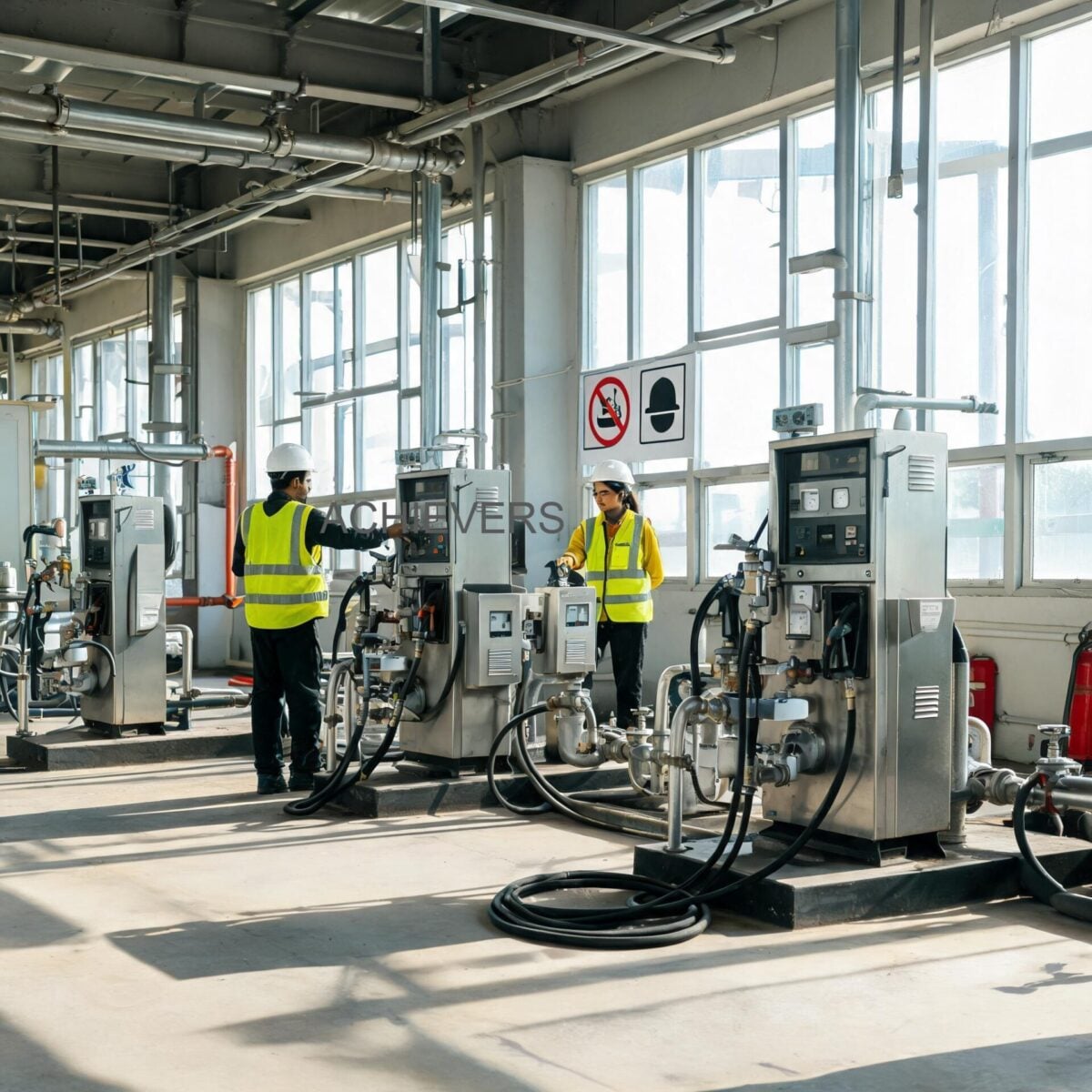
- Accessories and Systems Integration: Specify if you need the pump integrated with Diesel Flow Meters for custody transfer tracking, manual/automatic shut-off nozzles, or if you need full Mobile Diesel Dispensers built on a skid.
FAQ
Q: Can I use these DC transfer pumps to pump water or AdBlue?
A: No. Positive displacement fuel pumps rely on the lubricity of diesel or oil to lubricate the internal rotor and vanes. Pumping water will cause immediate internal rusting and seizing, while AdBlue will severely corrode the cast iron body and sintered steel rotor.
Q: What does the "30-minute duty cycle" actually mean in practical terms?
A: It means the pump can be run continuously for a maximum of 30 minutes, after which it must be turned off and allowed to cool down to ambient temperature (usually taking 30 to 60 minutes) before turning it on again.
Q: Why is my pump running, but the flow rate has dropped to a trickle?
A: In Indian industrial sites, the most common cause is a clogged built-in strainer due to contaminated fuel. Other causes include worn acetal resin vanes, or the bypass valve being stuck in the partially open position due to debris.
Q: Do these pumps require Legal Metrology (Weights & Measures) approval in India?
A: The pump itself does not require Legal Metrology approval. However, if the pump is coupled with a meter and used for commercial retail billing (custody transfer) to third parties, the metering system must be approved. For internal captive fleet fueling, approval is generally not required.
Q: Are these DC pumps safe for highly flammable liquids like petrol (gasoline)?
A: Absolutely not. The models listed (CE-40DC, CE-70-A-DC, CE-80-DC) use brush motors that create internal electrical sparks. Pumping petrol requires strict PESO/ATEX certified explosion-proof (flameproof) motors to prevent catastrophic ignition.
Q: Can I increase the flow rate by increasing the voltage from 12V to 24V on a 12V pump?
A: No. Applying 24V to a 12V permanent magnet DC motor will cause it to spin at double the designed RPM briefly before the stator windings overheat and burn out completely. Always match the motor voltage explicitly to your battery bank.
Q: What is the benefit of a built-in bypass valve?
A: When the operator shuts the dispensing nozzle, the pump continues to run. The bypass valve instantly opens to redirect the pressurized fluid internally from the outlet back to the inlet. This prevents the discharge hose from bursting under dead-head pressure.
If your plant requires a robust fuel management upgrade, do not leave the pump sizing to chance. Contact our engineering sales team today with your required flow rate, suction lift dimensions, fluid type, and power availability. We can custom design and supply the exact heavy-duty pump configuration, complete with meters and filtration accessories, to guarantee reliable, cavitation-free fuel transfers in the most demanding Indian industrial environments.