
Managing fuel distribution across decentralized, heavy-duty construction sites presents a unique set of logistical and economic challenges for project managers. While centralized bulk storage is necessary, the reality of global infrastructure projects—from highway expansions to remote mining operations—dictates that the fuel must be mobilized to reach stationary or slow-moving machinery. Relying on basic drum pumps or unmetered transfer hoses introduces high margins of error, undocumented fuel consumption, and significant contamination risks.
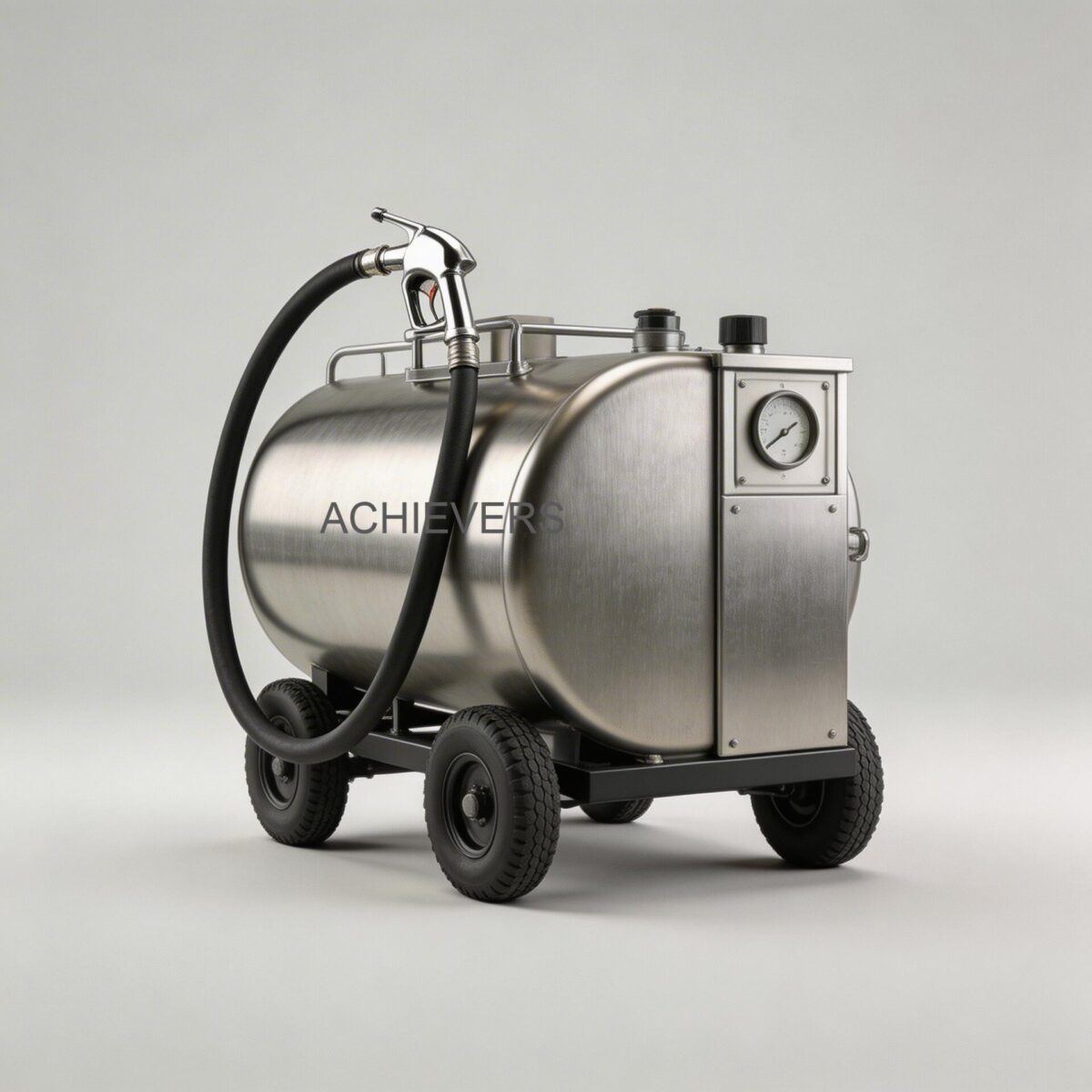
To bridge the gap between bulk storage and machine consumption, industrial operators utilize Mobile Diesel Dispensers. These robust, integrated skid systems combine high-capacity transfer pumping with precision flow measurement technologies. Unlike generic transfer equipment, a true dispensing system relies on positive displacement metering to track every liter dispensed into an asset, ensuring auditable consumption metrics and strictly limiting inventory shrinkage.
For the procurement engineer or plant manager, specifying Mobile Diesel Dispensers requires understanding not just the hydraulic capabilities of the pump, but the metrological accuracy of the integrated flow meter, the mechanical durability of the construction, and the compliance with site safety standards. Properly engineered Mobile Diesel Dispensers transition an operation from reactive fuel filling to proactive fluid inventory control.
1. Industry Overview: The Fluid Challenge
Heavy earthmoving equipment, cranes, and portable power generators operate continuously under demanding load profiles. A standard articulated dump truck can consume over 30 to 40 liters of diesel per hour. When multiplied across a fleet of 50 machines operating on multiple work fronts, fuel management becomes a dominant operational expense.
The primary challenge in construction site refueling is maintaining metrological accuracy in uncontrolled environments. High ambient temperatures alter the viscosity and density of diesel fuel. High-vibration environments (such as on the back of a lube truck traversing unpaved roads) can damage delicate electronic sensors. Airborne particulate matter and dust present a severe threat to both internal pump components and the heavy machinery's fuel injection systems.
Furthermore, legal accountability is paramount. Discrepancies between bulk tank deliveries and machine consumption logs often point to inefficient transfer practices, thermal expansion losses, or outright theft. Generic flow indicators with ±2.0% error margins are unacceptable for cost-accounting. Industrial-grade Mobile Diesel Dispensers resolve these variables by utilizing precision-machined oval gear flow meters capable of maintaining a strict ±0.5% precision regardless of field conditions, provided operating pressures remain within the system's 3 Bar specification.
2. Product Capabilities Matched to Industry Needs
Mobile Diesel Dispensers from the Achievers series (such as models CE-130, CE-204, and CE-117) are engineered specifically for the harsh realities of mobile fuel distribution. The integration of a 0.375 kW motor with a dedicated positive displacement flow sensor ensures that flow capacity and measurement integrity are never decoupled.
| Industry Requirement | Mobile Diesel Dispensers Feature | Engineering Rationale / How It Addresses the Need |
| :— | :— | :— |
| High-Speed Refueling | Flow Rate Range: 60 L/Min up to 200 L/Min | Minimizes downtime; a 60 LPM system fills a standard 300L machine tank in 5 minutes, allowing service trucks to optimize routes. |
| Auditable Accuracy | Oval Gear P.D. Flow Sensor (±0.5% Precision) | Volumetric measurement independent of flow profile, ensuring exact batch accounting for cost tracking per machine. |
| Spill Prevention | Auto Shut-Off Nozzle | Mechanical pressure-sensing nozzle automatically terminates flow when the tank is full, eliminating overflow and environmental hazards. |
| Durable Field Operation | 3 Bar Working Pressure / Robust Construction | Ensures the pump can overcome the dynamic head of long hose runs (4m rubber hose standard) and inline filtration restrictions. |
| Batch and Lifecycle Tracking | Resettable Batch (0-9999 L) & Cumulative Totalizer (0-9999999 L) | Dual-register mechanical or electronic counting allows operators to log individual fills while managers track the lifetime throughput. |
| Hardware Compatibility | 25 mm (1-inch) Inlet/Outlet Brass Fittings | Standardized industrial porting allows for rapid integration with existing suction strainers, quick-camlocks, and bulk tank piping. |
| Power Flexibility | 0.375 kW Power Requirement | Low power draw permits operation via vehicle batteries (12V/24V DC configurations) or portable site generators (220V AC). |
| Chemical Resistance | Compatible Materials (Metal gun, specialized seals) | Designed specifically for the lubricity, vapor pressure, and chemical composition of commercial diesel and bio-diesel blends. |

3. Typical Installation Scenarios in This Industry
The modular design of these dispensing systems permits flexible deployment across the civil engineering and industrial landscape.
Scenario A: The Mobile Lube and Fuel Truck (Fleet Servicing)
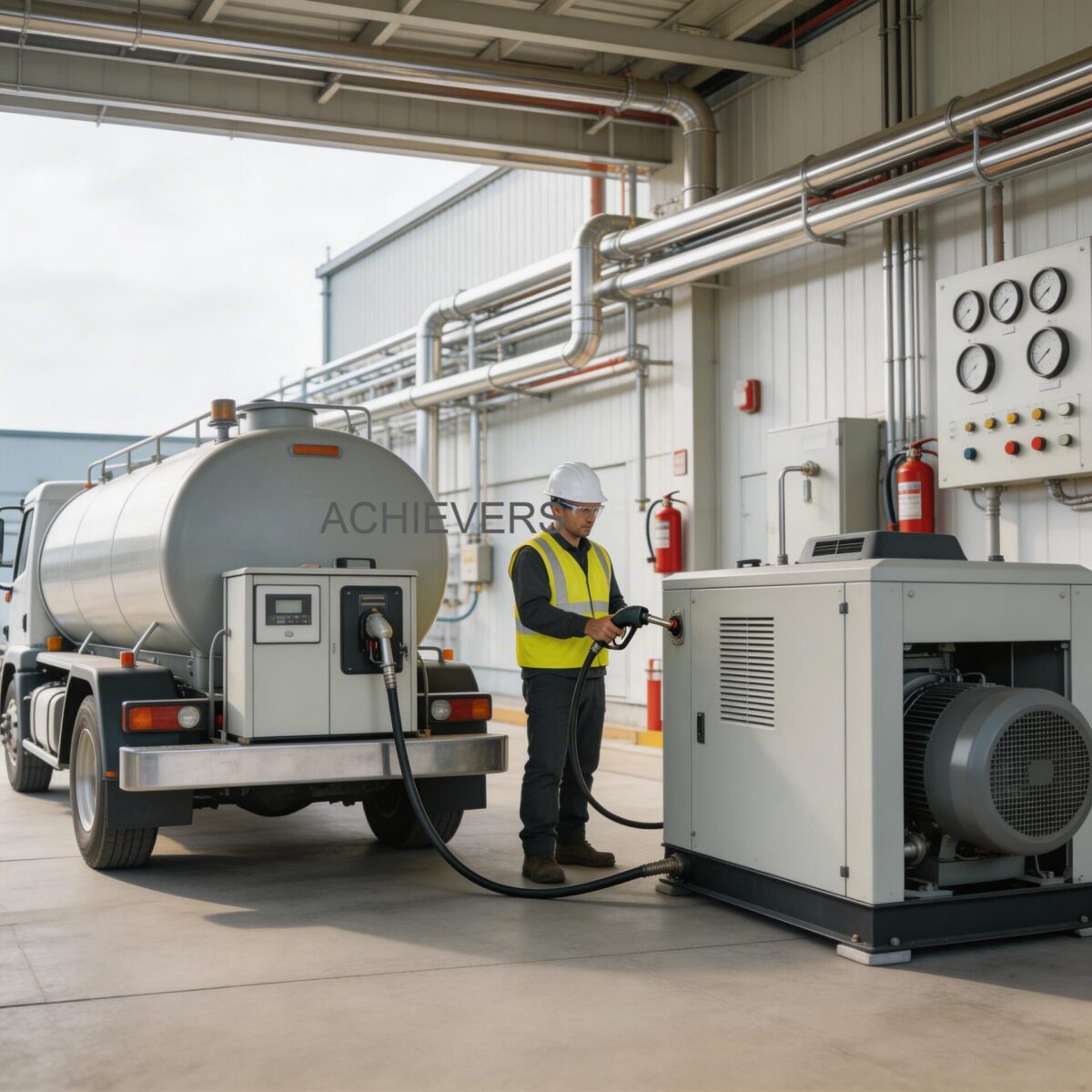
The most common application involves mounting the dispenser directly to the flatbed or enclosed utility body of a service truck. A customized 1,000L to 3,000L bulk tank is secured to the chassis. The dispenser is hard-piped to the tank's bottom-discharge port (incorporating an isolation valve and primary Y-strainer). Operating on 12V or 24V DC power drawn directly from the truck's alternator system, this setup allows the service vehicle to approach earthmovers mid-shift. The 4m rubber dispensing hose with auto shut-off nozzle ensures the operator can safely reach the excavator's fuel port while standing on the tracks.
Scenario B: Temporary Skid Tanks for Remote Work Fronts
For stationary equipment like rock crushers, screening plants, or high-capacity dewatering pumps, continuous fuel truck visits are inefficient. Instead, contractors place ISO tank containers or localized skid tanks near the equipment. The dispenser is mounted directly to the wall of the skid tank. Because these locations often have access to temporary site power, a 220V AC dispenser is typically specified. When paired with high-capacity Fuel Transfer Pumps to initially fill the skids, the localized dispenser provides controlled, metered access for daily equipment top-offs.
Scenario C: Emergency Power Generation and Facility Backup
Beyond construction, massive data centers, hospitals, and offshore rigs rely on continuous diesel generator backup. Mobile dispensers are utilized to transfer fuel from underground primary storage to the generator's smaller day-tanks. The ±0.5% precision of the oval gear meter is critical here for strict regulatory reporting regarding emissions and standby fuel readiness.
4. Compliance, Accuracy, and Certification Requirements
Instrumentation engineers understand that not all flow meters are appropriate for hydrocarbon dispensing. Diesel fuel is a relatively clean, lubricating fluid with a dynamic viscosity typically ranging from 2 to 4.5 centistokes (cSt) at 40 degrees Celsius. While various technologies can measure flow, their performance varies drastically under field conditions.
Technology Comparison Table: Diesel Measurement Systems
To highlight why Positive Displacement (Oval Gear) technology is the global standard for fuel dispensing, we must compare it against other common flow measurement principles.
| Parameter | Positive Displacement (Oval Gear) | Turbine Flow Meters | Electromagnetic (Mag Meters) | Vortex Shedding |
| :— | :— | :— | :— | :— |
| Primary Use Case | Custody transfer, batch dispensing, high accuracy | High-flow steady state transfer | Water, wastewater, conductive slurries | Steam, gas, low-viscosity liquids |
| Accuracy Rating | ±0.5% to ±0.1% | ±1.0% (highly dependent on flow rate) | N/A (Diesel is non-conductive) | ±1.0% to ±1.5% |
| Viscosity Sensitivity | Excellent (Accuracy improves with higher viscosity) | Poor (Viscosity changes alter rotor K-factor) | N/A | Poor (Struggles with viscous dampening) |
| Straight Pipe Requirement | None (0D upstream / 0D downstream) | High (10D upstream / 5D downstream) | High (5D upstream / 3D downstream) | Very High (15D upstream / 5D downstream) |
| Suitability for Diesel | Ideal (Diesel lubricates the gears) | Good (but requires inline strainers) | Incompatible (Requires >5 microSiemens/cm) | Marginal (Pressure drop limitations) |
| Flow Profile Dependency | Insensitive to swirl or flow disturbances | Highly sensitive to turbulent flow profiles | Sensitive | Sensitive |
The Engineering of Oval Gear Accuracy
The core of the Mobile Diesel Dispenser's metrology is the Positive Displacement (P.D.) Oval Gear Flow Meter. Unlike inferential meters (like turbines) that calculate flow based on fluid velocity, a P.D. meter physically traps a known volume of liquid and passes it from inlet to outlet.
Volumetric Calculation Principle:
The flow rate calculation for an oval gear meter is mathematically deterministic, defined by the geometry of the measuring chamber.
Flow Rate (Q) = V_s * N * (1 – Slip Factor)
Where:
- V_s = Swept Volume per complete revolution of the gear pair.
- N = Rotational Frequency (revolutions per minute).
- Slip Factor = The minute amount of fluid that bypasses the gears via mechanical clearances.
Because diesel has a higher viscosity than water, the "Slip Factor" approaches zero. The fluid itself seals the microscopic gaps between the oval gears and the chamber wall. This means that as long as the fluid is clean and the gears are turning, the accuracy of ±0.5% is guaranteed, regardless of whether the pump is operating at the low end (e.g., 20 LPM) or its maximum rated capacity (200 LPM). Furthermore, because P.D. meters require zero straight pipe runs, they can be compactly integrated into the tight footprint of a mobile skid.
5. ROI and Operational Benefits
Investing in engineered dispensing solutions provides rapid return on investment (ROI). In an industry where a 2% variance in fuel tracking can amount to hundreds of thousands of dollars in annual losses, the precision of a dedicated dispensing unit pays for itself within the first quarter of deployment.
'When to Use This Technology' Decision Matrix
Use the following matrix to determine if a Mobile Diesel Dispenser is the correct specification for your application:
- Is the fluid strictly diesel, bio-diesel, or light oil?
- Yes: Proceed. Oval gears require lubricating fluids.
- No (Water, AdBlue/DEF, Corrosives): Halt. Look for chemical-rated diaphragm pumps and mag-meters.
- Do you require batch accuracy for cost accounting?
- Yes: Proceed. The ±0.5% precision and resettable batch counter are mandatory.
- No (Just moving bulk fluid): Consider standard high-flow centrifugal pumps without metering.
- Is the installation space highly constrained (e.g., truck bed)?
- Yes: Proceed. PD meters require zero upstream straight pipe runs.
- Is the target application mobile/remote?
- Yes: Proceed. 12V/24V DC configurations are designed specifically for vehicular power grids.
| Benefit Category | Typical Improvement | Industrial Context & Operational Impact |
| :— | :— | :— |
| Fuel Loss Prevention | 95% reduction in undocumented fluid | Precise batch totalizers enforce accountability. Operators must log the exact volume dispensed against the machine ID, preventing internal theft. |
| Equipment Uptime | 30% reduction in refueling cycle time | High-capacity flow (up to 200 LPM on CE-130 models) allows service trucks to refuel a machine in minutes, keeping the asset moving. |
| Contamination Control | Significant drop in injector failures | Integrated dispensing relies on closed-loop hoses and clean auto-shutoff nozzles, eliminating the dirt ingress common with open buckets. |
| Safety & Environmental | Near elimination of ground spills | The mechanical auto shut-off nozzle reacts to tank backpressure instantly, preventing overflows and costly soil remediation efforts. |
6. Selection Checklist for This Industry
When specifying a dispensing system for an industrial project, plant managers must evaluate several technical parameters to ensure system longevity.
- Determine Target Flow Rate: Calculate the total fuel required per shift and the time available for refueling. Standard construction applications use 60 L/Min, while high-capacity mining trucks demand models operating up to 200 L/Min.
- Verify Power Availability: Select between 12V DC (light commercial vehicles), 24V DC (heavy earthmoving plant electrical grids), or 220V AC (stationary skid tanks and site power).
- Filtration Assessment: Ensure a dedicated particulate and water-absorbing filter (minimum 10 to 30 microns) is installed upstream of the dispenser to protect the oval gear tolerances.
- Confirm Hose Length Requirements: The standard 4m rubber hose is suitable for direct truck-to-truck transfer. If refueling requires extended reach (e.g., across trenches), specify extended heavy-duty hosing, noting the impact on dynamic head pressure.
- Identify Metering Precision: Verify the application requires custody-transfer or batch-level accuracy. Ensure the unit specifies ±0.5% precision via Positive Displacement technology.
- Evaluate Working Pressure Requirements: Ensure the pump curve can maintain the 3 Bar working pressure through all downstream restrictions (filters, meters, hoses, and swivels).
- Check Accessory Compatibility: Ensure the 25 mm brass fittings are compatible with your existing quick-disconnect inventory or camlock setups.
- Review the Totalizer Limit: Confirm the 0-9999999 L cumulative totalizer is sufficient for the asset's expected maintenance lifecycle before rollover.
Standard Operating Procedure for Accurate Field Dispensing
To maintain the ±0.5% accuracy and ensure safe operation, operators must adhere to a strict dispensing procedure:
- Pre-Operation Inspection: Visually inspect the 4m rubber hose for abrasions, check the 25 mm inlet/outlet brass fittings for weepage, and ensure the auto shut-off nozzle spout is clean.
- Zero the Batch Counter: Engage the reset knob to clear the previous transaction, ensuring the one-time count range reads exactly 0 L. Record the cumulative totalizer reading in the logbook.
- Engage Power System: Switch on the 0.375 kW pump motor. Listen for smooth operation; cavitation or excessive whining indicates a blocked suction strainer.
- Dispense Fuel: Insert the metal gun into the receiving asset's tank and pull the trigger. Ensure the nozzle is seated properly so the auto shut-off vacuum port can detect fluid level.
- Automatic Termination: Allow the auto shut-off mechanism to terminate the flow. Do not repeatedly "top off" the tank, as this can lead to fluid expansion spills and skews metered accuracy.
- Deactivation and Logging: Turn off the pump motor to relieve line pressure. Record the final batch volume (from the 0-9999 L register) into the site's fuel management software. Stow the hose securely.
FAQ
Q: Can Mobile Diesel Dispensers be used to pump water or AdBlue/DEF?
A: No. These dispensers utilize oval gear flow meters and internal pump components that rely on the lubricating properties of diesel fuel. Pumping water or corrosive fluids like AdBlue will strip lubrication, causing the gears to seize and internal metal components to rust.
Q: Why does the system use an Oval Gear meter instead of a Turbine meter?
A: Oval gear positive displacement meters physically measure discrete volumes of fluid, offering ±0.5% precision that is unaffected by flow rate fluctuations, viscosity changes, or lack of straight pipe runs. Turbine meters lose accuracy if the flow rate drops or if there is fluid turbulence from the pump.
Q: What power options are available for remote sites without grid access?
A: Dispensers can be specified with 12V DC or 24V DC motors. These low-draw (0.375 kW) motors are designed to be wired directly into the battery and alternator systems of flatbed trucks, pickups, or heavy machinery.
Q: How often does the internal flow meter require calibration?
A: Positive displacement meters are highly stable, but standard industrial metrology practices recommend verifying calibration annually using a certified volumetric proving can. If the dispensed fluid is heavily contaminated, accelerated wear on the gears may require more frequent validation.
Q: What is the maximum distance I can extend the dispensing hose?
A: The standard system includes a 4m rubber hose. While you can extend this up to 10-15 meters, doing so increases the frictional pressure drop. The pump has a maximum working pressure of 3 Bar; exceeding this dynamic head limit will significantly reduce the 60 L/Min flow rate.
Q: Does the auto shut-off nozzle require a power connection?
A: No. The auto shut-off nozzle is a purely mechanical device. It utilizes a small vacuum port near the tip. When the rising diesel fluid covers this port, the change in pressure trips a mechanical latch inside the handle, instantly snapping the valve shut to prevent spills.
Q: Can the cumulative totalizer be reset by operators to hide stolen fuel?
A: No. While the standard batch counter (0-9999 L) is easily resettable via a dial for daily operations, the cumulative totalizer (0-9999999 L) is designed to track lifetime throughput and cannot be reset without dismantling the meter casing, effectively preventing undocumented fuel shrinkage.
To optimize fuel distribution on your upcoming project, contact our technical sales team for guidance on specifying the right Mobile Diesel Dispensers for your fleet. Please provide your required flow rates, vehicle power configurations, and expected site conditions so we can engineer a system that maximizes your operational uptime.