
In the high-speed environment of modern automotive manufacturing, plant engineers are constantly balancing aggressive takt times with zero-tolerance quality control. Fluid filling stations—where engines, transmissions, and differentials receive their initial lifeblood—represent a critical bottleneck. Overfilling a modern internal combustion engine can lead to blown seals or damaged catalytic converters, while underfilling risks catastrophic failure before the vehicle even leaves the testing bay. Generic flow measurement setups simply cannot handle the high-speed repetition, the varying viscosities of modern synthetic lubricants, and the stringent batch traceability required by contemporary automotive quality standards.
To meet these exacting demands, assembly lines require dedicated Liquid Batching Systems engineered specifically for precise volumetric dispensing. By integrating robust metering equipment, localized pumps, flow sensors, advanced batch controllers, and rapid-response solenoid valves, these systems eliminate human error from the fluid filling process. For Indian automotive hubs from Pune to Chennai, where extreme ambient temperatures and inconsistent power grids wreak havoc on standard instrumentation, selecting the right batching architecture is paramount. This guide provides a deep engineering analysis of how specialized liquid batching systems are implemented on industrial assembly and service-fill lines to achieve repeatable volume control and audit-ready documentation.
1. Industry Overview: The Fluid Challenge
Automotive assembly and service lines in India handle a diverse matrix of fluids. From ultra-low viscosity 0W-16 motor oils to dense 85W-140 differential gear lubricants, the rheological properties of these liquids change dramatically with ambient temperature. In a typical Indian manufacturing shed, morning temperatures might be 15 degrees Celsius in winter, rising to 45 degrees Celsius by a summer afternoon. This temperature delta severely alters the kinematic viscosity of the oil, rendering velocity-based flow meters highly inaccurate.
Liquid batching systems for automotive lube oil filling must overcome several site-specific challenges. First is the requirement for rapid batching. If the line moves at one car every 60 seconds, the engine oil fill (typically 3.5 to 5 liters) must be completed in under 15 seconds to allow for nozzle engagement, dripping, and retraction. This requires a high flow rate, but stopping a high-viscosity fluid instantly creates hydraulic shock (water hammer) that can destroy piping and sensors.
Second, the power infrastructure in industrial zones frequently suffers from voltage sags and spikes. A batch controller reliant on a 220 V AC supply must maintain memory and process logic perfectly during a brownout, and the solenoid valves must actuate consistently despite voltage variations. Contamination is another critical factor; dust ingress and particulate matter in bulk oil storage can jam sensitive moving parts. Because of these factors, Indian engineers require industrial liquid batching system supplier specifications that prioritize heavy-duty mechanical robustnes alongside electronic precision.
2. Product Capabilities Matched to Industry Needs
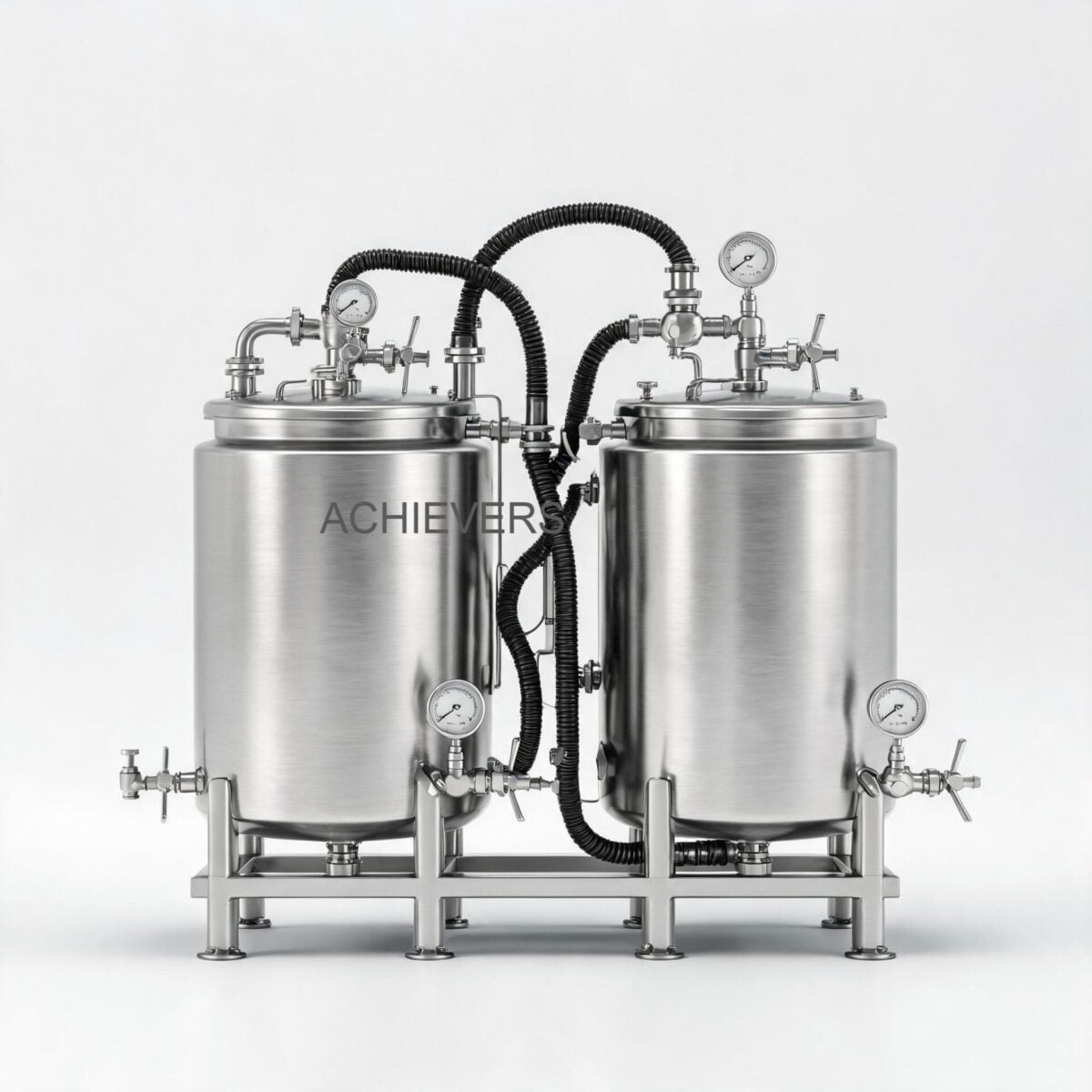
The core of an effective dispensing station is a properly specified batching skid. The Liquid Batching Systems manufactured under the Achievers brand by Lumen Instruments are precision-engineered to address these exact industrial demands. Featuring a maximum capacity of 60 Litre/Min and operating on a standard 220 V AC power source, these units utilize an oval gear metering mechanism to deliver an exceptional accuracy of ±0.5%.
To understand how these specifications translate to the assembly floor, we must map the technical features directly to the industry requirements.
| Industry Requirement | Liquid Batching Systems Feature | How It Addresses the Need |
| :— | :— | :— |
| High-Viscosity Handling | Oval Gear Metering Mechanism | Positive displacement oval gears physically trap and measure discrete volumes of fluid, ensuring accuracy regardless of how thick the oil or transmission fluid is. |
| Rapid Takt Time Compliance | 60 Litre/Min Flow Capacity | Allows a standard 4.5-liter engine crankcase to be filled in under 5 seconds, providing ample buffer time for the operator to maneuver the filling nozzle. |
| Precision Tolerances | ±0.5% Exactness (Accuracy) | Guarantees that a 5-liter preset batch will dispense exactly between 4.975 and 5.025 liters, completely eliminating the risk of over-pressurizing engine seals. |
| Automated Flow Shutoff | Integrated Solenoid Valve & Controller | The programmable preset controller communicates with the solenoid valve to automatically snap shut the exact moment the target pulse count is reached. |
| Harsh Environment Durability | Erosion Resistance & High Endurance | Built with heavy-duty cast bodies and superior grade raw materials that withstand the vibrations, dust, and continuous duty cycles of an automotive plant. |
| Integrated Pumping | Coupled Transfer Pump | Eliminates the need for gravity-fed overhead tanks; the system can pull fluid directly from ground-level barrels or IBC totes and push it through the meter. |
| Standardized Indian Power | 220 V AC Power Source | Compatible with standard Indian single-phase industrial power grids, removing the need for complex localized transformers or DC power supplies. |
| Traceability and Auditing | Digital Batch Controller | Provides verifiable batch totals that can be logged for quality assurance, ensuring compliance with automotive ISO standards. |
Technology Comparison: Why Oval Gear?
When selecting a flow measurement principle for viscous lube oils, engineers typically evaluate three technologies. Understanding why the oval gear mechanism is chosen is critical for instrumentation professionals.
| Parameter | Oval Gear Meter (Positive Displacement) | Turbine Flow Meters | Coriolis Mass Flow Meter |
| :— | :— | :— | :— |
| Viscosity Dependency | Accuracy improves with higher viscosity | Severely degraded accuracy with high viscosity | Independent of viscosity |
| Pressure Drop | Moderate to High | Low | High |
| Initial Capital Cost | Moderate (₹40,000 – ₹1,50,000) | Low | Very High (₹3,00,000+) |
| Accuracy Profile | ±0.5% Volumetric | ±1.0% (Only for thin fluids) | ±0.1% to ±0.2% Mass |
| Maintenance Need | Periodic gear cleaning / strainer check | Frequent bearing replacement | Minimal (no moving parts) |
| Best Application | Lube oil, transmission fluids, batching | Water, light diesel, solvents | Custody transfer of expensive chemicals |
For Liquid Batching Systems in India for assembly lines, the oval gear meter (a specific type of Positive Displacement Flow Meter) offers the optimal intersection of cost, mechanical reliability, and accuracy for oils.
Engineering Principle & Volumetric Formula
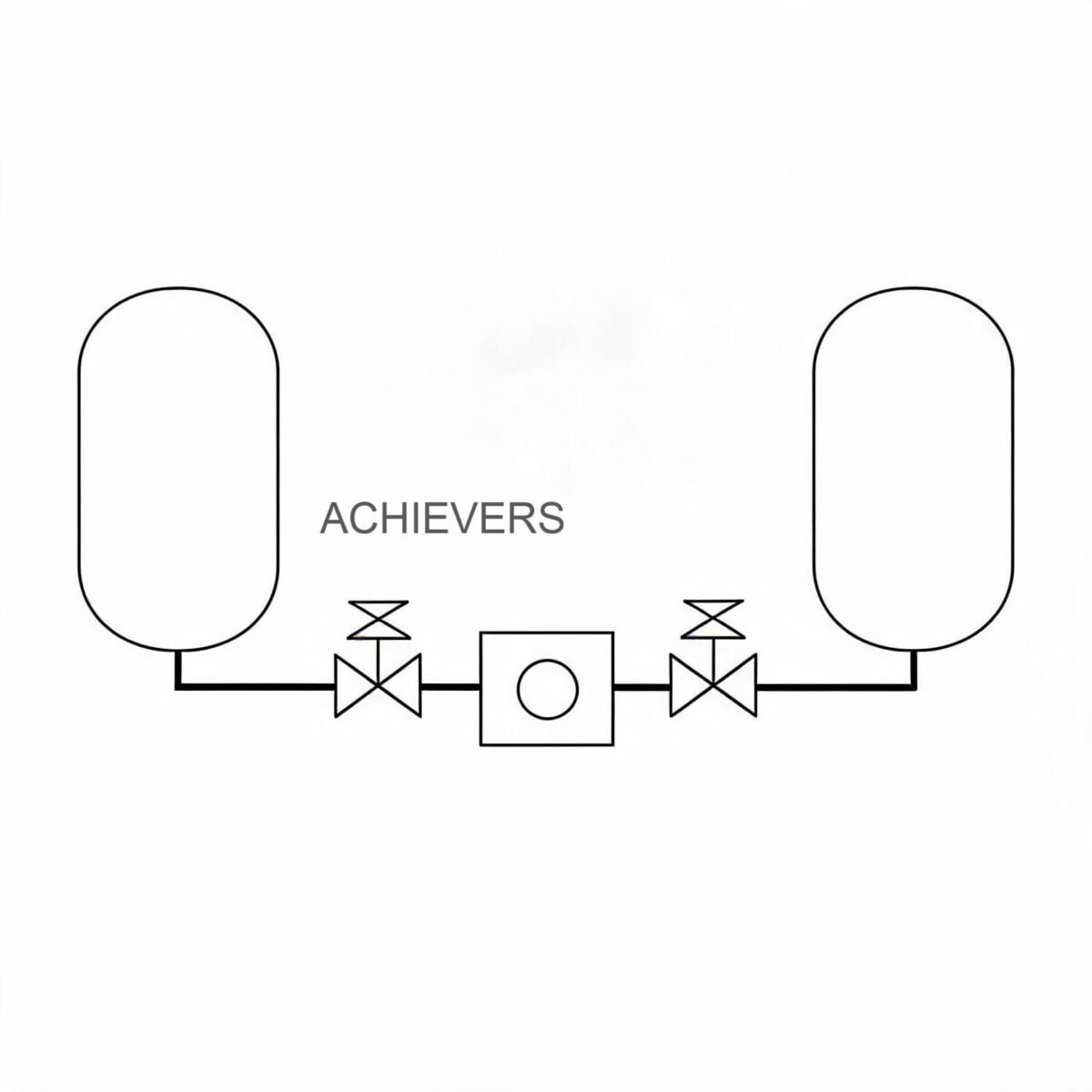
An oval gear meter operates by utilizing two synchronized, elliptical gears that rotate within a machined measuring chamber. As fluid pressure forces the gears to turn, they sweep a highly specific, unchanging volume of fluid from the inlet to the outlet with every rotation.
The volumetric flow calculation is deterministic.
Flow Rate (Q) = Swept Volume per Revolution (V) x Gear Rotational Frequency (N)
Because oil is incompressible, the primary source of error is "slip"—the tiny amount of fluid that bypasses the gears through mechanical clearances.
Actual Volume = (Pulse Count / K-Factor) + Slip Volume
Remarkably, as oil viscosity increases (e.g., cold engine oil), slip decreases, meaning the Achievers batching system often exceeds its stated ±0.5% exactness when handling thicker transmission fluids. The integrated controller continuously counts the magnetic pulses generated by the rotating gears, calculating real-time volume. Once the target batch volume approaches, the controller sends a signal to the solenoid valve.
3. Typical Installation Scenarios in This Industry
The modularity of the Liquid Batching Systems allows them to be deployed across multiple specialized zones within an automotive assembly plant.
Scenario A: Engine Block Initial Fill (Motor Oil)
In this critical station, engines arrive completely dry on the conveyor. The system is configured to draw 5W-30 synthetic oil from a 1,000-liter IBC tote. The operator inputs the specific engine code into the batch controller (e.g., Preset 1 for 3.2 liters, Preset 2 for 4.5 liters). The operator inserts the non-drip nozzle into the oil filler neck and presses start. The 220 V AC pump engages, pushing the oil through the oval gear meter at up to 60 Litre/Min. At 0.2 liters before the target, the controller shifts the solenoid valve to a restricted flow state, before snapping completely closed at the exact ±0.5% target mark to prevent over-pressurization and splashing.
Scenario B: Transmission Fluid (ATF/CVT) Dispensing
Transmission fluids are highly sensitive to contamination and require exact volumetric dosing to ensure correct hydraulic pressure within the gearbox. Here, the batching system is equipped with a fine 10-micron upstream strainer to protect both the oval gears and the vehicle transmission. Because ATF is highly viscous, the system's positive displacement mechanism ensures that the ±0.5% accuracy is maintained regardless of whether the factory ambient temperature is 18°C or 42°C.
Scenario C: Commercial Vehicle Differential Fill (Heavy Gear Oil)
Heavy commercial vehicle assembly lines deal with 80W-90 or 85W-140 gear oils. These fluids are exceptionally thick, challenging standard pumps. The Liquid Batching System’s robust Achievers brand pump provides the necessary head pressure to move this sludge-like oil. The batch controller is preset to deliver 12 liters. The unyielding rigidity of the oval gear chamber prevents gear deformation under the high pressure required to move this fluid.
4. Compliance, Accuracy, and Calibration Requirements
For an automotive plant operating under IATF 16949 quality management standards, every component of the manufacturing process must be verifiable, repeatable, and documented. If a batch of vehicles leaves the factory with underfilled gearboxes, the resulting warranty claims can cost millions of rupees. Therefore, the batching system with oval gear meter preset controller acts not just as a dispenser, but as a critical quality control gateway.
Furthermore, if the fluids dispensed are flammable (such as diesel or certain solvent-based additives), the installation may fall under the purview of PESO (Petroleum and Explosives Safety Organisation) in India, requiring specific flameproof (Ex d) enclosures for the electrical components. For standard lube oils, non-flameproof 220 V AC enclosures are generally sufficient, provided they meet IP65 ratings for dust and water resistance to survive factory washdowns.
Engineering Calibration Procedure
To maintain the stated ±0.5% accuracy, instrumentation engineers must periodically calibrate the liquid batching system. This is a critical maintenance procedure.
- System Purging: Run the pump and dispense at least 10 liters of the target fluid back into the source tank to purge any entrapped air from the lines and meter chamber. Air bubbles will register as false volume.
- Setup Proving Measure: Place a Legal Metrology-certified volumetric proving can (e.g., 20 liters) on a level surface beneath the dispensing nozzle.
- Set Preset: Program the batch controller to a 20.00-liter preset.
- Dispense and Record: Initiate the batch. Allow the solenoid valve to automatically shut off the flow. Let the nozzle drip for exactly 30 seconds into the can.
- Read Actual Volume: Read the meniscus level on the certified proving can. Note the actual fluid temperature, as thermal expansion affects absolute volume.
- Calculate Error Percentage: Error % = ((Controller Display Volume – Actual Can Volume) / Actual Can Volume) x 100.
- Adjust K-Factor: Access the controller's engineering menu. If the system dispensed less than the display showed, decrease the K-factor pulse value proportionally. If it dispensed more, increase the K-factor.
- Verify Repeatability: Empty the proving can, allow it to drain for 1 minute, and repeat the test twice more to ensure the results fall within the ±0.5% tolerance band consistently.
5. ROI and Operational Benefits
Investing to buy liquid batching system for industrial oil dispensing yields immediate and measurable returns. In a manual system, operators relying on sight glasses or dipsticks naturally tend to overfill to avoid the severe penalty of underfilling. This "safety margin" of just 100 ml per vehicle translates to massive fluid wastage over an annual production run.
| Operational Benefit | Typical Improvement Matrix | Indian Industry Context & ROI |
| :— | :— | :— |
| Fluid Loss Prevention | Eliminates 100-200ml overfill per cycle | At ₹400/liter for synthetic oil, saving 150ml per car on a 1,000 car/day line saves ₹2,19,00,000 annually. |
| Cycle Time Reduction | Decreases fill time by 30-50% | High flow 60 L/Min pump capacity clears line bottlenecks, improving overall factory throughput. |
| Quality Audit Compliance | 100% digital batch traceability | Eliminates warranty rejections due to "dry starts" or blown seals from incorrect fluid levels. |
| Labor Efficiency | Frees operator during the fill cycle | The automated solenoid shut-off allows the worker to perform other assembly tasks (like fastening) while the fluid fills. |
| Contamination Control | Closed-loop transfer from barrel to engine | Prevents Indian factory dust and humidity from degrading the oil quality, preserving engine longevity. |
By upgrading to dedicated Oil Flow Meters integrated into a complete skid, plant managers move from subjective manual processes to objective, automated quality control. The sturdy construction and low maintenance requirement of the Achievers brand units mean minimal downtime—a crucial factor when downtime on an automotive line can cost upwards of ₹1,00,000 per minute.
6. Selection Checklist for This Industry
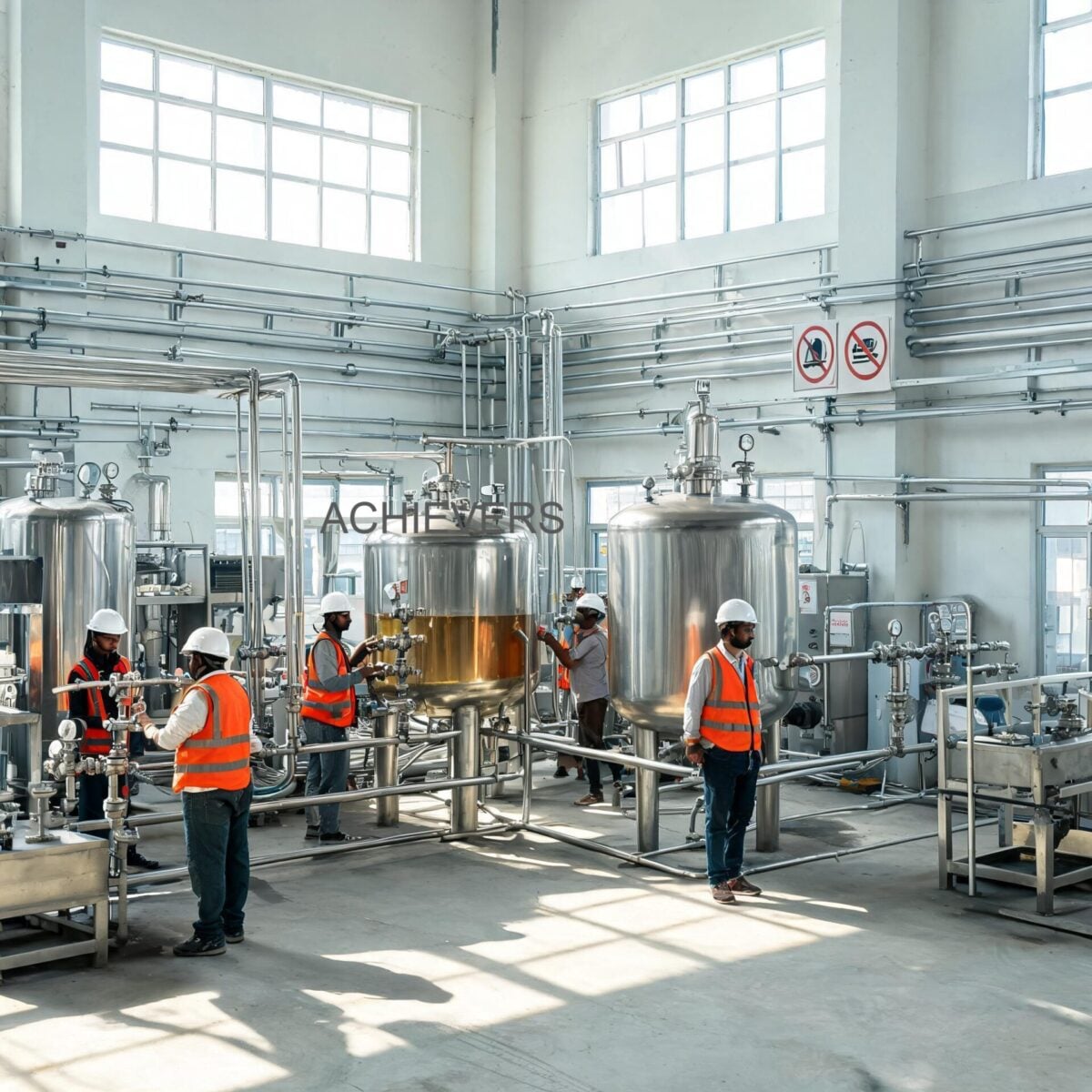
Before procuring an industrial liquid batching system, instrumentation engineers and procurement heads must evaluate the site parameters to ensure the system is built to the correct specifications. Use this decision matrix checklist when determining the required architecture:
- Fluid Viscosity Profile: Document the kinematic viscosity (in cSt) at the lowest expected winter temperature and highest summer temperature in the plant.
- Maximum Required Flow Rate: Calculate based on line takt time. (e.g., 5 liters in 15 seconds requires 20 L/Min actual flow). Ensure the 60 L/Min capacity is sufficient.
- Batch Volume Range: Identify the smallest and largest batches required. Oval gear meters are highly accurate, but extremely small batches (under 1 liter) may require specialized low-flow models.
- Power Quality and Availability: Confirm the stability of the 220 V AC supply. Specify if an inline voltage stabilizer is required to protect the controller and solenoid valve.
- Filtration Strategy: Determine the upstream strainer mesh size. A 100-mesh strainer is typically required to protect the oval gears from bulk tank debris.
- Solenoid Valve Staging: For high-flow applications, specify if a two-stage (slow-close) solenoid valve is required to prevent water hammer when the batch completes.
- Pump Suction Lift: Measure the distance from the bottom of the fluid barrel to the pump inlet. Ensure the coupled pump has adequate suction lift capabilities.
- Communication Protocols: Determine if the batch controller needs to push data to a factory PLC (via RS485, Modbus, or 4-20mA) for central quality control logging.
- Nozzle Type: Specify the requirement for manual vs. automatic non-drip nozzles at the dispensing end to maintain a clean factory floor.
FAQ
Q: Can this batching system handle varying grades of oil without recalibration?
A: Yes. Because it utilizes a positive displacement oval gear meter, the accuracy (±0.5%) is largely unaffected by changes in fluid viscosity. You can pump 5W-30 and then switch to 15W-40 without needing to recalibrate the K-factor.
Q: What happens if the power fails in the middle of a batch dispense?
A: The system is designed for industrial safety. If the 220 V AC power fails, the normally closed (NC) solenoid valve will instantly shut, stopping the flow. Advanced controllers retain the dispensed volume in non-volatile memory, allowing the batch to resume accurately once power is restored.
Q: Is the 60 Litre/Min capacity sufficient for heavy commercial vehicles?
A: A 60 L/Min flow rate translates to 1 liter per second. For heavy vehicles requiring a 30-liter oil fill, the batch will take approximately 30-35 seconds, which is well within standard commercial assembly takt times.
Q: How do we prevent water hammer when the solenoid valve closes at high flow rates?
A: The batch controller can be programmed with a two-stage closure strategy. It restricts flow to a trickle when it is within 5-10% of the target volume, and then fully closes the valve at the exact preset. This eliminates hydraulic shock to the pipes and sensors.
Q: What is the maintenance schedule for the oval gear metering mechanism?
A: Maintenance is minimal, primarily involving periodic cleaning of the upstream Y-strainer to remove debris. If pumping clean oil, the gears require inspection only every 2 to 3 years. The system is noted for its high endurance and low support requirements.
Q: Can the Achievers Liquid Batching System draw fluid directly from ground-level 210-liter barrels?
A: Yes, the systems come equipped with an integrated transfer pump. This self-priming pump generates enough suction to draw thick oils directly from ground-level drums or IBC totes, eliminating the need for elevated gravity-feed tanks.
Q: Are these systems certified for Legal Metrology in India?
A: While standard internal factory operations (like assembly line filling) do not strictly require Legal Metrology stamping for commercial trade, the meters can be calibrated and certified by NABL-accredited labs to meet internal ISO/IATF 16949 audit requirements for volumetric accuracy.
To request a customized technical proposal for integrating these precise fluid handling systems into your assembly or service lines, contact our engineering team with your specific fluid type, required batch volumes, and daily production cycle rates. We specialize in configuring complete Achievers-brand Liquid Batching Systems tailored to the rugged demands of the Indian manufacturing environment.