
Efficient fleet refueling operations require a delicate balance between high volumetric throughput and absolute fluid control. At the terminal end of any commercial diesel transfer system, the dispensing hardware acts as the final control element, directly impacting transfer speeds, operator safety, and volumetric accountability. For industrial engineers and depot managers, specifying the correct dispensing interface is as critical as selecting the primary transfer pump or the bulk storage containment system. Substandard dispensing hardware leads to premature wear, hydraulic shock within the piping infrastructure, and costly hydrocarbon spills due to auto-shutoff failures.
To mitigate these risks, modern fleet depots rely on engineered Fuel Nozzles designed to handle the specific fluid dynamics of commercial diesel. Unlike passenger vehicle dispensers, industrial-grade nozzles must accommodate higher kinematic viscosities, manage substantial pressure differentials, and integrate seamlessly with precision metering systems without inducing restrictive pressure drops.
1. Industry Overview: The Fluid Challenge in Fleet Refueling
In heavy-duty fleet depots—serving municipal buses, long-haul logistics networks, and mining operations—dispensing systems are subjected to continuous duty cycles under harsh environmental conditions. The primary fluid challenge in these environments involves managing the kinetic energy of diesel moving at elevated velocities. When a dispensing valve is closed rapidly, the sudden deceleration of the fluid column generates a pressure transient known as hydraulic shock, or water hammer. This shockwave travels back through the system, potentially damaging seals, flow meter rotors, and pump housings.
Furthermore, high-throughput diesel dispensing introduces significant aeration and foaming. Diesel fuel has a higher tendency to foam than lighter distillates like gasoline, particularly when forced through a restrictive spout at high velocities. This foam can prematurely trigger the vacuum sensing port on standard auto-shutoff mechanisms, causing frustrating "short-cycling" that drastically reduces depot throughput and frustrates operators.
Heavy industrial setups also require strict adherence to global safety and environmental standards, including ATEX or IECEx certifications for use in potentially explosive atmospheres, and API standards for hydrocarbon transfer. Operators require dispensing hardware that provides reliable, instantaneous flow cessation when the receiving tank reaches maximum safe capacity, preventing environmental contamination and ensuring compliance with stringent site safety protocols.
2. Product Capabilities Matched to Industry Needs
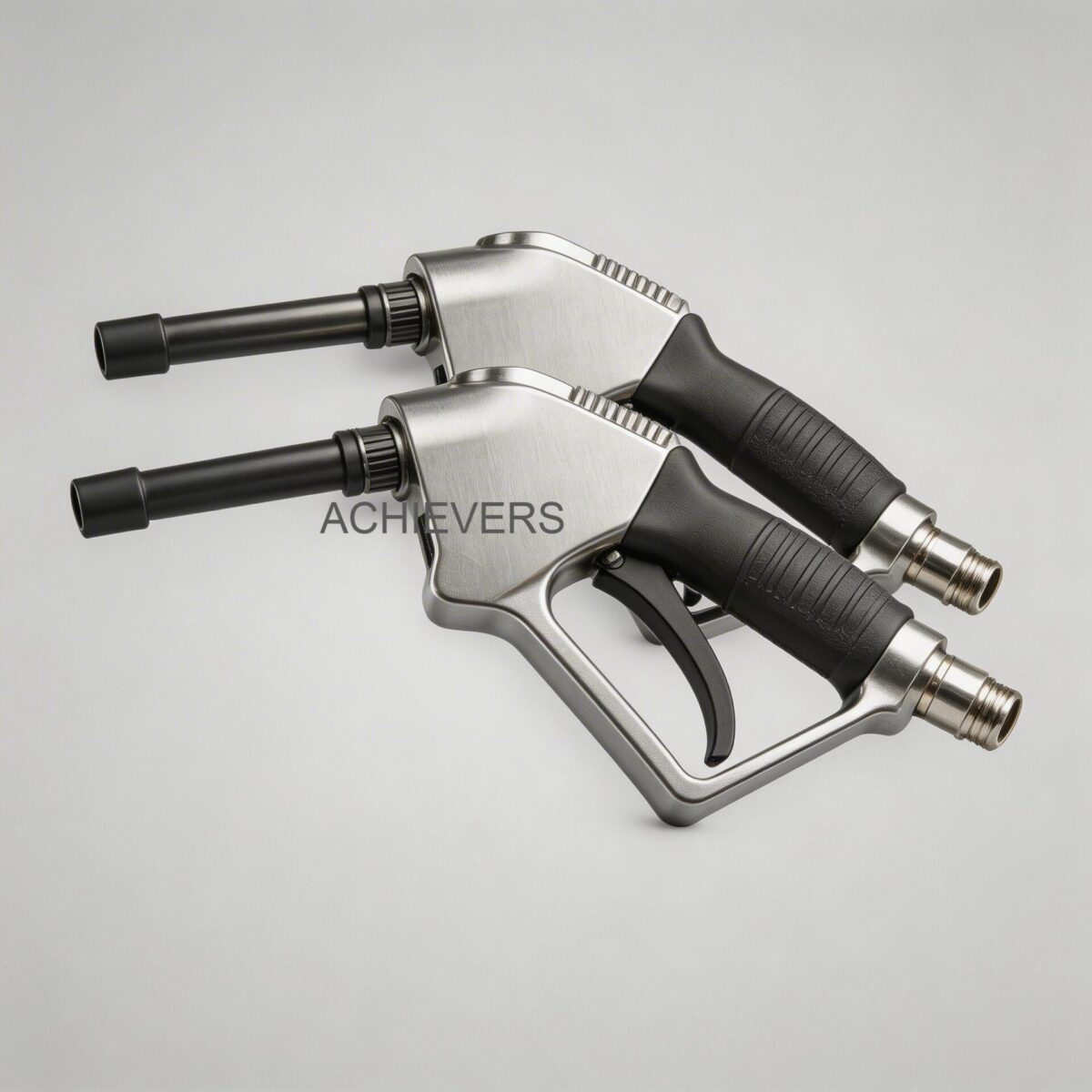
To address the rigorous demands of global fleet operations, purpose-built Fuel Nozzles are manufactured to precise metallurgical and hydraulic specifications. Available in both purely mechanical automatic shutoff configurations and models featuring integrated digital flow meters, these units provide the durability and accuracy required for commercial accountability.
The following table details how specific engineering features address the core operational requirements of high-volume fleet refueling depots.
| Industry Requirement | Dispensing Hardware Feature | How It Addresses the Need |
| :— | :— | :— |
| High Volumetric Throughput | Optimized internal flow path | Accommodates flow rates from 0 to 60 L/min without inducing cavitation or excessive pressure drop across the valve body. |
| Spill Prevention & Overfill Protection | Venturi-actuated automatic shutoff | Utilizes a vacuum-driven diaphragm to instantly release the hold-open latch when fuel or foam covers the sensing port at the spout tip. |
| System Pressure Management | Rated for 0.18 MPa (1.8 bar) operating pressure | Ensures safe continuous operation within the standard pressure envelope of commercial Diesel Dispensers, preventing seal blowout. |
| Standardized Infrastructure Integration | BSP 3/4" Inlet Thread | Provides seamless, leak-free connection to standard industrial dispensing hoses and swivel joints without the need for flow-restricting adapters. |
| Commercial Vehicle Compatibility | 13/16" Spout Diameter | Perfectly sized for standard commercial diesel tank filler necks, providing a snug fit that minimizes splashing and vapor escape during high-speed delivery. |
| Operator Ergonomics & Fatigue Reduction | Lightweight aluminum construction (1.14 kgs/pc) | Reduces musculoskeletal strain on operators managing continuous, back-to-back refueling cycles throughout long shifts. |
| Visual Identification & Safety | Red insulator slipcover | Provides immediate visual confirmation of the product type (customizable by site standards) and protects operators from temperature extremes and impact. |
| Point-of-Delivery Accountability | Optional Integrated Digital Metering | Allows for dual-measurement and highly accurate batch tracking directly at the nozzle, ideal for decentralized or mobile refueling operations. |
3. Technology Comparison & Engineering Principles
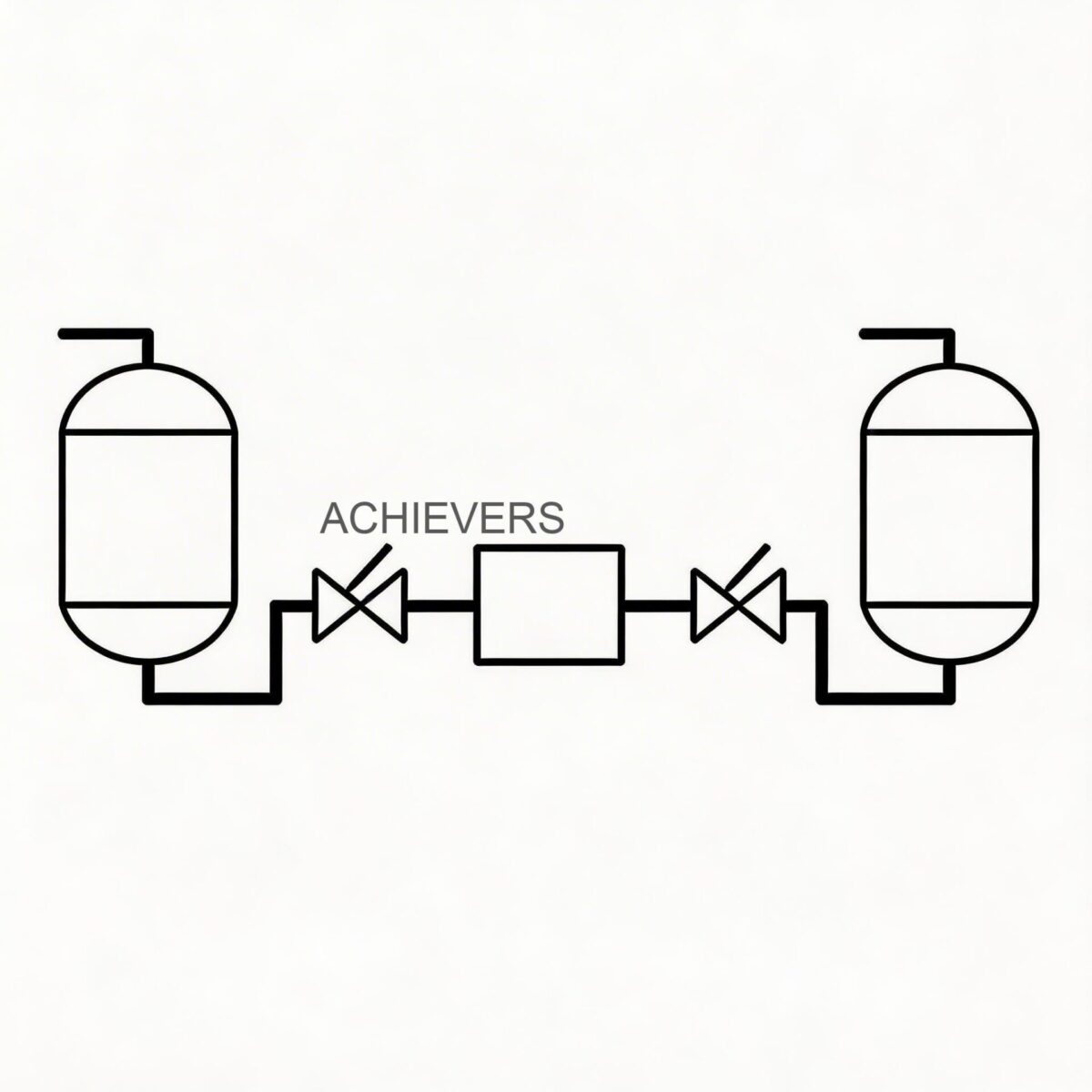
When designing a fleet refueling architecture, instrumentation engineers must select the appropriate metering technology to pair with the dispensing nozzle. Because our site covers a unique breadth of measurement technologies, it is crucial to understand how different flow measurement principles interact with the physical dispensing hardware.
Flow Measurement Technology Comparison for Fuel Dispensing
| Parameter | Turbine Flow Meters | Positive Displacement (PD) Meters | Electromagnetic Flow Meters | Vortex Flow Meters |
| :— | :— | :— | :— | :— |
| Operating Principle | Fluid velocity spins a bladed rotor. | Fluid is divided into precise volumetric pockets. | Faraday’s Law of Electromagnetic Induction. | Von Kármán effect (vortex shedding). |
| Integration with Nozzles | Highly common. Easily miniaturized for "digital nozzle" integration. | Common in stationary depot dispensers, rarely on the nozzle itself due to weight. | Not applicable. Diesel is non-conductive. | Rare. Requires high Reynolds numbers and straight pipe runs not possible in a nozzle. |
| Pressure Drop (ΔP) | Low to Moderate. | Moderate to High. | Zero (full bore). | Moderate. |
| Accuracy / Turndown | ±1.0% integrated, ±0.5% inline. | ±0.2% to ±0.5%. Highly accurate at low flows. | N/A for hydrocarbons. | ±1.0%, poor at very low velocities. |
| Viscosity Tolerance | Best for low-viscosity fluids (diesel, gasoline). | Excellent for high-viscosity fluids (heavy oils, lubricants). | N/A for hydrocarbons. | Sensitive to viscosity changes. |
Engineering Principle: The Automatic Shutoff Mechanism
The automatic shutoff capability of industrial Fuel Nozzles relies on applied fluid mechanics, specifically Bernoulli's principle and the Venturi effect.
As diesel flows through the main valve body and past the poppet valve, it passes through a restrictive seat that increases the fluid velocity. According to Bernoulli’s equation, this localized increase in velocity results in a corresponding drop in localized pressure:
P1 + ½ρv1² + ρgh1 = P2 + ½ρv2² + ρgh2
Within the nozzle, this localized low pressure creates a vacuum in a small Venturi tube connected to a sensing port at the tip of the spout. Under normal dispensing conditions, air is drawn into this port, satisfying the vacuum. However, when the fuel level in the tank rises and covers the sensing port, air can no longer enter. The vacuum immediately intensifies, pulling a flexible diaphragm upward. This mechanical movement trips the sear of the hold-open clip, causing the heavy main spring to slam the poppet valve shut, terminating the flow in a fraction of a second.
4. Typical Installation Scenarios in Fleet Depots
Integrating dispensing hardware into a commercial environment requires understanding the specific operational constraints of the site.
Scenario 1: Municipal Bus Terminals (High-Frequency Batching)
- Setup: Stationary dual-hose dispensers drawing from subterranean centralized storage tanks via submersible turbine pumps.
- Configuration: Mechanical automatic shutoff nozzles with BSP 3/4" inlets paired with heavy-duty breakaway valves and multi-plane swivels.
- Key Settings: Pump pressure regulated strictly below 0.18 MPa to prevent overriding the main nozzle spring. The 13/16" spout ensures proper insertion depth into the bus fuel tank, mitigating premature shutoff caused by the severe foaming typical of high-speed transit refueling.
Scenario 2: Remote Mining Equipment Refueling (Mobile Transfer)
- Setup: Lube trucks outfitted with mobile transfer tanks driving directly to heavy earth-moving equipment.
- Configuration: Fuel nozzle with an integrated digital flow meter.
- Key Settings: The integrated Turbine Flow Meters inside these nozzles are calibrated specifically for the kinematic viscosity of off-road diesel operating at extreme ambient temperatures. The digital readout allows the operator to record precise consumption metrics for individual pieces of equipment without relying on a centralized depot PLC.
Scenario 3: Logistics Hubs for Long-Haul Trucking
- Setup: Master/satellite dispenser configurations allowing simultaneous refueling of dual saddle tanks on articulated lorries.
- Configuration: High-flow optimized nozzles operating near the maximum 60 L/min capacity.
- Key Settings: Latching hold-open clips engaged. Operators rely completely on the Venturi auto-shutoff mechanism to prevent overfill while they clean windshields or conduct visual vehicle inspections, making the sensitivity and reliability of the vacuum diaphragm the most critical safety parameter on the site.
5. Decision Matrix & Operational Benefits
Selecting the correct dispensing hardware directly impacts the bottom line of fleet operations. Use the following decision matrix to determine the optimal configuration for your site.
'When to Use This Technology' Decision Matrix
- If the primary need is high-speed bulk transfer into large, single tanks…
- Select: Standard mechanical automatic shutoff nozzle. Maximize pump output up to 60 L/min and rely on the station's primary positive displacement meter for accounting.
- If the primary need is decentralized dispensing from mobile bowsers or gravity-fed IBCs…
- Select: Digital metering nozzle. The integrated turbine meter provides local volume tracking where stationary dispensers are impractical.
- If the transfer fluid has a high viscosity (e.g., heavy gear oil or bunker fuel)…
- Avoid: Standard diesel nozzles. The Venturi auto-shutoff is calibrated for the specific gravity and viscosity of diesel/gasoline. Highly viscous fluids will cause excessive pressure drop and fail to actuate the vacuum mechanism correctly.
- If the system pressure exceeds 0.18 MPa (1.8 bar)…
- Action: Install a pressure reducing valve upstream, or specify a specialized high-pressure nozzle. Standard commercial units will experience seal bypass and fail to shut off reliably at pressures exceeding 0.18 MPa.
ROI and Operational Benefits
| Benefit Category | Typical Improvement | Operational Context |
| :— | :— | :— |
| Loss Prevention | Elimination of overfills and thermal expansion spills. | A reliable auto-shutoff mechanism prevents the costly loss of diesel, drastically reducing environmental remediation costs and soil contamination risks. |
| Labor Efficiency | 30% reduction in refueling time per vehicle. | Features like hold-open latches and 0-60 L/min flow capacities allow operators to multitask during the dispensing cycle. |
| Maintenance Uptime | Extended lifespan of dispensing hoses. | Utilizing multi-plane swivels at the BSP 3/4" inlet prevents hose kinking and torque shear, extending the MTBF (Mean Time Between Failures) of the entire dispensing assembly. |
| Accounting Accuracy | Sub-1% variance in mobile inventory. | Integrated digital metering variants ensure every drop dispensed from mobile transfer tanks is accounted for, eliminating "shrinkage." |
6. Selection Checklist for Fleet Refueling
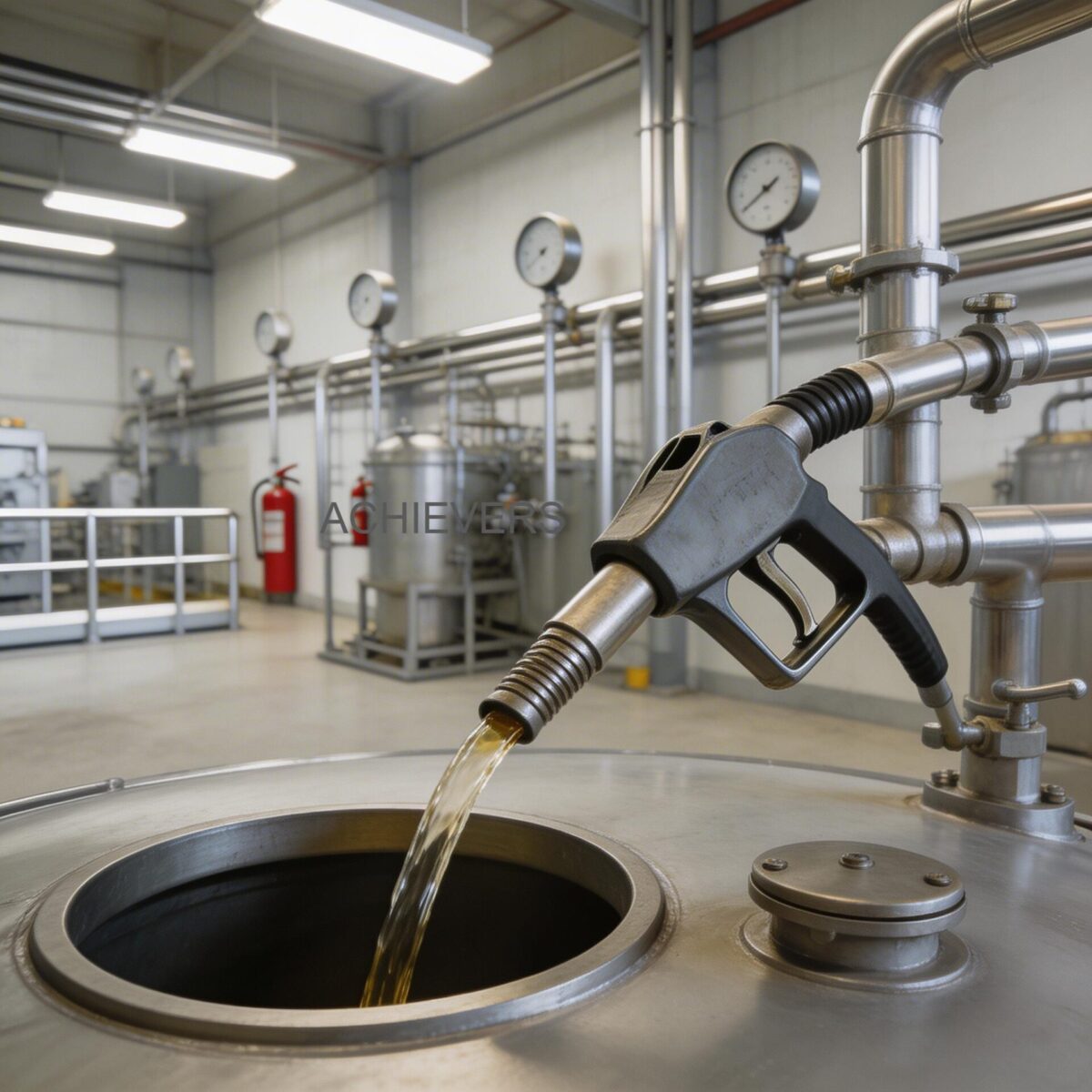
To ensure absolute compatibility and safety when procuring dispensing hardware for industrial depots, procurement heads and engineering teams should utilize the following 8-point specification checklist:
- Define Maximum Flow Rate: Verify that the primary transfer pump output does not exceed the nozzle's maximum rated capacity (e.g., 60 L/min). Exceeding this causes turbulent flow, severe foaming, and continuous premature shutoff.
- Verify Operating Pressure: Ensure system working pressure is strictly regulated below the nozzle's maximum rating (0.18 MPa / 1.8 bar) to ensure the poppet valve spring can overcome hydraulic force to shut off.
- Specify Inlet Thread Standard: Confirm the hose infrastructure matches the nozzle inlet (e.g., BSP 3/4"). Mismatched threads require adapters which create potential leak points and pressure drops.
- Determine Spout Diameter: Select a spout diameter (e.g., 13/16") that provides optimal clearance for the target vehicle's filler neck to allow air to escape, preventing dangerous splash-back.
- Assess Metering Requirements: Decide between a purely mechanical nozzle (relying on a central dispenser meter) or a model with an integrated digital flow meter for point-of-use accounting.
- Evaluate Fluid Compatibility: Confirm wetted materials (aluminum body, Viton/Nitrile seals) are chemically compatible with the specific hydrocarbon being transferred (diesel, gasoline, or kerosene).
- Select Insulator Preferences: Specify the insulator color (e.g., Red) based on site-specific fluid color-coding standards to prevent accidental cross-contamination of fuel types.
- Include Swivel Requirements: Always specify an inline swivel joint to reduce operator fatigue (base weight 1.14 kgs) and prevent premature torsional failure of the dispensing hose.
FAQ
Q: Why does the automatic shutoff mechanism keep tripping before the tank is full?
A: This is usually caused by excessive flow velocity generating severe diesel foaming. The foam travels up the filler neck and covers the spout's sensing port, creating a false "full tank" vacuum. Reducing pump pressure or adjusting the insertion angle usually resolves this.
Q: What is the maximum operating pressure for these standard depot nozzles?
A: The specified maximum operating pressure is 0.18 MPa (approximately 1.8 bar or 26 PSI). Operating above this pressure can prevent the internal spring from successfully closing the poppet valve against the force of the fluid.
Q: Can I use a digital metering nozzle for custody transfer or commercial billing?
A: While integrated digital turbine meters are highly accurate (often ±1.0%), true commercial billing (custody transfer) typically requires legal metrology certification (such as OIML or NTEP) which is usually achieved via the primary positive displacement meter inside the stationary dispenser, not the nozzle itself.
Q: How frequently should the nozzle be inspected or calibrated?
A: Visual inspections of the spout, hold-open clip, and sensing port should occur daily. If using a digital metering variant, calibration against a known volumetric proving can should be conducted every 6 to 12 months, depending on the volume of fuel processed.
Q: What thread standard is used for the hose connection?
A: The standard inlet connection is BSP 3/4" (British Standard Pipe). It is critical to match this exactly with your hose or swivel fittings to ensure a safe, pressure-tight seal without the use of thread sealants that could contaminate the fuel.
Q: Will this nozzle work with high-viscosity engine oils or hydraulic fluids?
A: No. The Venturi vacuum mechanism and internal flow paths are engineered specifically for the kinematic viscosity of diesel and gasoline. Highly viscous oils will not generate the correct pressure differential to trigger the automatic shutoff reliably.
Q: Can the integrated digital flow meter be calibrated in the field?
A: Yes. Digital metering variants feature an electronic interface that allows technicians to adjust the K-factor (calibration factor) in the field to account for slight variations in fluid specific gravity and operating temperature.
For specialized engineering support regarding your fleet refueling infrastructure, contact our technical team with your desired flow rate (L/min), target fluid specifications, operating pressure limits, and specific site conditions to receive a tailored recommendation for dispensing hardware and metering integration.