
For Indian plant managers, industrial engineers, and procurement heads, managing fuel inventory is a critical operational challenge. In industries ranging from mining and construction to petrochemicals and logistics, diesel is a high-cost commodity. Relying on rudimentary transfer pumps or inaccurate gravity-fed systems often results in inventory shrinkage, metering disputes, and severe safety hazards. When dealing with bulk fuel transfers—where equipment investments range from ₹20,000 to ₹10,00,000—selecting the right Fuel Dispensers is an engineering decision, not just a procurement task.
Understanding how to choose fuel dispensers for industrial refueling requires a deep dive into duty cycles, required accuracy, flow rates, and site-specific safety compliance. Indian site conditions present unique challenges: extreme ambient heat (up to 50°C), heavy particulate dust in mining zones, erratic rural power grids with severe voltage fluctuations, and monsoon humidity that accelerates corrosion. You need a system built to handle these brutal conditions while delivering metrological accuracy. This guide provides a specification-led framework to help you navigate these variables and source the correct dispenser configuration for your facility.
1. What Is Fuel Dispensers and What Does It Do
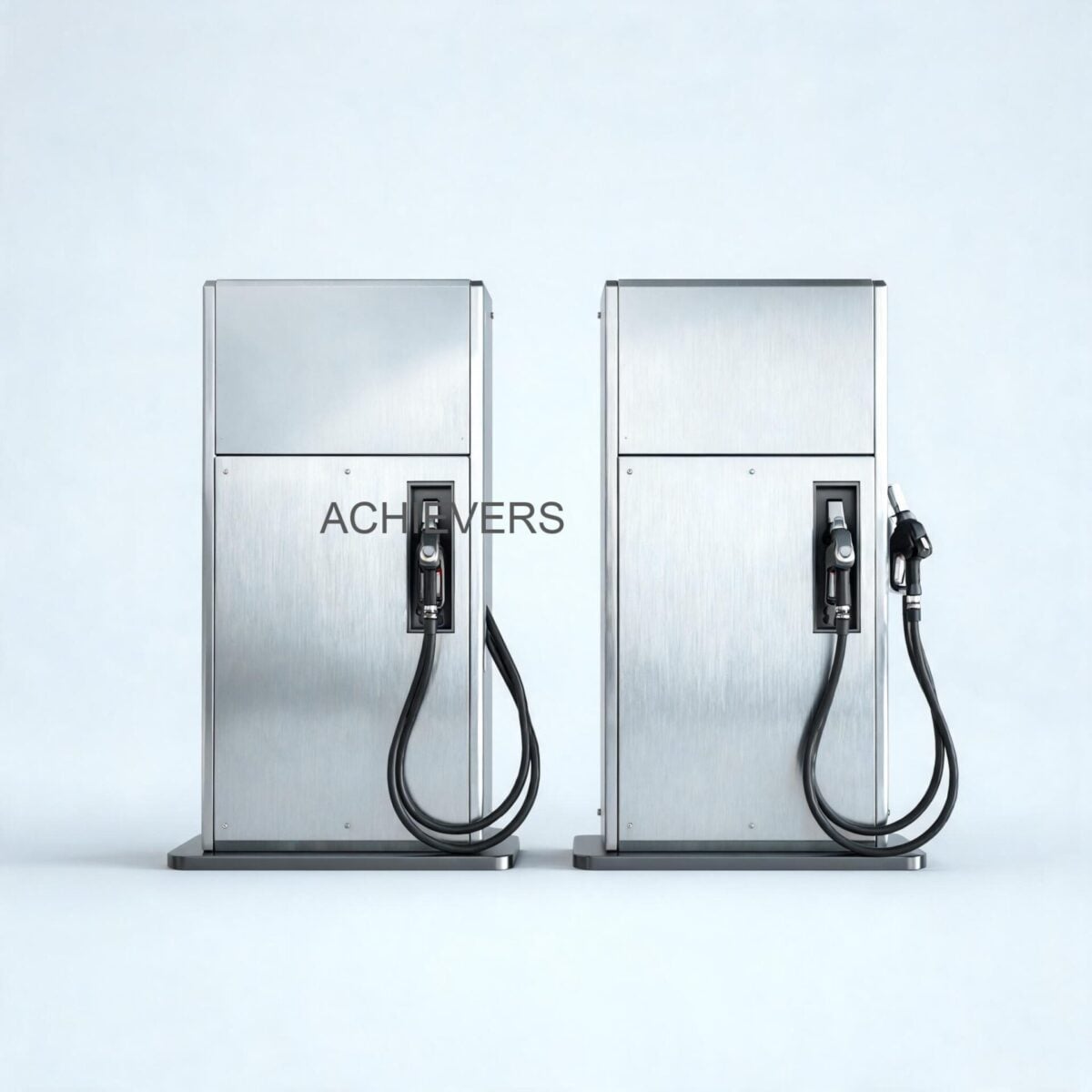
At its core, a fuel dispenser is a highly engineered electromechanical system designed to administer, screen, measure, and safely transfer fluid fuels such as diesel, gasoline, or kerosene into a vehicle, heavy equipment, or storage tank.
The architecture of our Fuel Dispensers consists of three primary subsystems: the hydraulic section, the metering unit, and the dispensing (hose/nozzle) portion. A continuously running electric motor drives a high-capacity rotary gear pump, maintaining a partial vacuum at the inlet. When the auto-shutoff nozzle is opened, this suction draws fuel from the storage tank or barrel. The fuel first passes through a large-capacity filter to remove suspended solids and air bubbles—critical for protecting the downstream precision components. It then enters the metering unit, which utilizes precision flow sensors (often positive displacement mechanisms or piston encoders) to calculate exact volume. Finally, the metered fuel travels through a durable 4-meter rubber hose into the receiving tank.
Below is the technical specification baseline for these industrial units:
| Specification Parameter | Rated Value / Description | Engineering Notes |
| — | — | — |
| Maximum Flow Rate | Up to 60 LPM (Liters Per Minute) | Ideal for fast filling of commercial fleets and construction equipment. |
| Metering Accuracy | +/- 0.5% of reading | Ensures precise inventory tracking; suitable for internal company dispensing. |
| Repeatability | +/- 0.1% of reading | Guarantees consistent batching across multiple dispensing cycles. |
| Power Supply Options | 220V/440V AC or 12V/24V DC | DC variants are critical for mobile bowsers and truck-mounted kits. |
| Hose & Nozzle | 4 Meter Rubber Hose, Auto-Shutoff | Auto-stop feature prevents tank overfilling and hazardous spills. |
| Display Interface | Backlit Digital Display with Totalizer | Resettable batch and cumulative totaliser; easy visibility during night shifts. |
2. Key Selection Criteria for Indian Industrial Buyers
When acting as a discerning buyer or searching for a reliable Fuel Dispensers supplier in India, you must evaluate the equipment against the rigorous demands of your specific site. An under-specified dispenser will fail prematurely, while an over-specified unit bloats your capital expenditure.
1. Flow Rate and Duty Cycle Sizing
The dispenser must match the required turnaround time of your fleet. A standard flow rate of up to 60 LPM is optimal for standard trucks, forklifts, and mid-sized construction machinery. For massive mining dumpers, high-flow variants may be necessary. Furthermore, consider the duty cycle. Continuous commercial dispensing requires heavy-duty thermal overload protection on the motors, especially under the Indian summer sun, to prevent winding failure.
2. Metering Accuracy and Fluid Dynamics
Fuel dispensers metering accuracy and calibration is the most critical factor for cost control. The standard +/- 0.5% accuracy is achieved through precision-machined flow sensors. However, diesel viscosity changes with temperature (thicker in Himalayan winters, thinner in Rajasthan summers). This temperature shift alters the "slip" inside mechanical meters.
Engineering Calibration Note: Modern digital dispensers rely on a K-Factor (Pulses per Liter). If you change the fluid type or notice seasonal drift, you must physically calibrate the unit using a certified proving can. The field calibration formula is:
New K-Factor = (Actual Volume Dispensed / Displayed Volume) * Current K-Factor
3. Power Supply Compatibility
Indian industrial sites often suffer from poor power quality. If you are operating a stationary depot connected to the grid, a 220V AC motor is standard. However, voltage drops in remote areas can stall AC motors. For construction and mining applications where dispensing occurs via mobile bowsers, 12V or 24V DC configurations running directly off the truck’s alternator and battery are mandatory.
4. Particulate Filtration (Contamination Control)
Adulterated or poorly stored diesel in India frequently contains rust, dust, and water. Passing contaminated fuel through high-precision positive displacement meters will score the mechanical internals, instantly degrading accuracy. A built-in, large-capacity pre-filter is non-negotiable.
5. Safety and Environmental Compliance
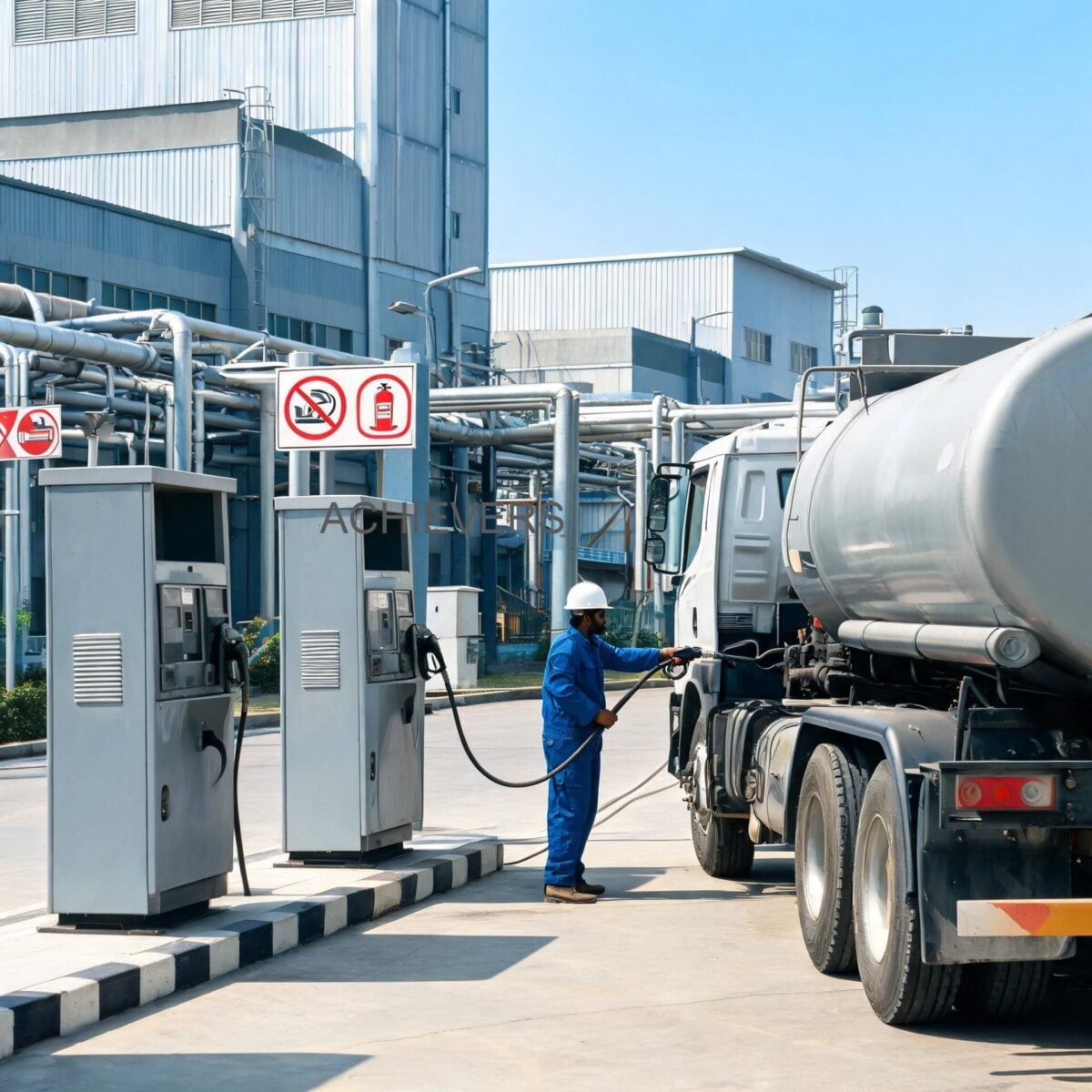
Depending on the fuel type and site zoning, you may require Flameproof (FLP) certified motors. Diesel has a higher flash point than gasoline and is generally safer, but if installed in a petrochemical plant rated as a Hazardous Area (Zone 1 or Zone 2), FLP enclosures certified by PESO (Petroleum and Explosives Safety Organisation) are mandatory to prevent spark ignition.
6. User Interface and Audit Trails
Industrial refueling often happens around the clock. A large numeral backlit digital display ensures visibility for night-shift operators. The presence of a resettable batch totalizer and a secure cumulative totalizer allows management to cross-reference physical inventory with dispensed volumes, minimizing pilferage.

3. Technology Comparison & Decision Matrix
No single flow measurement technology is perfect for every application. To make an informed decision, industrial engineers must compare the underlying metering technology inside the dispenser against other flow measurement paradigms. While fuel dispensers predominantly use Positive Displacement (PD) meters due to their viscosity tolerance, how do they stack up against alternatives?
Flow Measurement Technology Comparison Table
| Parameter | Positive Displacement (Used in Fuel Dispensers) | Turbine Flow Meters | Electromagnetic Flow Meters |
| — | — | — | — |
| Operating Principle | Traps discrete volumes of fluid in mechanical chambers. | Fluid spins a rotor; rotational speed is proportional to flow. | Faraday’s Law of Induction (requires conductive fluid). |
| Accuracy Class | +/- 0.5% (Excellent for fuel inventory). | +/- 1.0% (Highly dependent on stable flow profile). | +/- 0.2% to 0.5% (Highly accurate). |
| Viscosity Tolerance | High. Performance actually improves slightly with thicker diesel. | Low. High viscosity dampens the rotor, causing major errors. | N/A. But requires fluid conductivity > 5 µS/cm. |
| Suitability for Diesel | Optimal. Diesel lubricates the internal mechanical parts. | Fair. Good for thin, clean liquids but sensitive to wear. | Incompatible. Diesel is non-conductive (hydrocarbon). |
| Pressure Drop | Moderate to High (due to mechanical resistance). | Low to Moderate. | Zero (unobstructed flow tube). |
"When to Use This Technology" Decision Matrix
- Choose Positive Displacement Dispensers: When you need a complete standalone unit (pump, meter, hose) for transferring lubricating hydrocarbons like diesel or oils with high accuracy (+/- 0.5%) and require a simple K-factor calibration.
- Choose Turbine Flow Meters: When you are dealing with very clean, low-viscosity fuels in high-volume pipeline transfers where you have long straight pipe runs to condition the flow profile.
- Choose Electromagnetic Meters: Only for conductive fluids like water, wastewater, or chemical slurries. Never use these for pure hydrocarbons like diesel or kerosene.
4. Model and Variant Comparison
Lumen Instruments (under the brand Achievers) provides several variants engineered for distinct industrial applications. Below is a technical comparison based on pricing and application duty:
| Dispenser Model | Price Range (INR) | Power Configuration | Primary Application | Best For |
| — | — | — | — | — |
| Achievers CE-101 | ₹32,499.00 | 12V/24V DC or 220V AC | Barrel Dispensing / Light Duty | Small construction sites dispensing directly from 210L drums. |
| Achievers CE-117 | ₹34,999 – ₹35,999 | 12V/24V DC or 220V AC | Mobile Truck Refueling | Mobile Diesel Dispensers mounted on light commercial vehicles. |
| Achievers CE-202 | ₹45,999.00 | 12V/24V DC or 220V AC | Medium Fleet Refueling | Stationary factory depots for forklift and logistics fleet management. |
| Achievers CE-204 | ₹82,999 – ₹86,499 | Heavy Duty / Flameproof FLP | High-Volume & Hazardous Zones | Heavy mining operations, petrochemical plants, and large bowsers. |
5. Common Mistakes Indian Buyers Make When Choosing
Procurement teams looking to buy fuel dispensers for fleet refueling depot operations often fall into costly traps by focusing solely on upfront capital expenditure rather than total cost of ownership.
- Under-Sizing the Pump Capacity: Buying a 30 LPM dispenser for a fleet of large earthmoving equipment leads to excessive idling times for trucks waiting to refuel, resulting in massive losses in operational productivity.
- Ignoring Voltage Drop in Mobile Applications: Selecting a 12V DC system for a truck setup where the cable run from the battery to the pump is overly long. The resultant voltage drop causes the motor to overdraw current, overheat, and burn out. Always size cables correctly.
- Bypassing Primary Filtration: In an attempt to increase flow rates, operators sometimes remove or bypass the built-in strainer. This allows hard silica dust and rust from old storage tanks to enter the metering chamber, immediately destroying the +/- 0.5% accuracy.
- Neglecting Viscosity Calibration: Assuming factory calibration is perfect for all site conditions. A dispenser calibrated at 25°C in a factory will exhibit slight volumetric variances when dispensing freezing diesel in a Himalayan winter environment due to changes in fluid viscosity and meter slip.
- Using Non-FLP Equipment in Classified Zones: Installing standard electrical dispensers in Zone 1 hazardous areas instead of Flameproof (FLP) models. This violates PESO regulations and creates an extreme explosion hazard from motor sparking.
6. Enquiry Specification Checklist
To ensure you receive exactly what your facility needs, use this industrial fuel dispensers specifications checklist when contacting your supplier. Providing these details upfront prevents technical mismatches.
- Fluid Specification: Specify the exact fuel (Diesel, Petrol, Kerosene, or Oil) and its expected viscosity range.
- Target Flow Rate: Define the required LPM (e.g., 40 LPM for light vehicles, 60+ LPM for heavy machinery).
- Power Availability: State clearly if you need AC (220V/440V) for stationary tanks or DC (12V/24V) for mobile bowsers.
- Accuracy Requirement: Confirm if standard +/- 0.5% is acceptable for internal monitoring, or if higher accuracy is needed for custody transfer.
- Filtration Needs: Specify if your fuel source is known to be highly contaminated so appropriate high-capacity filters can be included.
- Hose and Nozzle Type: Confirm the required hose length (standard is 4 meters) and the necessity of an auto-shutoff nozzle to prevent spills.
- Environmental Conditions: Detail the ambient temperature, humidity, and dust levels of the installation site (e.g., coastal port vs. dry mining quarry).
- Safety Certifications: State if the installation area is a classified hazardous zone requiring Flameproof (FLP) motors and PESO certification.
FAQ
Q: Can I use a standard diesel dispenser to pump petrol or aviation fuel?
A: No. Petrol and aviation fuels have much lower flash points and differ in viscosity. Pumping petrol requires strict Flameproof (FLP) certified motors and specifically compatible internal seals to prevent explosions and chemical degradation.
Q: How often should I calibrate my industrial fuel dispenser?
A: For internal fleet tracking, it is recommended to calibrate the dispenser every 6 months, or whenever there is a drastic change in seasonal temperature that affects diesel viscosity.
Q: The digital display is working, but the pump isn't drawing fuel. What is wrong?
A: This usually indicates a loss of prime due to an air leak in the suction line, a blocked internal filter, or the bypass valve being stuck open. Check the inlet plumbing for tight seals and clean the built-in large capacity filter.
Q: What is the difference between the 12V and 24V DC options?
A: Both are designed for mobile bowsers. 12V is typically used on smaller light commercial vehicles or pickup trucks, while 24V is required for larger heavy-duty trucks and earthmoving equipment that utilize a 24-volt electrical architecture.
Q: Can these dispensers be integrated with a Receipt Printer or Fleet Management Software?
A: Yes. Many advanced units, such as our Fuel Dispenser with Receipt Printer models, can output pulse signals or connect directly to fleet management controllers for automated, paperless inventory tracking.
Q: Is the 4-meter rubber hose resistant to Indian summer heat and UV exposure?
A: Yes, the hoses provided are industrial-grade, reinforced rubber designed specifically for hydrocarbon transfer and formulated to resist UV degradation and extreme ambient temperatures.
Q: What happens if the operator forgets to turn off the pump while the tank is full?
A: The standard auto-shutoff nozzle detects the rising fuel level and automatically stops the flow. Concurrently, the hydraulic section's internal bypass valve opens, allowing the fuel to circulate within the pump body safely until the motor is turned off.
To secure your fluid inventory and upgrade your site's refueling infrastructure, you need equipment engineered for longevity and precision. Contact Lumen Instruments today with your specific flow rate requirements, power availability (AC/DC), and site conditions to get a custom-tailored quote for your facility.