
For instrumentation engineers and plant managers across India, accurate industrial fuel transfer is not just a matter of fluid mechanics; it is a critical component of operational expenditure (OpEx) control. Whether you are managing diesel dispensing for a fleet of mining trucks in Jharkhand, operating high-capacity DG sets for a pharma plant in Baddi, or handling bulk unloading at a petrochemical terminal in Gujarat, your choice of measurement technology directly impacts inventory reconciliation. The market is saturated with options, leaving procurement heads to navigate a complex matrix of specifications, communication protocols, and mechanical constraints.
A recurring dilemma during equipment specification is choosing between traditional mechanical registers and modern digital-output Diesel Flow Meters. While mechanical variants offer rugged, grid-independent reliability—crucial in areas with poor power quality—digital variants open the door to SCADA integration, automated batching, and real-time leak detection via 4-20 mA or RS485 Modbus RTU outputs. This technical guide breaks down the engineering trade-offs, accuracy profiles under changing fluid viscosities, and lifecycle costs to help you specify the exact Diesel Flow Meters required for your Indian industrial application.
1. Overview of the Diesel Flow Meters Family
At their core, the vast majority of reliable Diesel Flow Meters rely on Positive Displacement (PD) technology. As a direct volumetric measurement technique, PD flow meters repeatedly entrap liquid to quantify its flow. You can conceptualize this process as mechanically filling a precision-machined bucket with fluid and dumping it downstream. The number of times this "bucket" is filled and emptied is strictly proportional to the volumetric flow.
Within the Positive Displacement Flow Meters category—which accounts for nearly 8% of global flow meter sales—entanglement is accomplished using rotating parts (such as oval gears, rotary vanes, or nutating discs) that form moving seals between each other and the meter body.
The primary distinction in the modern market is how this physical rotation is translated into actionable data:
- Mechanical Register Meters (e.g., Achievers CE-113): The rotation of the internal gears drives a magnetic or mechanical coupling connected to a gear train. This gear train directly turns the numbered wheels on a mechanical display. They require zero electrical power.
- Digital/Electronic Output Meters (e.g., Achievers CE-111 / CE-112): The rotation is detected by a sensor (usually a Hall-effect or Reed switch) that picks up magnets embedded in the rotating gears. The sensor generates raw pulses. A digital transmitter processes these pulses to display flow rate and totalized volume on an LCD, or transmits the data via Pulse, 4-20 mA analog, or RS485 digital signals to a central PLC.
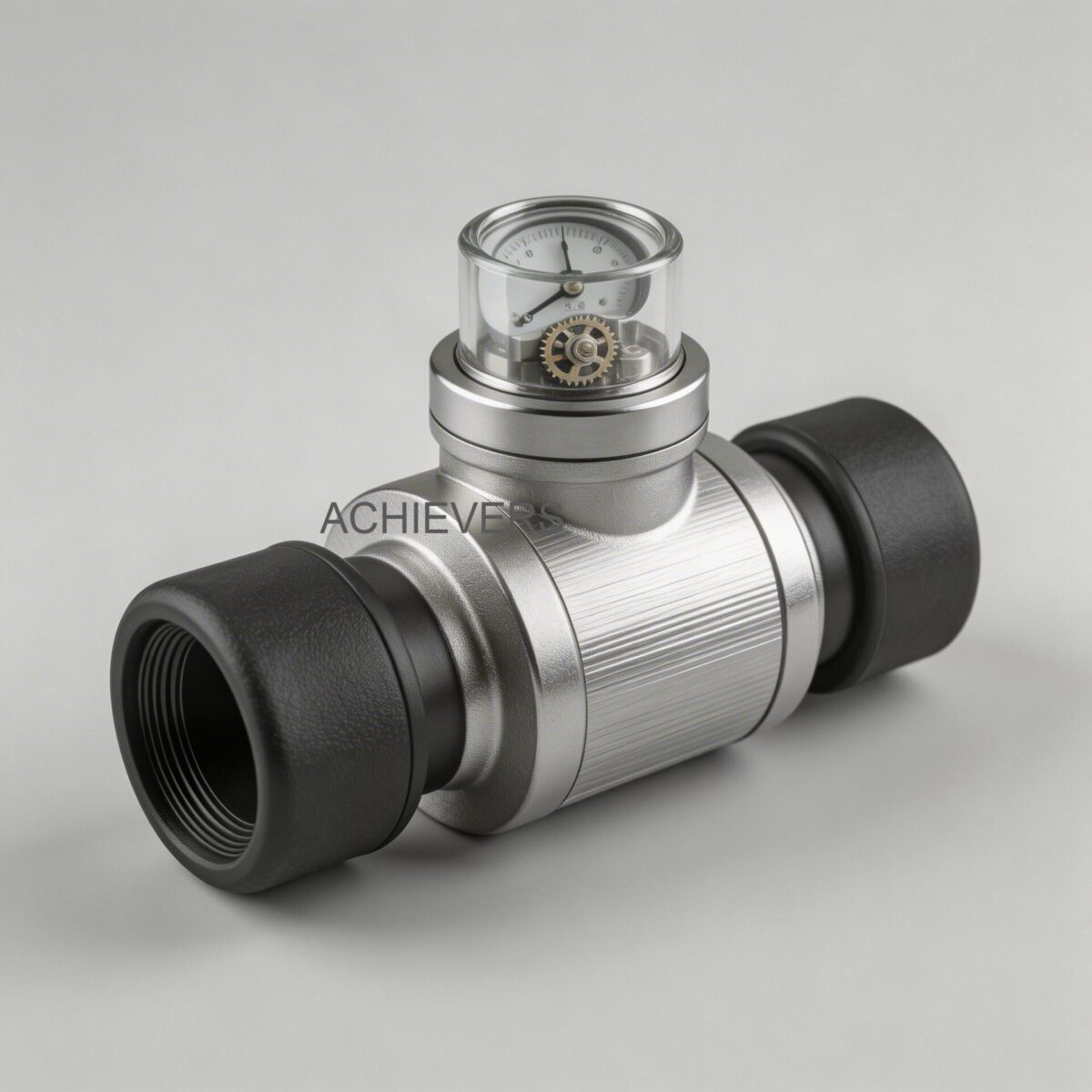
The Physics of Viscosity and Slippage
A unique engineering characteristic of PD Diesel Flow Meters is how they react to fluid viscosity. In many technologies, higher viscosity introduces measurement errors. In PD meters, expanding fluid thickness actually diminishes slippage (the fluid that escapes past the moving seals without being measured).
Surprisingly, accuracy can actually improve at low flow conditions when viscosity increases and slippage decreases. However, higher viscosity also increases the pressure drop across the flow meter. If this pressure drop exceeds the manufacturer's maximum limits, it can prematurely wear the internal bearings, leading to catastrophic meter failure.
Engineering Formula: True Volumetric Flow in PD Meters
Q_true = (V_d * N) – Q_slip
Where:
- Q_true = Actual volumetric flow rate
- V_d = Displaced volume per revolution of the gear/vane
- N = Rotational speed (RPM)
- Q_slip = Slippage rate
Q_slip is directly proportional to the differential pressure across the meter and the cube of the clearance between gears, and inversely proportional to the fluid's dynamic viscosity.
2. Head-to-Head Specification Comparison
When specifying Diesel Flow Meters for an Indian facility, the decision between mechanical and digital involves evaluating power availability, ambient conditions (dust, IP ratings, summer temperatures exceeding 45°C), and control system architecture.
Below is a technical comparison based on standard industrial variants such as the Achievers CE series.
| Feature / Specification | Mechanical Register (e.g., CE-113 / CE-110) | Basic Digital Display (e.g., CE-111) | Advanced Digital / Transmitter (e.g., CE-112) |
| :— | :— | :— | :— |
| Operating Principle | PD with mechanical gear train | PD with magnetic pickup & battery LCD | PD with active sensor & signal processor |
| Power Requirement | None (Grid independent) | 3V Lithium Battery (2-3 year life) | 12-24V DC loop or external power |
| Output Signals | Visual display only | Visual display, optional raw pulse | 4-20 mA, RS485 Modbus RTU, Scaled Pulse |
| Accuracy Rating | ±1.0% to ±1.5% | ±0.5% to ±1.0% | ±0.2% to ±0.5% (with multi-point linearization) |
| Display Type | Rotating mechanical digits (non-resettable totalizer available) | Digital LCD (Resettable batch + Cumulative total) | Backlit LCD or blind transmitter to SCADA |
| Pressure Drop (ΔP) | Moderate (gear train adds slight mechanical resistance) | Low (free spinning gears) | Low (free spinning gears) |
| Indian Site Suitability | Excellent for remote sites, dusty environments, high heat | Good for indoor/covered outdoor, susceptible to screen blackout in direct 50°C sun | Excellent for integrated plants, requires quality shielded cabling |
| Calibration Method | Mechanical gear adjustment / calibration screw | Electronic K-Factor adjustment | Multi-point electronic K-Factor mapping |
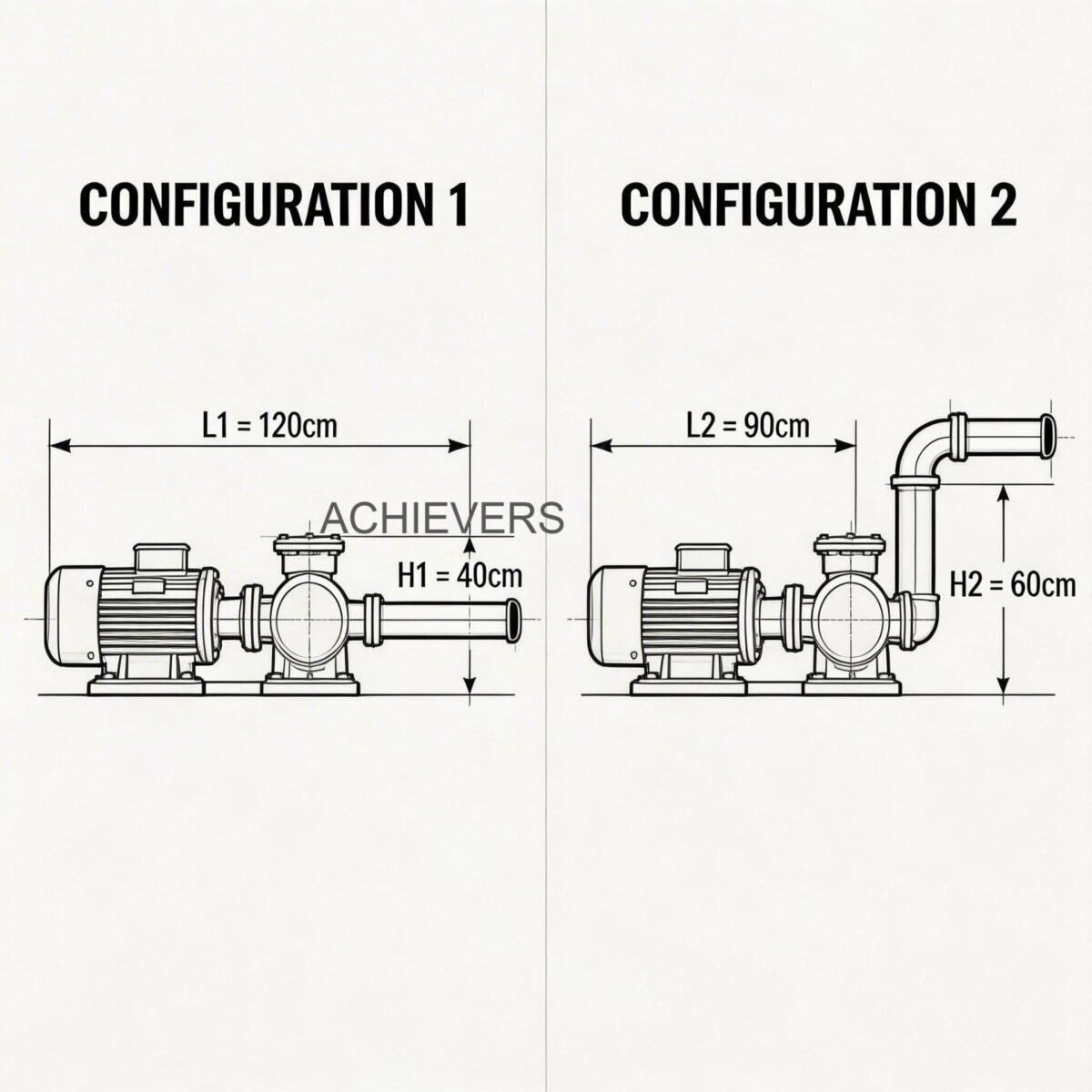
Standard Calibration Procedure for Digital Diesel Flow Meters
To ensure accuracy under Legal Metrology or internal ISO auditing standards, Indian plant engineers should follow this calibration sequence when commissioning a digital meter:
- Prime the system to ensure all air is purged. Pass the fluid through an upstream air eliminator, as air bubbles will be measured as fluid volume, causing false high readings.
- Ensure the working fluid is at the standard operating temperature, as thermal expansion alters diesel volume.
- Dispense a known volume (minimum 100 liters for industrial meters) into a highly accurate, PESO-certified volumetric proving can.
- Record the volume displayed on the Diesel Flow Meter's digital register.
- Calculate the new K-Factor using the formula: New K-Factor = (Actual Volume in Proving Can / Displayed Volume on Meter) * Current K-Factor.
- Enter the new K-Factor into the meter's digital interface.
- Run a secondary validation batch of 100 liters to confirm the error margin is within the stated ±0.5% specification.
3. Application Comparison Table
Different operational zones within a plant demand different meter architectures. Utilizing advanced RS485 meters for a simple gravity-fed day tank is an over-specification, while using a mechanical meter for precise chemical dosing is an under-specification.
| Application Scenario | Recommended Option | Engineering Reasoning |
| :— | :— | :— |
| Remote Mining Equipment Refueling | Mechanical Register | No electrical grid available; highly resilient to severe dust, physical shock, and extreme ambient heat. |
| Plant DG Set Fuel Consumption | Advanced Digital (Pulse / RS485) | Allows direct integration into the building management system (BMS) to monitor specific fuel consumption (SFC) in real-time. |
| Tank Lorry Unloading (Bulk Transfer) | Advanced Digital (4-20 mA) | High flow rates demand precise electronic totalization. Analog output feeds directly to the terminal's batch controller. |
| Mobile Fuel Dispensers | Basic Digital Display | Battery-operated LCD is vibration resistant, lightweight, and allows operators to reset batches easily without wiring. |
| Hazardous Area (Zone 1/Zone 2) | Mechanical OR ATEX Digital | Mechanical meters are inherently safe. If digital is used, it must have PESO/ATEX flameproof enclosures (Ex d). |
| High Viscosity Oils/Lubricants | Digital with Multi-point Calibration | Viscosity curves change at different temperatures. Smart digital transmitters can map multiple K-factors across flow ranges. |
| Marine Diesel Transfer | Mechanical Register | Saline environments degrade electronics rapidly. Mechanical gear trains housed in bronze/aluminum bodies survive longer. |
| Automated Liquid Batching Systems | Advanced Digital (Pulse Output) | High-frequency pulse output is mandatory for closing solenoid valves instantly when the exact batch volume is reached. |
4. Total Cost Comparison
Procurement decisions in Indian industries are highly cost-sensitive. However, buyers must look beyond the initial Capital Expenditure (CapEx) and evaluate the Operational Expenditure (OpEx), which includes calibration downtime, bearing replacements, and integration costs.
Based on standard market pricing for line sizes between 1-inch and 2-inch (typical for diesel transfer):
| Option | Purchase Range (INR) | Annual Maintenance Focus | Expected Life | Best For |
| :— | :— | :— | :— | :— |
| Mechanical Diesel Flow Meters (e.g., CE-110/113) | ₹9,999 – ₹18,000 | Periodic cleaning of upstream strainer; checking gear train lubrication. | 7–10 Years | Standalone Fuel Dispensers and rural/remote installations. |
| Basic Digital Meters (e.g., CE-111) | ₹10,999 – ₹19,999 | Battery replacement every 2 years; clearing magnetic sensor of ferrous debris. | 5–8 Years | Standard plant transfer pumps, mobile bowsers. |
| Advanced Digital with Transmitter (e.g., CE-112) | ₹25,000 – ₹62,499 | Checking cable shielding; validating K-factor; verifying PLC Modbus parity/baud rate. | 8–12 Years | Automated process plants, SCADA integrated fuel farms. |
Note: High pressure drops caused by clogged strainers will destroy the bearings in any of these meters, drastically reducing their expected lifespan regardless of the CapEx.
5. Decision Guide: Which One for Your Plant?
To finalize your specification, use this 8-step decision matrix tailored to the realities of Indian industrial site conditions:
- You require integration with a central SCADA or PLC.
Choice: Advanced Digital Diesel Flow Meters (RS485/Modbus).
Reasoning: Modbus RTU over RS485 allows you to daisy-chain multiple meters across a tank farm using a single twisted-pair cable, reducing cabling costs while transmitting flow rate, total volume, and diagnostic data simultaneously to the control room.
- The installation site experiences frequent voltage fluctuations and power cuts.
Choice: Mechanical Register or Battery-Operated Basic Digital.
Reasoning: Indian industrial grids can suffer from severe voltage spikes. A mechanical meter relies purely on fluid kinetics. A battery-operated digital meter provides local readouts completely isolated from grid anomalies.
- You are building an automated batching system for generator day-tanks.
Choice: Digital Meter with Pulse Output.
Reasoning: A raw, unscaled high-resolution pulse output (e.g., 100 pulses per liter) sent to a high-speed PLC counter allows for precise, millisecond-level shutoff of fuel transfer pumps and solenoid valves, preventing tank overflow.
- The fluid is heavily contaminated or the site is highly abrasive.
Choice: Mechanical Meter (with rigorous upstream filtration).
Reasoning: Operating positive displacement flow meters in dirty fluids causes catastrophic damage to the sealing surfaces and bearings. While a Y-strainer is mandatory for all PD meters, mechanical meters lack fragile electronic sensors that can be fouled by microscopic ferrous dust often found in poorly refined HSD (High Speed Diesel).
- Custody transfer and extreme accuracy (Legal Metrology) are required.
Choice: Advanced Digital Flow Meter.
Reasoning: Custody transfer demands accuracies of ±0.2% or better. Only advanced digital transmitters with multi-point linearization capabilities can electronically correct the slight non-linearities of the meter's mechanical body across different flow rates.
- The meter will be installed outdoors in direct Indian summer sunlight.
Choice: Mechanical Register.
Reasoning: LCD screens on basic digital meters can suffer from "blackout" or UV degradation when exposed to constant 45°C+ ambient heat in states like Rajasthan or Gujarat. Mechanical analog dials remain perfectly readable and functional.
- You are pumping liquids with entrained gas or air pockets.
Choice: Re-evaluate system design (Add an Air Eliminator).
Reasoning: Neither mechanical nor digital PD meters can distinguish between a volume of diesel and a volume of air. The bucket measures both. If your transfer lines run dry and introduce air, you must install an upstream air eliminator; otherwise, you will pay for "phantom" diesel.
- You need a simple, low-cost solution for a mobile diesel bowser.
Choice: Basic Digital Flow Meter (e.g., CE-111).
Reasoning: At a price point around ₹10,999, these lightweight aluminum-body meters fit easily onto standard fuel delivery nozzles or gravity hoses, providing clear batch totals that the driver can reset after every vehicle fill.
FAQ
Q: Are positive displacement Diesel Flow Meters suitable for water transfer?
A: Generally, no. PD meters rely on the lubricity of the measured fluid (like diesel or oil) to lubricate their internal bearings and moving seals. Using them for water, particularly hard Indian ground water, will cause rapid internal friction, wear, and eventual seizure.
Q: How do I choose between Pulse, 4-20 mA, and RS485 outputs?
A: Use Pulse for high-speed batching to a local controller. Use 4-20 mA for standard flow-rate monitoring to a PLC over moderate distances (resistant to voltage drops). Use RS485 Modbus when you need to network multiple meters on a single cable run and want to transmit multiple variables (flow rate, totalizer, alarms) digitally to a SCADA system.
Q: What happens if the viscosity of our diesel drops significantly due to heating?
A: As viscosity decreases, "slippage" (fluid slipping past the mechanical seals without being measured) increases. This means the meter will slightly under-report the actual volume passing through it. You may need to recalibrate the K-Factor for the specific summer operating temperatures.
Q: Do these meters require a straight pipe run like turbine or vortex meters?
A: No. One of the massive engineering advantages of positive displacement Diesel Flow Meters is that they do not require straight pipe runs upstream or downstream to condition the flow profile. They can be installed immediately after a 90-degree elbow or valve.
Q: Why is my mechanical meter showing a reading even when the pump is turned off?
A: This is usually caused by thermal expansion. If diesel is trapped in the pipework exposed to the sun, it expands, creating pressure that forces a small amount of fluid through the meter. Installing thermal relief valves or check valves can mitigate this.
Q: Is PESO certification mandatory for Diesel Flow Meters in India?
A: If the meter is installed in a hazardous area designated as Zone 1 or Zone 2 (where explosive vapor concentrations may exist), any electronic/digital meter must have a PESO (Petroleum and Explosives Safety Organisation) approved flameproof or intrinsically safe enclosure. Mechanical meters generally do not require electrical certification, making them easier to deploy in these zones.
Q: How often should we calibrate our plant’s diesel meters?
A: For internal inventory management, an annual calibration check is standard practice. However, if the meters are used for commercial custody transfer, they must be calibrated and stamped according to the Indian Legal Metrology Act schedules, which often dictate periodic recalibration by certified authorities.
Whether you require a robust mechanical register for a remote, dusty mining operation or an advanced RS485 digital output meter for a highly automated petrochemical facility, matching the right technology to your fluid conditions is paramount. To get a precise technical recommendation and accurate pricing for your specific site, contact us today with your required line size, expected flow rate, maximum operating pressure, and preferred output integration.