
Indian industrial plants operate in unforgiving conditions. From extreme ambient temperature swings spanning Delhi winters to Chennai summers, to inconsistent power quality and heavily contaminated fuel supplies, instrumentation engineers face unique challenges when specifying flow measurement devices. When managing high-value petroleum products—where discrepancies cost lakhs of rupees monthly—selecting the right technology is not just an engineering decision; it is a financial mandate.
For plant managers and procurement heads trying to ensure accurate oil consumption tracking, a common dilemma arises: choosing between turbine meters, standard rotary piston meters, and oval gear positive displacement systems. Buyers often default to cheaper turbine technologies, only to face massive inaccuracies when fluid viscosity shifts or when operating under gravity-fed conditions.
This comprehensive technical guide provides a deep-dive positive displacement vs turbine oil flow meter comparison, outlining exactly how to specify Oil Flow Meters for harsh industrial applications. Whether you are tracking heavy furnace oil in boilers, metering diesel for backup generator sets, or unloading tankers, this guide unpacks the engineering fundamentals behind reliable oil flow measurement.
1. Overview of the Oil Flow Meters Family
To achieve precise fluid measurement, the fundamental metering principle must match the fluid dynamics of the application. The three primary technologies utilized in industrial fluid measurement are Turbine, Rotary Piston, and Oval Gear—the latter two falling under the broader category of Positive Displacement Flow Meters.
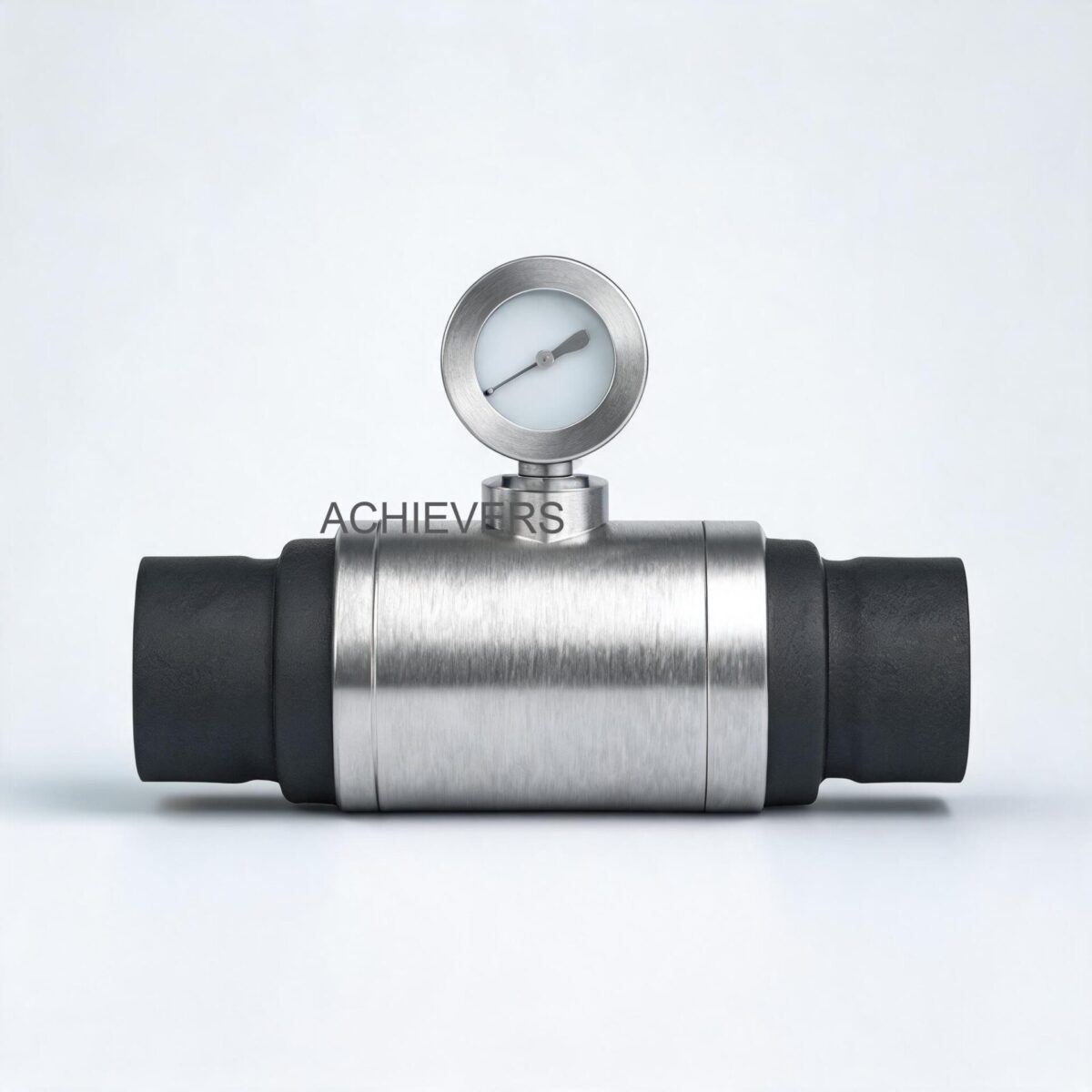
The Turbine Meter Conundrum
Turbine Flow Meters calculate flow by inferring the fluid velocity. As oil passes through the meter body, it spins a rotor. The rotational speed is theoretically proportional to the flow rate. However, turbine meters are highly dependent on the fluid's Reynolds number. If you are measuring light, consistent liquids like water, turbines excel. But in oil applications, viscosity variations drastically alter the velocity profile. If ambient temperatures drop, oil viscosity increases, causing viscous drag on the turbine blades and leading to severe under-registration.
The Positive Displacement (PD) Advantage
For high-thickness, viscous liquids, positive displacement is the gold standard. PD meters isolate a specific volume of fluid and physically transport it from the inlet to the outlet. Because they measure discrete volumetric parcels, their accuracy is largely independent of the fluid's velocity profile.
Lumen's Oil Flow Meters utilize an advanced oval gear design. The meter houses two precision-machined oval gears that rotate in tandem. As fluid pressure pushes against the gears, a defined volume is trapped in the crescent-shaped cavity between the gear and the outer housing.
Engineering Formula: Volumetric Flow Rate in Oval Gear Meters
The total flow (Q) is determined by the volume of the measuring chamber (V), the rotational speed of the gears (N), and the volumetric efficiency (eta_v).
Q = V * N * eta_v
Where Volumetric Efficiency (eta_v) is calculated as:
eta_v = 1 – (Q_slip / Q_theoretical)
Engineering Calibration Note: Slip flow (Q_slip) is the minute amount of fluid that bypasses the gears through the mechanical clearances. In turbine meters, high viscosity causes errors. In oval gear Oil Flow Meters, high viscosity actually improves accuracy by acting as a dynamic seal in these clearances, reducing slip flow nearly to zero. This is why step-less alignment systems in modern PD meters provide repeatability better than 0.02%.
2. Head-to-Head Specification Comparison
When evaluating buy oil flow meters supplier specifications, B2B procurement teams must look past marketing claims and analyze the raw instrumentation data. Below is a strict technical comparison of how Oval Gear technology (specifically Lumen's Achievers series) compares to standard industrial alternatives.
| Technical Parameter | Lumen Oval Gear (PD) | Standard Turbine Meter | Rotary Piston (PD) |
| :— | :— | :— | :— |
| Typical Accuracy | +/- 0.5% (Up to +/- 0.2% on request) | +/- 1.0% to 2.0% (viscosity dependent) | +/- 0.5% |
| Repeatability | Better than 0.02% | +/- 0.1% | +/- 0.05% |
| Line Size Availability | 6mm to 150mm (1/4" to 6") | 15mm to 300mm | 15mm to 100mm |
| Viscosity Handling | Excellent (Improves accuracy) | Poor (Causes extreme viscous drag) | Good |
| Pressure Drop | Ultra-Low (Works under 1" gravity head) | Moderate to High (Requires pump) | Moderate |
| Flow Profile Requirement | None (No straight pipe runs needed) | 10D upstream, 5D downstream required | None |
| Power Requirement | None (Mechanical), 12-24V for Pulse PG1 | 24V DC typically required | None (Mechanical) |
| Maintenance Profile | Low (Single moving part exposed to metered liquid) | High (Bearings wear quickly with dirty oil) | Moderate (Capillary seals can wear) |
Electronic Integration Capabilities
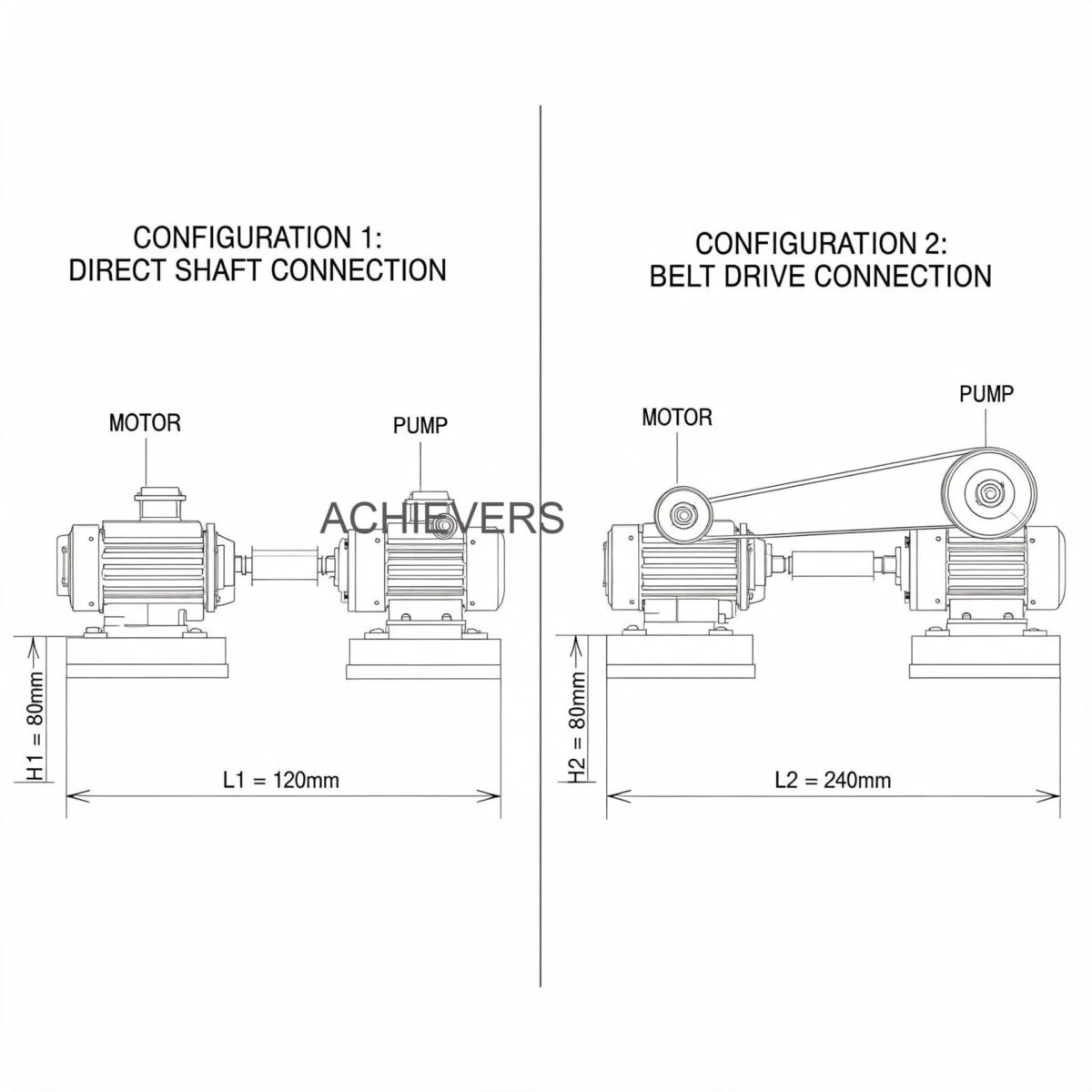
In modern Indian process plants, local mechanical readouts are often insufficient. Plants utilizing SCADA, DCS, or PLC systems require robust digital integration. Lumen meters handle this through modular electronics:
- Pulse Generator (PG 1): Converts the mechanical rotary motion into a digital pulse signal. Operates on a standard 12 to 24-volt DC supply, outputting via a stable three-core cable.
- Remote Totalizer (TF 200): Takes the PG1 pulse and converts it into a flow rate indication and totalized volume. Through an FI converter, this unit easily generates an industry-standard 4 – 20 mA signal.
- Batching Controller (BTF 200): Combined batching, totalization, and rate of flow unit with two set points for dispensing pre-determined quantities of liquids—critical for chemical dosing or precise tanker loading.
3. Application Comparison Table
Selecting the best oil flow meter for viscosity variation and intermittent flow requires matching the meter's strengths to the specific operational challenge. Below is a decision matrix tailored for common Indian industrial scenarios.
| Application Scenario | Recommended Option | Engineering Reason |
| :— | :— | :— |
| Intermittent Generator Loads (DG Sets) | Oval Gear PD (15mm – 25mm) | DG sets draw fuel sporadically based on load. Turbines fail to measure low/start-up flows. PD meters capture every drop of low-flow consumption. |
| Gravity Tank Draw-Off | Oval Gear PD (80mm) | Oval gear vs PD for tank draw off is a common debate. Oval gears have the lowest pressure drop, operating effectively even under a mere 1" static head without a pump. |
| High Viscosity Furnace Oil (Boilers) | Oval Gear PD | High thickness liquids increase volumetric efficiency in oval gears, whereas turbines will stall or grossly under-register. |
| Tanker Unloading (Pumped) | Oval Gear PD (50mm – 80mm) | Requires high flow capacity with structural rigidity. An upstream air release system ensures accuracy during turbulent pumped delivery. |
| Hazardous Area / Remote Sites | Mechanical Oval Gear PD | Requires zero power. The mechanical register can be rotated to any of the four 90º cardinal positions for easy reading in tight, off-grid locations. |
| Process Control & Dosing | Oval Gear PD with BTF 200 | Precise batch control. The 0.02% repeatability ensures consistent chemical/oil dosing, reducing raw material waste. |
| Dirty / Contaminated Fluid Systems | Neither (Pre-filtration required) | All precision meters will jam on hard particulates. A 100-mesh strainer must be installed upstream before any meter technology is deployed. |
| Aviation Refueling Vehicles | High-Precision Oval Gear | Meets strict accuracy requirements and handles varying flow rates during mobile dispensing seamlessly. |
4. Total Cost Comparison
Procurement teams must evaluate Total Cost of Ownership (TCO), not just the initial capital expenditure. Oil flow meters in India for generators and boilers often suffer from hidden costs if the wrong technology is specified.
| Technology Option | Purchase Range (INR) | Annual Maintenance Focus | Expected Life | Best For |
| :— | :— | :— | :— | :— |
| Lumen Oval Gear Oil Meters | ₹9,999 – ₹62,499 | Low. Periodic strainer cleaning (100 mesh) and minor calibration checks. | 10–15 Years | DG sets, Boiler oil feeds, Gravity discharge, High accuracy custody transfer. |
| Industrial Turbine Meters | ₹15,000 – ₹45,000 | High. Frequent bearing replacement due to lack of lubricity in certain fluids; recalibration due to blade wear. | 3–5 Years | Clean, low-viscosity fluids (water, light solvents) pumped at constant, high velocities. |
| Rotary Piston Meters | ₹12,000 – ₹50,000 | Moderate. Checking capillary wear and maintaining precise filtration to prevent piston jamming. | 7–10 Years | Clean oils at moderate pressures, but higher pressure drop than oval gear designs. |
Note: Lumen Achievers meters come with a 1-year standard warranty and up to 2 years of extended warranty on demand, significantly de-risking the capital investment.
5. Decision Guide: Which One for Your Plant?
Proper specification prevents premature failure. Use this 8-step engineering procedure when specifying and installing your measurement system to ensure absolute accuracy and longevity.
- Calculate Flow Rate vs. Line Size First: Do not size a meter strictly by the existing pipe diameter. If the pipeline size is large but the flow rate is small, use reducers. For monitoring DG set oil consumption, 15 mm, 20 mm, or 25 mm sizes are recommended based on maximum flow rate and available head.
- Determine Gravity vs. Pumped Delivery: If you are emptying oil under a gravity head from a storage tank, the pressure is incredibly low. Standardize on 80mm meters (or 50mm alternatively) because oval gear designs can operate efficiently under just 1" of liquid head. For pumped unloading, 50mm/80mm meters are ideal.
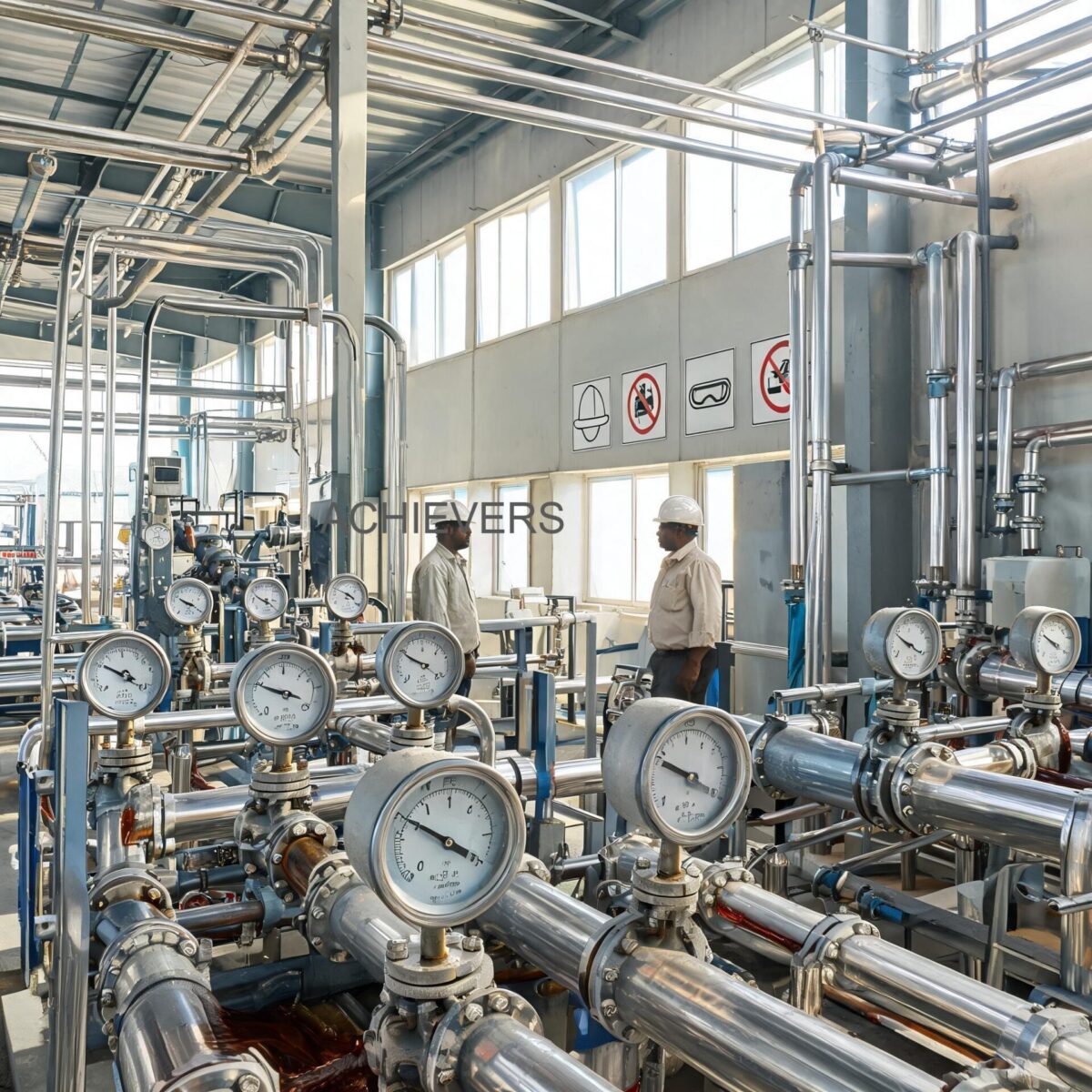
- Mandatory Upstream Filtration: Indian site conditions involve significant particulate contamination. You must install a strainer of at least 100 mesh upstream of the meter. Before final fitting, completely flush the pipelines to remove construction debris or welding slag.
- Install an Air Release System: When pumping petroleum products from underground tanks, air pockets are inevitable. Installing an air eliminator upstream of the meter ensures that the volumetric chamber measures only liquid, preventing costly metering errors (charging for air).
- Design for Maintenance (Bypass Lines): Industrial processes cannot shut down for instrument calibration. Install every meter and its associated filter with a mechanical bypass loop. This simplifies subsequent servicing without halting plant operations.
- Select the Output Architecture: If you need manual reading only, the mechanical counter requires zero power. If integration into a DCS is required, specify the PG 1 pulse generator, feed it into a TF 200 totalizer, and output a 4-20 mA signal to your control room.
- Optimize Visual Ergonomics: Installations in cramped boiler rooms make reading dials difficult. The register top on these meters can be easily removed and rotated to any 90º orientation, ensuring operators can log readings without error.
- Validate Alignment and Calibration: Ensure your setup takes advantage of the step-less calibration system. Because the accuracy is consistent between calibration levels, you achieve reliable +/- 0.5% reading accuracy independent of external installation stresses (unlike turbine meters which warp under flange stress).
FAQ
Q: Will an Oval Gear meter cause a pressure drop that stops my gravity-fed tank flow?
A: No. One of the primary advantages of this volumetric rotary design is its incredibly low pressure drop. The meter is engineered to operate effectively even under just 1" of static oil head, making it ideal for gravity draw-offs where turbine meters would completely stall.
Q: Do I need straight pipe runs before and after the meter?
A: Unlike turbine or ultrasonic meters that require fully developed laminar flow profiles (often demanding 10 pipe diameters upstream and 5 downstream), positive displacement meters isolate and measure precise volumes. Therefore, they are entirely unaffected by external flow components and do not require straight pipe runs.
Q: How does fluctuating Indian ambient temperature affect accuracy?
A: Ambient temperature changes fluid viscosity. In turbine meters, higher viscosity causes severe drag and under-reading. In oval gear meters, higher viscosity actually increases volumetric efficiency by sealing mechanical clearances. You maintain a stable accuracy of +/- 0.5% regardless of normal seasonal viscosity shifts.
Q: What power supply is required for remote monitoring?
A: The mechanical meter itself requires no power. If you utilize the PG 1 Pulse Generator for remote instrumentation, it requires a standard 12 to 24-volt DC power supply, which is typically provided directly by the remote totalizer (like the TF 200).
Q: Can I use this meter for batching exact amounts of oil into mixing tanks?
A: Yes. By pairing the meter's pulse output with the BTF 200 Combined Batching Unit, you can set two pre-determined set points. This allows for automated, highly repeatable (better than 0.02%) dispensing of petroleum products.
Q: What happens if contaminated fuel passes through the meter?
A: Oval gear meters are precision-machined instruments. Hard particulates can jam the rotary gears. It is absolutely mandatory to install a 100-mesh strainer upstream of the meter to capture sludge, rust, and particulates before they enter the measuring chamber.
Q: Is it difficult to repair these meters in the field?
A: No. The straightforward construction means only a single moving assembly is exposed to the metered liquid. By using an efficient magnetic coupling between the measuring chamber and the register, maintenance is incredibly simple. Spare parts are readily available, and the system is backed by a 1-year warranty (extendable to 3 years).
To permanently resolve fuel discrepancies and automate your industrial oil tracking, selecting the correct instrumentation is critical. Contact our engineering team today with your specific fluid type, maximum flow rate, pipeline size, and site conditions (pumped vs. gravity). We will help you specify the exact Oil Flow Meters configuration—including strainers, air eliminators, and 4-20mA electronics—to guarantee absolute precision in your facility.