
Accurate measurement of bulk diesel and lubricating oils is not just a process requirement; it is a critical financial control mechanism. In Indian industrial contexts—ranging from cement plants in Rajasthan to petrochemical refineries in Gujarat—diesel represents a massive operational expenditure. At current INR fuel rates, a metering error of just 1% on a 500-liter-per-day transfer system results in unaccounted losses exceeding ₹1,60,000 annually. Choosing the wrong flow measurement technology leads directly to inventory shrinkage, poor generator efficiency calculations, and compromised process automation.
This technical buyer’s guide is engineered for industrial procurement heads, plant managers, and instrumentation engineers. It provides a deep dive into selecting the right Fuel Flow Meters by matching flow ranges, viscosity profiles, construction materials, and output signals to the harsh realities of Indian site conditions.
1. What Is Fuel Flow Meters and What Does It Do
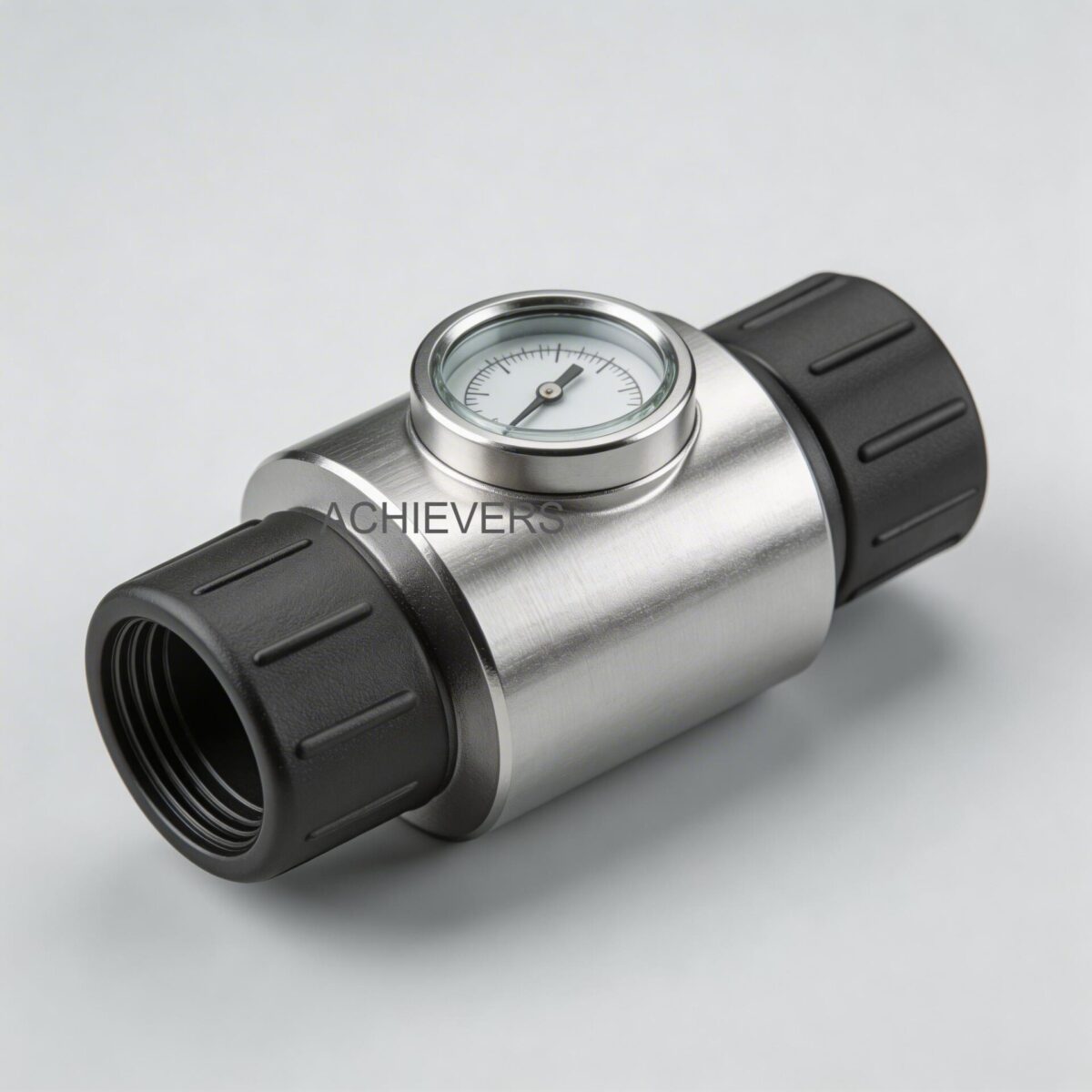
At their core, Fuel Flow Meters are precision instrumentation devices designed to quantify the exact volume of liquid hydrocarbons passing through a pipeline. The digital variants primarily utilize an axial turbine measuring framework. As the fluid enters the meter, it strikes the turbine blades, causing the rotor to spin at an angular velocity directly proportional to the fluid's flow rate.
What sets industrial-grade Fuel Flow Meters apart from commercial gas station totalizers is their internal metallurgy and signal processing. High-quality units feature an S.S. 316 (Stainless Steel) housing to resist corrosion from high-sulfur or contaminated fuels. Furthermore, the rotor assembly spins on a solid-state tungsten carbide-ceramic bearing. This specific material pairing renders the rotational movement practically frictionless, producing a substantial linear range while virtually eliminating pressure drop (head loss).
For signal transmission in electrically noisy mechanical environments (common in Indian factories with heavy VFD usage), the meter utilizes a detachable square-wave generated pickup assembly. This solid-state device converts the mechanical rotation into a high-fidelity electronic pulse, immune to standard electromagnetic interference.
| Specification | Value | Engineering Notes |
| :— | :— | :— |
| Model Series | CE-104 / Achievers Series | Flange and threaded types available |
| Measured Mediums | Diesel, Kerosene, Gasoline, Light Oils | Kinematic viscosity must be evaluated for heavy oils |
| Connection Size | BSPT / NPT 1" | Ensure pipe schedule matches thread standard |
| Calibrated Flow Rate | 6–100 L/Min or 0–120 L/Min | Highly sensitive to low flow rates |
| Metric Accuracy | ±1% over linear range | Dependent on stable fluid viscosity |
| Display Mechanics | 5-Digit LCD readout | Vacuum-sealed, leak-proof dry totaliser |
| Accumulative Counter | 8 Digits | Non-resettable mechanical/digital backup |
| Core Metallurgy | S.S. 316 Housing | Prevents galvanic corrosion with dissimilar pipe metals |
| Bearing Material | Tungsten Carbide-Ceramic | Self-lubricating, frictionless, long maintenance-free life |
Engineering Note: Pulse Calibration and the K-Factor
When integrating a digital fuel meter with a PLC or SCADA system, the instrument relies on a calibration constant known as the K-Factor.
The K-Factor represents the number of pulses generated by the meter per unit volume of fluid passing through it (Pulses/Liter).
To calculate the total volume dispensed, the PLC uses the straightforward formula:
Total Volume = Total Accumulated Pulses / K-Factor
For highly accurate batching, the K-Factor must be verified at the site using a Legal Metrology certified proving tank, especially if the fluid's operating temperature deviates significantly from the factory calibration baseline.
2. Key Selection Criteria for Indian Industrial Buyers
Procuring a flow meter strictly based on line size is an engineering fallacy that guarantees poor performance. Indian industrial sites present unique challenges: extreme ambient heat (often exceeding 45 degrees Celsius), heavy particulate dust, aggressive voltage fluctuations, and monsoon-induced humidity. Consider the following criteria before finalizing a purchase.
1. Flow Profile and Turndown Ratio
A meter rated for 0–120 L/Min is designed to capture high-velocity transfers. However, turbine meters have a minimum Reynolds number requirement to maintain their ±1% accuracy. If you are gravity-feeding diesel at extremely low flow rates, the fluid may not possess enough kinetic energy to overcome the resting inertia of the tungsten-carbide bearing, leading to under-registration. Always match the meter's nominal flow range to your pump's output curve.
2. Fluid Viscosity and Temperature Dynamics
Diesel viscosity changes inversely with temperature. During North Indian winters, diesel becomes thicker, whereas in the peak summer heat of central India, it thins out. Turbine meters are excellent for stable, low-viscosity fluids (like diesel and kerosene). However, if you are measuring thick gear oils or heavy fuel oils (HFO), the increased drag on the turbine blades will shift the K-Factor. In such cases of high viscosity, Positive Displacement Flow Meters are the mathematically superior choice.
3. Electronics and Output Signals
Modern process automation relies on remote data acquisition. Mechanical registers are sufficient for basic day-tanks, but modern smart facilities require digital integration. Look for models equipped with solid-state square wave pulse outputs. For longer cable runs through electrically noisy plants, opt for variants with RS-485 Modbus RTU or 4-20mA analog outputs.
4. Material of Construction (Wetted Parts)
Contaminated fuel is a reality in many remote Indian construction and mining sites. Aluminum bodies may suffice for clean, filtered diesel, but S.S. 316 housings provide the necessary tensile strength and chemical resistance against water-contaminated or high-sulfur diesel. The internal gears should be self-lubricating, ensuring a long, maintenance-free operational life even if the line temporarily runs dry.
5. Pressure Drop (Head Loss) Tolerances
Every instrument introduced into a pipeline creates restriction. If you are retrofitting a meter into a gravity-fed dispensing line, you must ensure the meter has ultra-low head loss. Turbine meters inherently offer a less restrictive flow path compared to bulky positive displacement units, preserving line pressure for downstream dispensing nozzles.
6. Environmental Ingress Protection and Power Quality
If the meter is installed outdoors, the digital register must be vacuum-sealed and leak-proof to prevent LCD fogging during the Indian monsoons. Furthermore, if powered externally rather than by internal lithium batteries, the electronics must withstand the transient voltage spikes common in rural Indian industrial grids.
'When to Use This Technology' Decision Matrix
- Use Turbine Flow Meters When: Fluid is low viscosity (diesel, gasoline, kerosene, water), flow rate is steady, pressure drop must be minimized, and high-frequency pulse output is needed for batching controllers.
- Use Positive Displacement Meters When: Fluid is highly viscous (lube oils, bunker fuel, resins), flow rates fluctuate heavily, and the installation lacks the required straight pipe runs upstream.
- Use Electromagnetic Meters When: The fluid is highly conductive (water, wastewater, slurries). Note: Electromagnetic meters CANNOT measure non-conductive hydrocarbons like diesel or oil.
3. Technology Comparison Table
Because no single technology solves every fluid dynamics challenge, instrumentation engineers must compare primary measurement principles.
| Parameter | Axial Turbine Meters | Positive Displacement (PD) | Electromagnetic (Mag) | Vortex Shedding |
| :— | :— | :— | :— | :— |
| Operating Principle | Kinetic energy rotates a bladed rotor | Traps discrete volumes in mechanical chambers | Faraday’s Law of Electromagnetic Induction | Von Kármán effect (bluff body creates vortices) |
| Ideal Indian Applications | High-speed diesel dispensing, light chemical transfer | Heavy gear oils, bunker fuels, lube batching | Slurry, hard bore-well water, chemical dosing | High-temp steam, large pipe gas flow |
| Hydrocarbon Capability | Excellent (Diesel, Petrol, Kerosene) | Excellent (All oils and fuels) | Zero (Hydrocarbons are non-conductive) | Good (but requires high flow velocity) |
| Viscosity Tolerance | Low to Medium (shifts calibration if too high) | High (Accuracy actually improves with viscosity) | Independent of viscosity | Low (Thick fluids dampen vortex formation) |
| Pressure Drop | Very Low | Moderate to High | Zero (Full-bore design) | Moderate |
| Upstream Pipe Requirement | Requires 10D upstream straight run | Requires 0 straight run (flow conditioning not needed) | Requires 5D upstream straight run | Requires 10D to 15D upstream straight run |
| Relative Cost | Budget-friendly to Mid-Range | Mid-Range to Expensive | Mid-Range | Expensive |
4. Model and Variant Comparison
The Achievers brand (manufactured by Lumen Instruments) offers a wide array of variants ranging from ₹9,999 to ₹62,499. The price scales directly with the sophistication of the electronics and the communication protocols embedded within the unit.
| Model Number | Base Price Range (INR) | Meter Type / Application | Key Features & Output Tags | Best Suited For |
| :— | :— | :— | :— | :— |
| CE-104 | Call for Quote | Digital Fuel Meter | ±1% Accuracy, 5-Digit LCD, 0-120 L/min | General diesel/kerosene line transfer |
| CE-110 | ₹9,999 – ₹19,499 | Digital Diesel Meter | Variable output product | Standard industrial fuel management |
| CE-111 | ₹10,999 – ₹19,999 | Digital Diesel Meter | Upgraded internal totalizer | High-frequency diesel dispensing |
| CE-112 | ₹9,999 – ₹62,499 | Smart Digital Diesel | 4-20mA, RS-485, Pulse Output | SCADA integration, automated batching plants |
| CE-113 | Available on Backorder | Mechanical Register | Standard mechanical counting | Remote sites without reliable electrical power |
| CE-118/119 | ₹9,999 – ₹19,999 | Oil Flow Meter | Calibrated for higher viscosities | Hydraulic and lubricating oil transfer |
| CE-120 | ₹9,999 – ₹62,499 | Smart Digital Oil | 4-20mA, RS-485, Pulse Output | Automated lube oil dispensing systems |
5. Common Mistakes Indian Buyers Make When Choosing
Procurement errors in instrumentation compound over time. Avoid these five critical mistakes when sourcing your equipment:
- Ignoring Upstream Straight Pipe Requirements:
- Omitting Pre-Filtration (Y-Strainers):
- Confusing Flow Rate Limits with Pump Dead-Heading:
- Neglecting Air Elimination:
- Bypassing Statutory Certifications:
Turbine rotors require a fully developed, uniform laminar flow profile. Installing a meter immediately after an elbow, valve, or Fuel Transfer Pumps creates flow swirl. This turbulence strikes the turbine blades at incorrect angles, destroying the ±1% accuracy. Always ensure a minimum of 10 times the pipe diameter (10D) of straight pipe before the meter, and 5D after.
Indian diesel often suffers from particulate contamination during transit. If hard debris enters a turbine or mechanical meter, it will lodge between the S.S. 316 housing and the rotor, jamming the self-lubricating gears or shattering the ceramic bearing. A 100-micron Y-strainer installed upstream is a non-negotiable requirement.
Specifying a meter rated for 100 L/Min when your centrifugal pump pushes 150 L/Min causes "overspeeding." This exponentially increases wear on the tungsten carbide bearing and drastically shortens the maintenance-free working life. Conversely, running at 2 L/Min on a 100 L/Min meter will fail to register accurately.
Flow meters measure volume, not state. If your storage tank runs low and the pump sucks in air, the meter will measure the passing air pockets as diesel. This leads to massive discrepancies between purchased fuel and consumed fuel. Bulk installations must include mechanical air eliminators upstream of the meter.
If the fluid transfer involves custody transfer (buying from or selling to a third party), the meter must comply with the Indian Legal Metrology Act. Furthermore, any electronics installed in hazardous zones (like a petrol depot) require PESO (Petroleum and Explosives Safety Organisation) flameproof certifications. Ensure the selected model meets your plant's safety classifications.
6. Enquiry Specification Checklist
To receive an accurate technical quotation and avoid post-installation headaches, provide your supplier with a comprehensive specification sheet. Ensure you list the following parameters when raising an RFQ:
- Exact Medium: State clearly if it is High-Speed Diesel (HSD), Light Diesel Oil (LDO), Kerosene, or a specific grade of lubricating oil.
- Kinematic Viscosity: Provide the operating viscosity in Centistokes (cSt) at your site's average ambient temperature.
- Flow Rate Range: Specify the Minimum, Nominal (Normal), and Maximum expected flow rates in Liters Per Minute (L/Min).
- Operating Pressure: Note the maximum pump discharge pressure to ensure the meter’s housing and flanges are rated correctly (e.g., PN16, ANSI 150#).
- Operating Temperature: Crucial for sites in extreme climates to ensure LCD screens and internal seals do not degrade.
- Line Size and End Connections: Specify pipe diameter and standard (e.g., 1" BSPT threaded, or ANSI B16.5 Flanged).
- Signal Output Requirements: State whether you need local mechanical display, battery-powered LCD, Pulse, 4-20mA, or RS-485 Modbus for SCADA.
- Material Preferences: Confirm requirement for S.S. 316 housing and solid-state tungsten carbide bearings.
FAQ
Q: Can I use a turbine flow meter to measure both diesel and heavy gear oil?
A: No. Turbine meters are highly calibrated for specific viscosity ranges. While diesel has a low viscosity (around 2-4 cSt), heavy gear oils possess much higher fluid drag. Swapping fluids without recalibrating the K-factor will result in severe measurement inaccuracies. For heavy oils, an oil-specific model like the CE-118 is required.
Q: What happens if the internal battery dies on a digital meter?
A: Most digital meters with an LCD display utilize long-life lithium batteries designed to last several years. Furthermore, premium models feature non-volatile memory—meaning your 8-digit accumulative totalizer data is securely saved and will not be lost during a battery replacement or power failure.
Q: Do I need a straight pipe run if I use a mechanical displacement meter instead?
A: Positive displacement meters do not require upstream straight pipe runs because they mechanically isolate and measure exact fluid volumes rather than inferring volume from fluid velocity. If your installation space is too cramped for the 10D straight pipe required by a turbine meter, a PD meter is the correct engineering workaround.
Q: How often do I need to recalibrate my diesel flow meter?
A: For internal accounting, an annual calibration check against a certified Legal Metrology proving tank is recommended. However, thanks to the frictionless tungsten carbide-ceramic bearings, S.S. 316 turbine meters experience very little mechanical wear, often maintaining their ±1% accuracy for years without adjustment, provided the fluid is properly filtered.
Q: Will water contamination in diesel damage the meter?
A: The S.S. 316 stainless steel housing and ceramic bearings are highly resistant to rust and corrosion caused by water. However, large slugs of water will alter the fluid's viscosity and density, temporarily affecting measurement accuracy.
Q: How does a detachable square wave generated assembly work in noisy environments?
A: In industrial plants with heavy motors, standard analog signals can suffer from electromagnetic interference (EMI). A square wave pulse is a robust digital signal; the receiving PLC simply counts the distinct "high" and "low" voltage states, making it highly immune to ambient electrical noise.
Q: Are these meters suitable for gravity-fed diesel tanks?
A: Yes, turbine meters are excellent for gravity-fed systems because they feature exceptionally low head loss. However, you must ensure that the gravity head generates enough flow velocity to meet the meter's minimum flow rate threshold (e.g., 6 L/Min) for accurate turbine rotation.
To ensure your diesel and oil transfer systems operate with pinpoint accuracy, selecting the right instrumentation is critical. If you are upgrading your plant's fuel management infrastructure, gather your site's flow rate, fluid viscosity, pressure ratings, and desired output signals. Contact the technical team at Lumen Instruments to engineer a bespoke flow measurement solution tailored exactly to your process realities.