
Selecting the appropriate fuel transfer equipment is a critical engineering decision that directly impacts fleet uptime, inventory accuracy, and site safety. For industrial operations spanning construction, mining, agriculture, and logistics, the reliance on field-refueling is absolute. In these demanding environments, relying on undersized or inaccurate dispensing units leads to compound losses: unrecorded fuel consumption, extended refueling cycle times, and premature equipment failure due to cavitation or ingress of contaminants. Procurement heads and plant managers must evaluate these systems not merely as pumps, but as integrated custody-transfer and fluid-handling assets.
This technical guide provides a specification-first methodology for selecting Mobile Diesel Dispensers. By analyzing duty cycles, required flow rates, positive displacement metering accuracy, and compliance with global safety standards, engineers can specify equipment that withstands harsh site conditions. Whether outfitting a remote processing plant or a dynamic construction site, specifying the correct Mobile Diesel Dispensers requires a deep understanding of fluid dynamics, power availability, and metrology. This guide cuts through the marketing noise to deliver the exact specifications, comparative analyses, and operational parameters needed to make an informed, resilient purchasing decision for Mobile Diesel Dispensers.
1. What Is Mobile Diesel Dispensers and What Does It Do
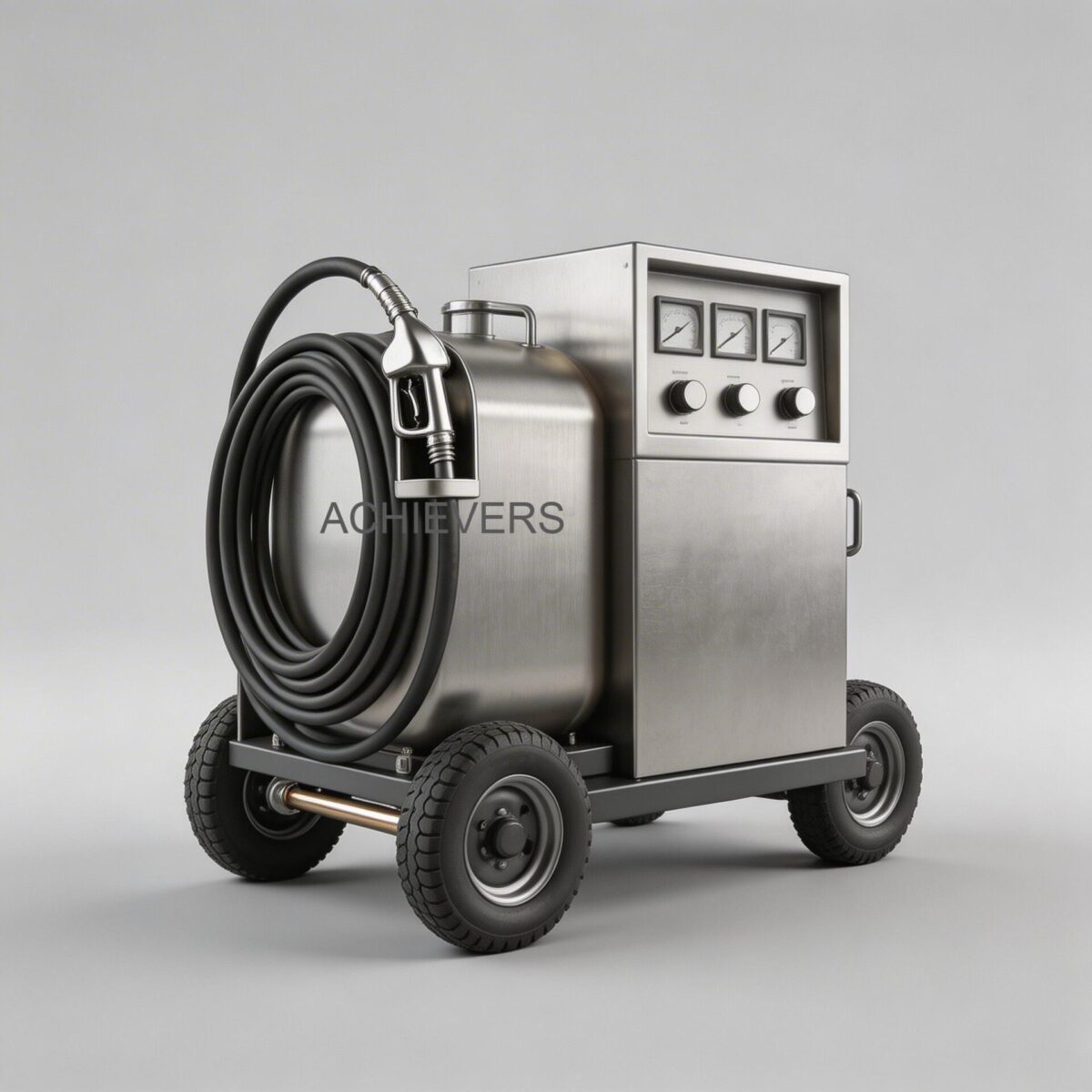
A mobile diesel dispenser is an integrated, skid-mounted or vehicle-mountable fluid transfer system designed for the precise dispensing of diesel fuel in remote or non-fixed locations. Unlike static service station pumps, these dispensers are engineered for portability and robust operation across varied environmental conditions. A high-quality unit seamlessly integrates four primary subsystems: a prime mover (typically a 0.375 kW AC or DC motor), a self-priming transfer pump, a high-accuracy volumetric flow meter, and the delivery hardware (hoses, auto shut-off nozzle, and filtration).
The Achievers brand dispensers utilize a highly precise Positive Displacement (PD) Oval Gear flow sensor. This is a critical engineering feature. In an oval gear meter, fluid pressure forces two meshed oval gears to rotate. Each rotation sweeps a precise, finite volume of fluid through the meter chamber. Because the measurement is volumetric and mechanical, it is highly immune to upstream flow profile disturbances (eliminating the need for straight pipe runs) and maintains high accuracy even as fluid viscosity changes with ambient temperature variations.
Engineering Calibration Note:
For volumetric measurement using an oval gear PD meter, the flow rate is determined by the displacement volume and the rotational speed of the gears. The formula can be expressed as:
Q = V_displacement x N x Volumetric Efficiency
Where Q is the volumetric flow rate, V_displacement is the fixed volume passed per full revolution of the gears, and N is the rotational frequency (RPM). Calibration involves adjusting the k-factor on the resettable batch totalizer to account for the specific mechanical slippage (volumetric efficiency) of diesel at a nominal operating temperature.
| Specification Parameter | Value / Rating | Engineering Notes |
| :— | :— | :— |
| Applicable Media | Diesel / Bio-diesel | Not suitable for highly volatile fluids (gasoline) without ATEX upgrades. |
| Metering Technology | Oval Gear P.D. Flow Sensor | Immune to flow profile distortion; high accuracy in variable viscosities. |
| Volumetric Precision | ±0.5% | Suitable for internal inventory tracking and fleet consumption monitoring. |
| Max Working Pressure | 3 Bar (43.5 PSI) | Sufficient to overcome friction losses in standard 4m dispensing hoses. |
| Flow Rate Range | 60 L/Min up to 200 L/Min | Scales from light commercial vans to heavy earth-moving equipment refueling. |
| Power Consumption | 0.375 kW | Low power draw allows for 12V/24V DC battery operation on mobile trucks. |
| Inlet/Outlet Ports | 25 mm (1 Inch) | Standard industrial sizing; minimizes restriction to maintain flow velocity. |
| Totalizer Range | 0-999,999.9 L (Cumulative) | Resettable batch (0-9,999 L) and non-resettable cumulative limits. |
2. Key Selection Criteria for Global Industrial Buyers
Selecting the optimal dispenser requires matching the system's hydraulic and electrical capabilities to the specific demands of the site. Industrial buyers must evaluate the following six criteria to ensure operational reliability.
1. Flow Rate and Duty Cycle Constraints
Flow rate determines the turnaround time for fleet refueling. A standard 60 L/Min dispenser will fill a 300-liter truck tank in approximately 5 minutes. However, for large mining excavators with 1,000+ liter tanks, a high-capacity 200 L/Min unit (Model CE-130) is necessary to minimize downtime. Buyers must also consider the duty cycle of the pump motor. Continuous refueling of multiple assets requires motors with high thermal class ratings to prevent overheating, especially in regions with high ambient temperatures.
2. Metering Technology and Volumetric Accuracy
Accuracy translates directly to financial control. The integration of an Oval Gear Flow Meter provides an accuracy of ±0.5%. When comparing technologies, positive displacement is generally superior to velocity-based meters (like turbines) for diesel, because diesel's viscosity helps seal the clearances between the gears, reducing fluid slippage and increasing low-flow accuracy. If your operation involves bulk transfers with varying fluid conditions, understanding the capabilities of Positive Displacement Flow Meters is paramount.
Technology Comparison Table: Flow Measurement for Diesel Dispensers
| Parameter | Oval Gear (Positive Displacement) | Turbine Flow Meter | Electromagnetic Flow Meter |
| :— | :— | :— | :— |
| Accuracy Class | ±0.5% (High) | ±1.0% (Moderate) | ±0.2% to ±0.5% (High) |
| Viscosity Dependency | Improves with higher viscosity | Performance drops as viscosity increases | Independent of viscosity |
| Conductivity Requirement | None (Ideal for Diesel) | None (Ideal for Diesel) | Requires conductive fluid (Fails on Diesel) |
| Straight Run Required | 0D Upstream / 0D Downstream | 10D Upstream / 5D Downstream | 5D Upstream / 3D Downstream |
| Pressure Drop | Moderate to High | Low | Minimal / Zero |
| Best Application | Mobile dispensers, trucks, high accuracy | High-velocity pipeline transfer | Water / Slurry (Not suitable for hydrocarbons) |
3. Working Pressure and Hydraulic Friction Losses
The pump provides a maximum working pressure of 3 Bar. Engineers must account for pressure drops across the internal filtration, the 4-meter rubber hose, and the auto shut-off nozzle. At 60 L/Min through a 25mm hose, the fluid velocity is approximately 2.03 meters per second. Using the Darcy-Weisbach equation, friction losses are minimal over 4 meters, but extending the hose to 10 or 15 meters for difficult-to-reach heavy machinery will significantly increase head loss, potentially reducing the flow rate or deadheading the pump.
4. Power Supply and Portability Configuration
Mobile dispensers are deployed in environments where grid power is often unavailable. Procurement must align the dispenser's power requirements with the host vehicle. Variants operating on 12V DC or 24V DC are essential for mounting directly onto flatbeds or service trucks, drawing power from the vehicle's alternator. For skid tanks stationed at semi-permanent construction camps, 220V AC configurations are often preferred to utilize site generators.
5. Material Compatibility and Robust Construction
Diesel acts as both a fuel and a mild lubricant, but it can degrade standard elastomers over time. The dispenser must utilize compatible wetted parts—such as cast iron pump casings, aluminum or stainless steel meter bodies, and Viton or Nitrile (Buna-N) seals. The exterior construction must withstand harsh environments, including high dust loading, heavy rain (requiring high IP-rated electrical enclosures), and mechanical vibration from transit.
6. Safety Features and Environmental Protection
Safety mechanisms are non-negotiable. An auto shut-off nozzle is critical to prevent tank overflows, thereby preventing environmental soil contamination and fire hazards. Additionally, the presence of a bypass valve within the pump architecture is necessary. If the nozzle is closed while the pump is running, the bypass valve circulates the fluid internally, preventing dangerous pressure spikes that could rupture the hose or damage the oval gears.
3. Model and Variant Comparison
The Achievers brand offers several configurations tailored to specific scale requirements. Understanding the distinctions between the CE-series models allows buyers to match the hardware exactly to their infrastructure.
Achievers Mobile Diesel Dispenser Model Matrix
| Model Series | Expected Flow Range | Operating Power Options | Target Application / Best For | Typical Mounting Style |
| :— | :— | :— | :— | :— |
| CE-101 | Up to 60 LPM | 12V DC / 24V DC | Light commercial fleets, agriculture tractors | Direct tank mount / Wall mount |
| CE-117 | 60 LPM Standard | 220V AC / 12V DC | Semi-permanent processing facilities, logistics hubs | Skid frame / Fixed post |
| CE-130 | 60 LPM to 200 LPM | 220V AC / Heavy DC | Mining equipment, high-capacity bulk transfer | Heavy service truck / Mobile bowser |
| CE-202 | 60 LPM | 220V AC | Dedicated factory refueling zones | Pedestal / Wall bracket |
| CE-204 | 60 LPM – High Head | Custom Configurations | Long-reach dispensing for rugged off-road sites | Enclosed robust cabinet / Van mount |
'When to Use This Technology' Decision Matrix
- Scenario A: Forestry or Agricultural Field Service.
- Requirement: Refueling tractors miles away from grid power. Low daily volume, but high reliability needed.
- Recommended Configuration: CE-101 (12V DC) paired with a 500L poly-tank.
- Rationale: Draws power directly from the pickup truck battery. ±0.5% accuracy ensures exact cost accounting for different farming sectors.
- Scenario B: Open-Pit Mining Refueling Truck.
- Requirement: Refueling massive dump trucks rapidly to maintain operational cadence. High dust environment.
- Recommended Configuration: CE-130 (Max 200 LPM) heavy-duty configuration.
- Rationale: High flow rate minimizes downtime. Robust construction and PD metering handle the vibration and heavy usage without losing calibration.
- Scenario C: Manufacturing Plant Internal Logistics.
- Requirement: Refueling a fleet of diesel forklifts at a fixed staging area.
- Recommended Configuration: CE-202 or CE-117 running on 220V AC.
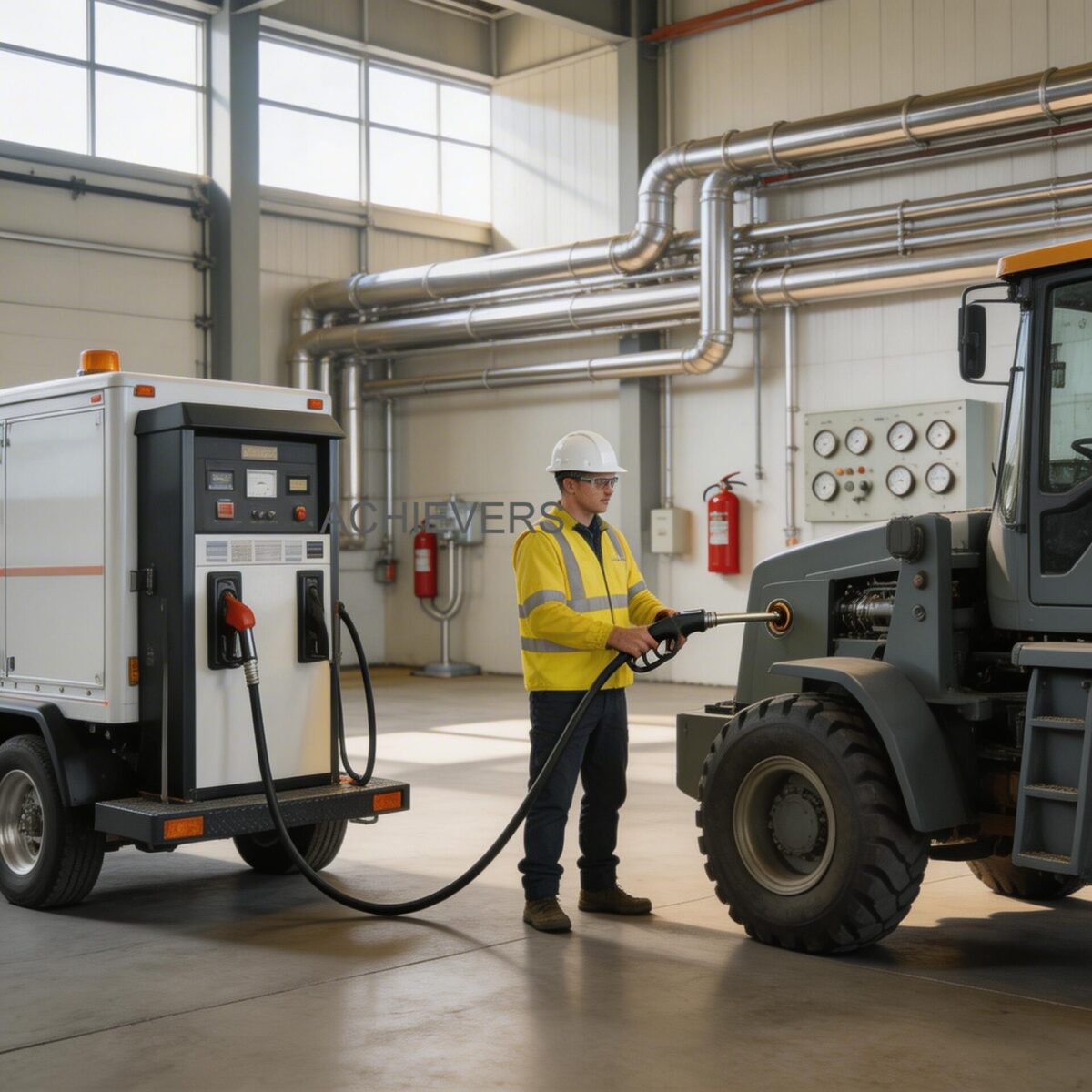
- Rationale: Utilizes reliable site power. The 60 LPM flow rate is perfectly matched to the smaller 50-100L tanks of forklifts, preventing violent splash-back during dispensing.
4. Common Mistakes Buyers Make When Choosing
Procurement errors in fluid transfer equipment frequently result in operational bottlenecks. Avoid these common engineering and specification mistakes:
- Ignoring Net Positive Suction Head (NPSH) Limits:
- Mismatched Flow Rate to Tank Size:
- Failing to Specify Proper Electrical Protection:
- Neglecting Filtration Upstream of the Meter:
- Over-Extending the Discharge Hose:
Buyers often focus entirely on the discharge side. If the dispenser is mounted too high above the bulk storage tank, or if the suction line is too narrow/long, the available NPSH drops below the pump's required NPSH. This leads to pump cavitation, which destroys the pump internals and introduces air into the flow meter, drastically skewing accuracy.
Specifying a 200 LPM high-capacity dispenser to fill small generators or forklifts with 40-liter tanks is a dangerous mistake. The high velocity will cause extreme foaming and rapid splash-back before the auto shut-off nozzle can react, causing spills and potential ignition hazards.
Mobile dispensers running on vehicle alternators (12V/24V) can experience voltage spikes. Failing to install proper inline fuses or heavy-duty relays can result in burnt-out motors. Furthermore, using undersized power cables for long runs from the battery to the pump causes voltage drop, reducing motor RPM and flow rate.
Oval gear meters have tight mechanical tolerances. While highly accurate, they are susceptible to damage from hard particulates. Bypassing or omitting a Y-strainer or particulate filter before the meter will lead to locked gears, sheared pins, and total system failure when drawing from dirty mobile tanks.
Standard units are calibrated and tested with the provided 4m rubber hose. Buyers who arbitrarily replace this with a 15-meter hose without calculating the new friction head loss will overwork the 0.375 kW motor. The pump's internal bypass valve may crack open prematurely due to the backpressure, resulting in a drastically reduced dispensing rate.
5. Enquiry Specification Checklist
To receive accurate quoting and technical matching from a supplier, industrial buyers should submit RFQs (Requests for Quotation) with strict engineering parameters. Use this 8-step procedural checklist when engaging suppliers for mobile diesel dispensers or integrated Fuel Transfer Pumps.
- Determine the Target Fluid: Confirm the specific gravity, kinematic viscosity (at ambient operating temperatures), and precise chemical makeup (e.g., standard automotive diesel, heavy off-road diesel, or bio-diesel blends).
- Specify Maximum Flow Rate (LPM): Calculate based on the largest receiving tank size and the maximum allowable refueling downtime. Provide both normal operating flow and maximum desired flow.
- Define Power Supply Parameters: State exactly what power is available at the mounting location (12V DC, 24V DC, or 220V AC single-phase). Include anticipated voltage fluctuation ranges.
- Detail the Suction Lift Geometry: Provide the vertical distance from the lowest fluid level in the supply tank to the pump centerline, and the horizontal length of the suction pipe, to verify self-priming capabilities.
- Specify Discharge Hose Length and Nozzle: Note if the standard 4m hose is sufficient or if custom lengths are required. Always mandate an auto shut-off nozzle with an appropriate swivel joint to prevent hose kinking.
- State the Desired Accuracy Class: Confirm that ±0.5% volumetric accuracy via oval gear technology meets your internal custody transfer or audit requirements.
- Identify the Operating Environment: List the ambient temperature extremes, expected humidity, and dust levels. Specify if the enclosure requires a specific IP rating (e.g., IP55 or IP65).
- Request Certification and Calibration: Demand factory calibration certificates for the internal flow meter and confirm adherence to CE or relevant global machinery directives.
FAQ
Q: Can a mobile diesel dispenser be used to pump gasoline or aviation fuel?
A: No. Standard diesel dispensers are strictly designed for combustible, slightly viscous fluids with lubricating properties. Pumping highly flammable fluids like gasoline requires specialized ATEX/explosion-proof motors, intrinsically safe wiring, and different internal seals to prevent catastrophic fire hazards.
Q: Why does the flow rate drop when I extend the discharge hose?
A: Extending the hose increases the internal surface area, which drastically increases the friction head loss (pressure drop). Since the pump has a maximum working pressure of 3 Bar, excessive backpressure forces fluid through the pump's internal bypass valve, reducing the volume delivered to the nozzle.
Q: How often does the oval gear flow meter require calibration?
A: For standard industrial fleet tracking, a calibration check is recommended every 12 months or after every 500,000 liters dispensed. However, if you notice discrepancies in fuel reconciliation, or if you change to a fuel with a significantly different viscosity, immediate recalibration via the totalizer's k-factor adjustment is necessary.
Q: Is it safe to let the dispenser pump run dry?
A: Absolutely not. Positive displacement pumps and oval gear meters rely on the diesel fluid itself for internal lubrication and cooling. Running the system dry for more than a few minutes will cause excessive friction, overheating, and permanent damage to the gears, mechanical seals, and motor.
Q: What is the maximum suction lift for these mobile dispensers?
A: While these pumps are self-priming, physical laws limit their suction capability. Generally, a maximum vertical suction lift of 2 to 3 meters is recommended to prevent cavitation and ensure rapid priming. Always install a foot valve with a strainer on the suction line to maintain prime.
Q: Can the cumulative totalizer be reset by operators to hide stolen fuel?
A: The Achievers models feature a dual-display system. The primary batch counter (0-9999 L) is easily resettable for individual vehicle fills. However, the cumulative totalizer (0-9999999 L) is master-locked and non-resettable, ensuring absolute tamper-proof tracking of all fluid passed through the meter.
Q: Will extreme cold weather affect the dispensing accuracy?
A: As temperature drops, diesel viscosity increases. While the oval gear meter actually becomes slightly more accurate at higher viscosities (due to reduced fluid slip between the gears), the thicker fluid increases pressure drop. In extreme cold, the pump flow rate may decrease, but volumetric accuracy will remain within the ±0.5% specification.
To optimize your fleet refueling infrastructure, contact our engineering team with your specific flow rate requirements, power supply parameters, and site environmental conditions. We will assist you in sizing the precise mobile diesel dispenser to minimize operational downtime and secure your fluid inventory.