
In the high-stakes environment of Indian fleet yards, mining sites, and construction projects, diesel is not just a fuel; it is the lifeblood of operations. With commercial diesel prices frequently fluctuating and consistently representing a massive chunk of operating expenses, volumetric accuracy and dispensing reliability are non-negotiable. A single malfunctioning dispenser drifting by just 1% on a daily throughput of 5,000 liters translates to a hidden loss of ₹4,500 daily—or over ₹13 Lakhs annually. This is why planned preventive maintenance for Mobile Fuel Dispensers is a critical cost-saving strategy, not just a housekeeping task.
Mobile dispensing units, such as the Achievers CE-117, CE-204, CE-202, and CE-101 models, are engineered for rugged private utilization. However, continuous exposure to harsh Indian site conditions—ranging from the abrasive dust of Rajasthan to the relentless monsoon humidity of the Konkan coast—accelerates wear on moving parts, seals, and metrological components. This comprehensive guide provides instrumentation engineers, plant managers, and procurement heads with a technically rigorous preventive maintenance schedule designed to eliminate unplanned downtime, prevent cavitation-induced pump failures, and lock in metering accuracy to strictly within the manufacturer’s ±0.5% specification.
1. Product Overview and Critical Wear Components
To maintain a system, you must understand its engineering anatomy. The Mobile Fuel Dispensers discussed here operate on a finely tuned synergy of fluid dynamics and positive displacement mechanics.
Core Technical Specifications:
- Applicable Media: High-Speed Diesel (HSD)
- Metering Technology: Oval Gear Flow Meter (Positive Displacement)
- Pump Technology: Self-priming vane pump
- Motor Power: 0.375 kW (approx. 0.5 HP)
- Operating Pressure: 3 Bar (approx. 43.5 PSI)
- Nominal Flow Rate: 60 L/Min
- Volumetric Precision: ±0.5%
- Piping Connections: 25 mm (1 inch) Inlet/Outlet
- Dispensing Hardware: 4 m rubber hose with a brass-fitted metal gun
- Register/Display: Mechanical totalizer (One-time count: 0-9999L; Total count: 0-9999999L)
These units are prized for their 60 L/min flow rate, which perfectly balances rapid truck refuelling with precise fluid control to prevent foaming and splashing. However, achieving this requires tight tolerances. The critical wear components include the carbon or Delrin vanes inside the self-priming pump, the precision-machined oval gears inside the metering chamber, the 25 mm inlet suction strainer (utilization channel), and the internal O-rings that maintain the 3 Bar pressure seal.
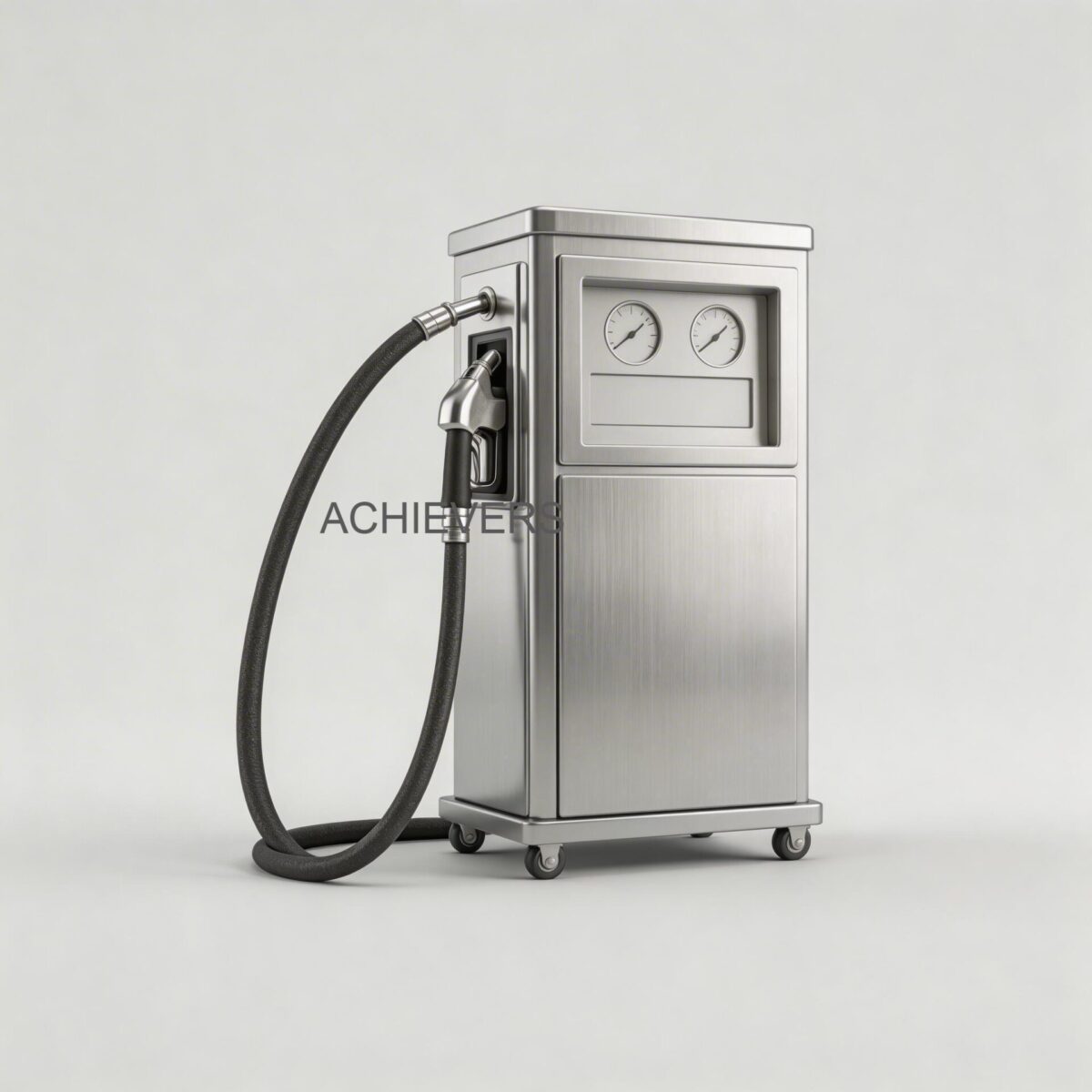
Technology Comparison: Mobile Dispensing Flow Meters
When selecting or maintaining mobile dispensing equipment, understanding why oval gear technology is utilized over alternatives like turbine meters is crucial for diagnostics.
| Parameter | Oval Gear Flow Meter (Used in these Dispensers) | Turbine Flow Meter (Alternative Technology) |
| — | — | — |
| Measurement Principle | Positive Displacement (captures specific fluid volumes) | Velocity-based (rotor speed proportional to flow) |
| Viscosity Handling | Excellent; accuracy improves with higher viscosity liquids. | Poor; requires recalibration if fluid viscosity changes. |
| Accuracy at Low Flows | Highly accurate (±0.5%) even as flow tapers off. | Loses accuracy at the low end of the flow range. |
| Upstream Piping Needs | Zero straight-run pipe required (ideal for compact mobile units). | Requires 10D-20D straight pipe upstream to condition flow. |
| Pressure Drop | Moderate to High (requires robust 0.375 kW pump). | Very Low. |
| Particulate Tolerance | Low; requires strict 25mm inlet filtration to prevent gear jamming. | Moderate; but debris can damage high-speed rotor blades. |
| Maintenance Focus | Gear clearances, shaft wear, and strict upstream filtration. | Rotor bearing wear and flow conditioner cleaning. |
2. Preventive Maintenance Schedule
A reactive "fix-it-when-it-breaks" approach leads to erratic flow rates, dry-running pumps, and severe pilferage vulnerabilities. Implementing the following schedule ensures that Mobile Fuel Dispensers deliver steady performance, minimum maintenance overhead, and a flawless finish to daily dispensing operations.
| Task | Frequency | Responsible Personnel | Est. Time | Engineering / Maintenance Notes |
| — | — | — | — | — |
| Visual Leak Inspection | Daily | Pump Operator | 5 mins | Check 25 mm inlet/outlet joints, 4m rubber hose, and metal gun for weeping. |
| Display & Zero Check | Daily | Pump Operator | 2 mins | Ensure the one-time count resets cleanly to 0.0 before the first shift. |
| Primary Strainer Blowdown | Weekly | Maintenance Tech | 15 mins | Remove and clean the utilization channel filter to prevent pump cavitation. |
| Motor & Pump Sound Check | Weekly | Maintenance Tech | 5 mins | Listen for gravel-like sounds (cavitation) or high-pitch whine (vane wear). |
| Hose & Nozzle Inspection | Monthly | Maintenance Tech | 10 mins | Inspect 4m hose for micro-cracking; ensure brass nozzle auto-shutoff works. |
| Volumetric Calibration Check | Monthly | Metrology Engineer | 30 mins | Dispense into a PESO-certified 20L proving measure; verify ±0.5% precision. |
| Electrical Terminal Tightening | Quarterly | Electrician | 15 mins | Check the 0.375 kW motor terminals. Loose connections cause voltage drops. |
| Vane Pump Internal Inspection | Bi-Annually | Mechanical Eng. | 45 mins | Inspect pump vanes for wear. Clearances must be tight for self-priming action. |
| Oval Gear Chamber Cleaning | Bi-Annually | Instrumentation Tech | 60 mins | Remove faceplate; inspect gears for scoring. Clean with mild solvent. |
| O-Ring & Seal Replacement | Annually | Maintenance Team | 90 mins | Proactively replace all dynamic seals to maintain the 3 Bar working pressure. |
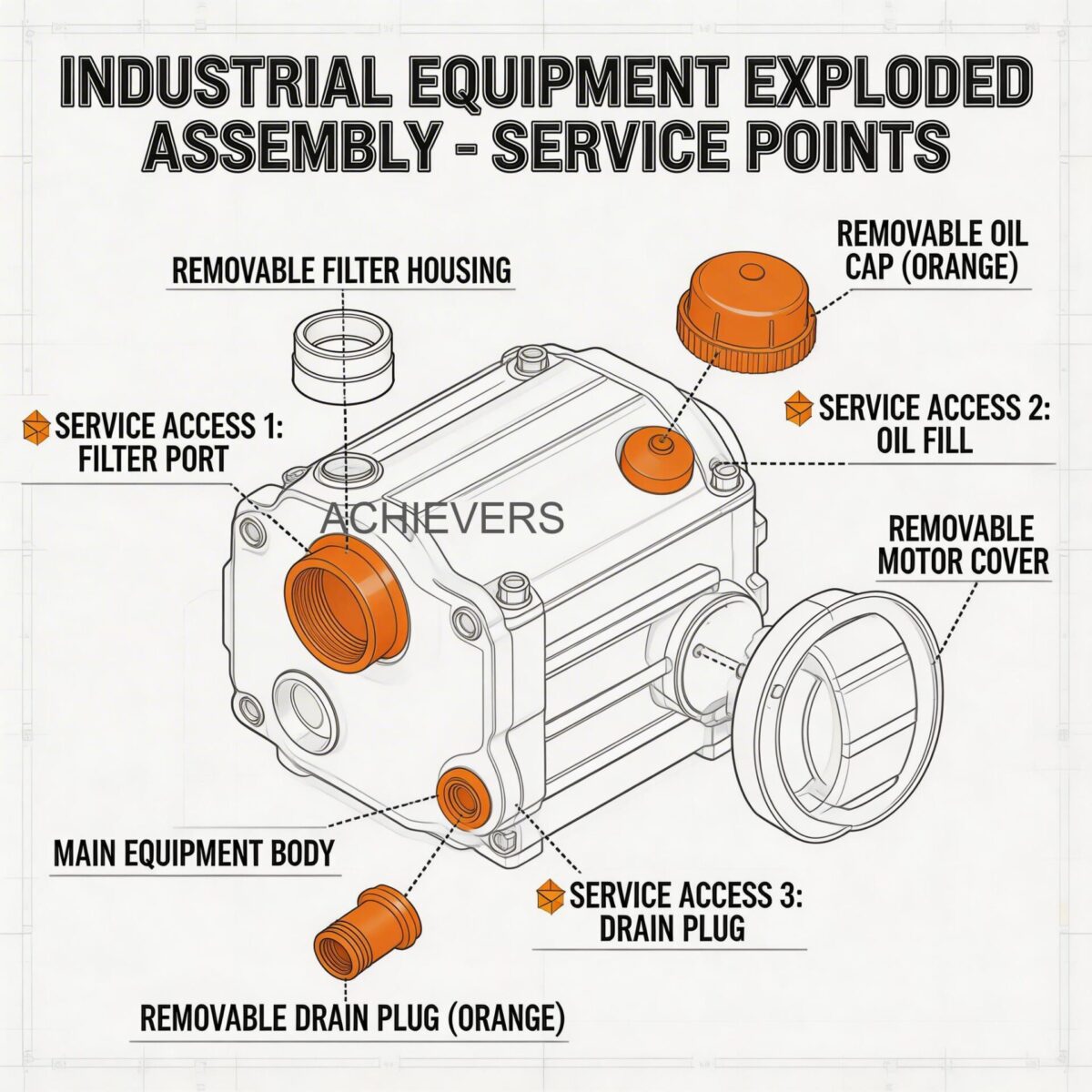
3. Step-by-Step Procedures for Key Tasks
Proper maintenance execution requires strict adherence to Standard Operating Procedures (SOPs). Below are two critical procedures that directly impact the longevity and accuracy of your dispensing equipment.
Procedure 1: Strainer and Utilization Channel Cleaning
The self-priming vane pump relies on a vacuum to lift diesel from the tank. A clogged inlet strainer increases the suction head, dropping the pressure below the vapor pressure of diesel, causing cavitation. Cavitation bubbles implode with immense force, pitting the pump internals and destroying the flow rate.
- Isolate Power: Disconnect the 0.375 kW motor from the electrical supply. Apply LOTO (Lockout/Tagout) protocols.
- Relieve Pressure: Squeeze the metal gun handle into a safe container to relieve the 3 Bar residual line pressure.
- Close Valves: Shut the isolation valve on the suction side (the tank or barrel).
- Open Strainer Housing: Using a highly fitting wrench, carefully unthread the 25 mm inlet strainer housing cap.
- Extract the Mesh: Remove the stainless-steel utilization channel mesh. Inspect for sludge, rust flakes, or biological growth (diesel bug).
- Clean the Mesh: Wash the mesh in a basin of clean diesel or appropriate solvent. Use a soft nylon brush. Blow dry from the inside out using low-pressure compressed air (max 2 Bar).
- Inspect Seals: Check the housing O-ring. If flattened or cracked, replace it to prevent air ingress, which kills self-priming capability.
- Reassemble and Prime: Reinstall the mesh, hand-tighten the cap, then nip it with a wrench. Open valves, restore power, and dispense 5 liters to purge air.
Procedure 2: Oval Gear Meter Calibration Check
To ensure the equipment maintains its ±0.5% precision, monthly proving is mandatory. Do not rely on truck fuel gauge readings for calibration, as they are highly inaccurate.
- Prepare Proving Measure: Obtain a Legal Metrology / PESO-certified 20-liter volumetric proving can. Ensure it is perfectly level and wetted (rinsed with diesel and drained for exactly 30 seconds).
- Reset Counter: Reset the mechanical one-time count to exactly 0000.
- Dispense: Dispense diesel into the proving can at the normal flow rate (close to 60 L/min) until the liquid reaches the zero mark on the can's sight glass.
- Record Indicated Volume: Note the exact reading on the mechanical flow meter. Let's call this V_indicated.
- Determine Actual Volume: The actual volume in the can is precisely 20.00 liters (V_actual).
- Calculate Error: Use the following calibration formula:
- Evaluate: If the Error Percentage is between -0.5% and +0.5%, the meter is within specification.
- Adjust (If Necessary): If the error exceeds 0.5%, access the calibration bypass screw on the oval gear meter housing. Turning the screw clockwise typically increases the fluid bypassing the gears (lowering the registered volume), while counter-clockwise decreases bypass (increasing registered volume). Adjust in small increments and repeat the test.
Error Percentage = [(V_indicated – V_actual) / V_actual] * 100
4. On-Site Spare Parts to Stock
Supply chain delays for critical components can halt fleet operations. For equipment ranging from ₹32,499 (Achievers CE-101) to ₹86,499 (CE-204), keeping ₹5,000 worth of strategic spares on-site ensures 99% uptime.
| Part Name | Component Type | Recommended Qty per 5 Units | When to Replace |
| — | — | — | — |
| Rotor Vanes | Pump Internal | 2 Sets | When flow rate drops below 50 L/min or pump struggles to prime. |
| 25 mm Strainer Mesh | Filtration | 3 Pcs | If mesh is torn or heavily calcified with rust. |
| Viton O-Ring Kit | Sealing | 5 Sets | Annually, or immediately if seepage is detected around the pump head. |
| 4m Rubber Hose | Dispensing | 1 Pc | At the first sign of outer jacket cracking or bubbling. |
| Brass Nozzle Swivel | Hardware | 2 Pcs | When the Fuel Nozzles leak at the connection point. |
| Mechanical Totalizer | Instrumentation | 1 Pc | If gears skip or numbers fail to roll over smoothly. |
When to Use This Technology: Decision Matrix
Selecting the right dispensing technology is the first step in preventive maintenance. If you deploy a mobile dispenser where a high-volume custody transfer skid is required, the equipment will fail prematurely.
| Application Parameter | Gravity Feed System | Mobile Fuel Dispenser (Achievers Series) | Heavy-Duty Static Dispenser |
| — | — | — | — |
| Daily Volume | < 500 Liters | 500 – 5,000 Liters | > 10,000 Liters |
| Mobility Requirement | Stationary | High (Mounted on trucks, carts, or walls) | Fixed to civil island |
| Power Availability | None | 12V/24V DC or 220V AC (0.375 kW) | 415V 3-Phase |
| Accuracy Needs | Low (approx ±2%) | High (±0.5% via Oval Gear) | Custody Transfer (±0.1%) |
| Budget Range (INR) | ₹5,000 – ₹10,000 | ₹30,000 – ₹90,000 | ₹1,50,000+ |
| Ideal For | Small agricultural setups | Construction sites, mid-size fleets, mining equipment refuelling | Commercial petrol pumps, large transport hubs |
Engineering Takeaway: If your operations match the middle column, the Achievers CE-series mobile dispensers provide the optimum balance of ruggedness, precision, and capital expenditure.
5. Diagnosing Maintenance-Related Failures
When operators report issues, instrumentation and mechanical engineers must trace the symptom back to the root cause. This table aligns common operational failures with the specific missed maintenance task.
| Failure Symptom | Mechanical / Engineering Root Cause | Corrective Action |
| — | — | — |
| Flow rate drops significantly below 60 L/min. | Pump starvation due to a clogged 25mm suction strainer, or heavily worn pump vanes losing volumetric efficiency. | Clean utilization channel mesh. If flow remains low, replace pump vanes. |
| Pump motor hums but fails to rotate. | Seized oval gears due to particulate ingress bypassing a torn filter, or severe voltage drop to the 0.375 kW motor. | Check voltage. Disassemble and clean Positive Displacement Flow Meters chamber. Replace filter. |
| Pump runs, but no diesel is dispensed. | Loss of prime. Air leak on the suction side piping, or liquid level in the source tank is too low. | Check suction O-rings. Tighten all 25mm inlet fittings. Ensure adequate tank level. |
| Meter dispenses, but registers zero or skips. | Stripped linkage between the oval gear magnetic coupling and the mechanical counter. | Replace mechanical register head. Ensure no severe pressure spikes occurred. |
| Inaccurate dispensing (>0.5% error). | Drift in bypass valve setting, or worn oval gears allowing fluid "slip" past the measuring chamber. | Recalibrate using a 20L proving can. If adjustment fails, replace oval gears. |
| Fuel weeping from pump housing joints. | Hardened or ruptured Viton seals due to operating continuously above the 3 Bar pressure limit (deadheading). | Replace O-ring kit. Train operators not to run the pump with the nozzle closed for long periods. |
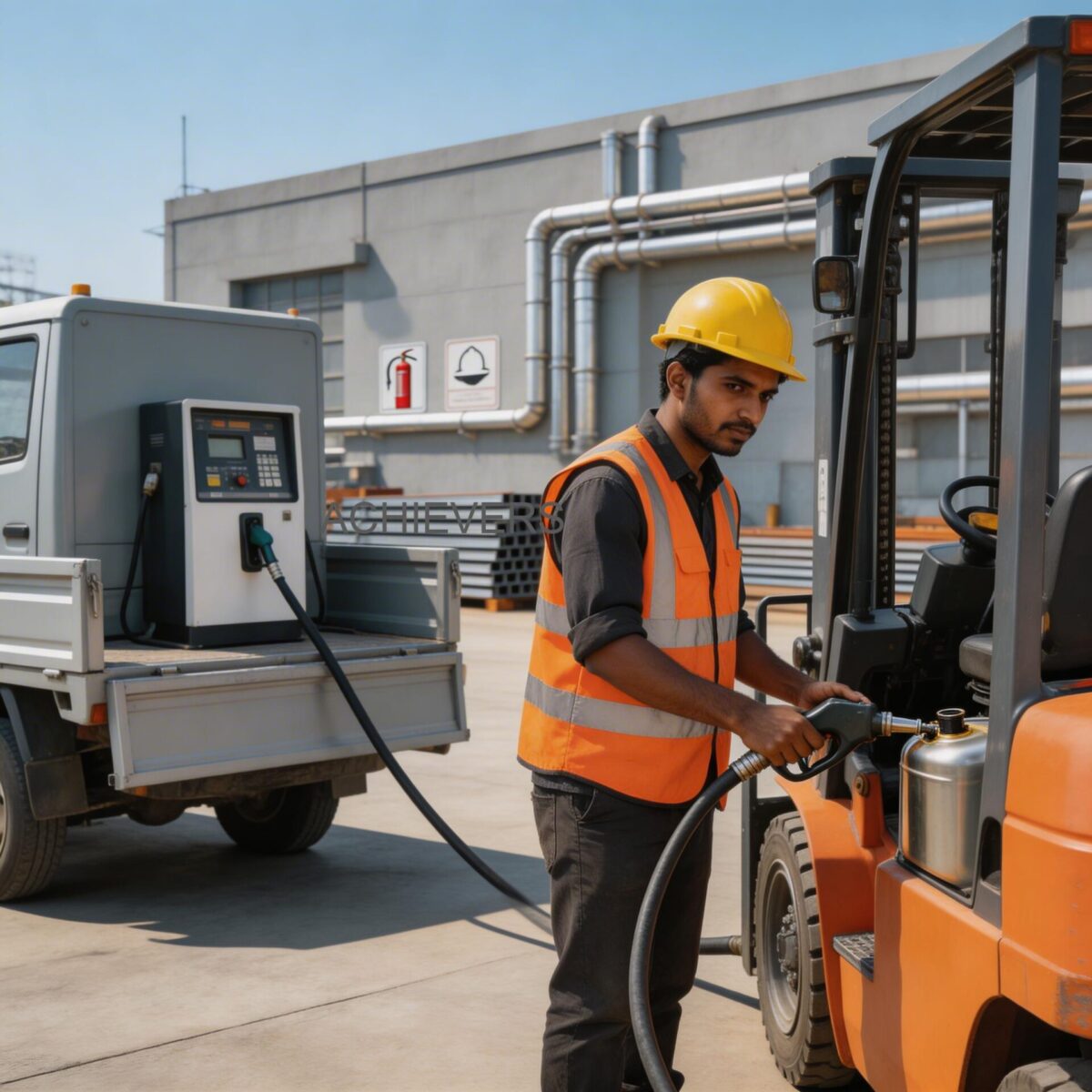
6. Extending Service Life in Indian Conditions
Indian industrial environments present unique challenges that standard European or American operating manuals rarely account for. To ensure the steady performance and longer operational life promised by Lumen Instruments, implement these site-specific adaptations:
1. High Ambient Heat (Rajasthan, Gujarat, Central India):
Summer temperatures easily exceed 45°C. When exposed to direct sunlight, the metal casing of the dispenser can reach 65°C. This causes the diesel inside the metering chamber to expand (diesel expands by approx 0.083% per degree Celsius), altering volumetric accuracy. Furthermore, extreme heat degrades the 0.375 kW motor's insulation.
Solution: Always mount the dispenser under a canopy. If truck-mounted, ensure it is bolted on the shaded side of the vehicle or protected by a vented metallic shroud.
2. Monsoon Humidity and Water Contamination (Coastal and Eastern India):
High humidity causes severe condensation inside bulk diesel storage tanks. This water is sucked up by the dispenser, leading to instant rusting of the steel pump components and emulsion blockages in the filters.
Solution: Install a dedicated water-separating filter (coalescer) upstream of the dispenser’s 25mm inlet. Drain the bulk tank water bottoms weekly during the monsoon season.
3. Dust and Particulate Matter (Mining Sites, Construction):
Abrasive silica dust is the enemy of oval gear flow meters. If dust bypasses the primary strainer, it acts as a grinding paste between the precision gears, destroying the ±0.5% accuracy within months.
Solution: Keep the brass nozzle holstered securely when not in use. Wipe down the nozzle tip before inserting it into a vehicle tank. Strictly adhere to the weekly strainer blowdown schedule.
4. Power Quality Issues (Voltage Fluctuations):
Rural construction sites and remote fleet yards frequently experience voltage drops or surges, which can burn out the 0.375 kW motor coils.
Solution: For 220V AC models, run the power through a quality voltage stabilizer. For 12V/24V DC truck-mounted units, ensure the vehicle's alternator is outputting a clean, regulated voltage and all battery terminals are coated in anti-corrosive dielectric grease.
5. Contaminated or Adulterated Fuel:
In some regions, diesel may be mixed with heavier oils, solvents, or contain high sulfur and rust from aging infrastructure.
Solution: The utilization channel filter provided with the Achievers dispensers is a primary defense. However, for heavily contaminated environments, adding an external 10-micron spin-on particulate filter significantly extends the life of the internal positive displacement mechanics.
FAQ
Q: How often must we calibrate our mobile fuel dispenser to comply with Indian regulations?
A: If the dispenser is used strictly for internal fleet refuelling (private use), monthly internal checks are recommended to prevent pilferage. However, if any commercial transaction occurs, it falls under the Legal Metrology Act and must be stamped and verified annually by the state Weights and Measures department.
Q: The pump runs, but flow has dropped to 20 L/min instead of the rated 60 L/min. What is wrong?
A: This is almost always a restriction on the suction side. Check the 25 mm inlet strainer for sludge. If the strainer is clean, the self-priming vane pump blades are likely worn out and failing to create adequate suction lift, requiring a vane replacement.
Q: Can we extend the 4m rubber hose to 10 meters to reach further equipment?
A: Extending the hose increases the discharge head and friction loss. While the pump generates 3 Bar of working pressure, a 10m hose will noticeably reduce the flow rate below 60 L/min and force the 0.375 kW motor to work harder, potentially leading to overheating. Stick to a maximum of 6 meters if possible.
Q: We found water in the diesel. Will this damage the dispenser?
A: Yes. Water lacks the lubricity of diesel. Oval gears and pump vanes rely on the diesel itself for lubrication. Prolonged pumping of water will cause increased friction, heat, and eventual mechanical seizure, alongside internal rusting.
Q: The mechanical counter is not resetting to zero properly. Can it be repaired?
A: The reset mechanism relies on a series of springs and plastic/metal gears. Often, dust accumulation or forceful twisting of the reset knob strips these gears. It is usually more cost-effective and reliable to replace the entire mechanical counter head assembly than to attempt micro-repairs on the gears.
Q: Why does the motor hum loudly but trip the breaker when we turn it on?
A: This indicates a locked rotor condition. Either the power supply voltage is too low to provide the starting torque, or debris has jammed the oval gears/pump vanes, physically preventing the motor shaft from turning. Do not force it; disassemble and inspect the mechanicals.
Q: Are these units safe to use with petrol or solvents?
A: Absolutely not. The Achievers Mobile Fuel Dispensers are designed specifically for High-Speed Diesel (applicable media). Pumping highly volatile fluids like petrol through this unit poses a massive explosion risk, as the internal seals and the 0.375 kW motor are not inherently rated for explosive, low-flashpoint vapors.
Is your fleet losing money to inaccurate dispensing or frequent pump breakdowns? Upgrading to rugged, precisely engineered equipment is the first step to securing your fuel inventory. Contact our technical team today with your required flow rate, fluid type, and site conditions (AC/DC power availability, mobility needs), and we will match you with the perfect dispensing solution for your operations.